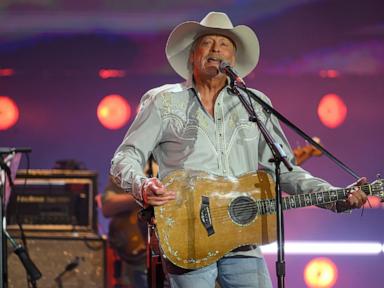
You could feel the collective catch in the throat of 50,000 country fans when the lights dimmed at Nashville's Nissan Stadium. It wasn't just another stadium gig in Music City. This was the final curtain for Alan Jackson, the absolute benchmark of traditional country music.
On Saturday, June 27, 2026, Jackson officially closed the book on a 35-year touring career with his Last Call One More for the Road finale. For a genre that frequently forgets its roots in exchange for pop crossovers and stadium rock beats, this evening was a massive, uncompromising statement. Alan Jackson didn't just play his hits; he reminded everyone what country music actually sounds like before it got heavily produced and homogenized.
Standing Tall Against a Cruel Disease
What made this final tour so heavy was something everyone in the stadium knew but barely spoke aloud. Jackson has been battling Charcot-Marie-Tooth disease, a chronic genetic degenerative nerve disorder that messes with balance and muscle movement. It makes standing on a stage for two hours a grueling physical challenge.
Instead of hiding it or quietly slipping away into retirement, Jackson turned the night into a rallying point. He partnered with the CMT Research Foundation, donating a dollar from every ticket sold to fund a cure for the disease, an amount matched two-to-one by an outside donor.
Seeing him lean into the microphone, stable but visibly pacing his energy, gave songs like "Livin' on Love" and "Chasin' That Neon Rainbow" an entirely new layer of emotional weight. He wasn't out there looking for pity. He was out there doing his job one last time with the exact same humility that made him a Hall of Fame legend.
The Night Music Row Remembered Itself
The stadium felt less like a modern corporate venue and more like a massive honky-tonk. Before Jackson even hit the stage around 8:30 p.m., a rotating door of country heavyweights turned the night into an live tribute festival.
Artists like Luke Combs, Miranda Lambert, Carrie Underwood, Lainey Wilson, and Eric Church took turns keeping the energy high. But the absolute peak of the evening happened when King George Strait walked out onto the stage.
When Jackson and Strait stood side-by-side to trade verses on their 2002 hit "Designated Drinker," it felt like watching the twin towers of 90s country stand firm against the test of time. They followed it up with "Murder on Music Row," their famous 1999 protest track against the commercialization of country music. Hearing fifty thousand people scream every word to a song that criticizes the radio machine, inside Nashville's biggest stadium, was pure irony. It was also the most authentic moment of the entire night.
The Surprising Drama of the Video Tributes
Not everything went exactly according to a corporate script, which honestly made the night feel much more human. Between sets, Grand Ole Opry announcer Kelly Sutton introduced pre-recorded video messages from artists who couldn't make it to Nashville in person.
When Taylor Swift's face popped up on the giant video screens to pay her respects, a noticeable wave of boos rippled through several sections of the stadium. Loud cheers from younger fans quickly tried to drown out the negativity, creating a bizarre vocal battle in the stands. Swift's message focused heavily on Jackson's legendary support of young songwriters when she was first starting out in Nashville.
It served as a quick reminder of the underlying tension in modern country music culture. Yet, when video messages from Kenny Chesney, Keith Urban, and Zac Brown played, the stadium fell back into a unified appreciation for the man of the hour.
What Alan Jackson Retiring Means for the Future
Losing Alan Jackson from the touring circuit leaves a massive hole that today's modern stadium acts aren't quite ready to fill. He belongs to that rare breed of artists who never needed pyrotechnics, backing tracks, or flashy wardrobe changes to hold an audience captive. He just needed a guitar, a white Stetson hat, and stories about real people.
If you want to keep his style of traditional country alive, you can't rely on mainstream radio to do it for you. You have to seek it out.
- Check out independent neo-traditional country artists like Cody Johnson, Randall King, or Sierra Ferrell who keep the steel guitar front and center.
- Dig into the back catalogs of writers like Don Williams, Vern Gosdin, and George Jones to understand exactly where Jackson got his blueprint.
- Support live local country music in independent venues rather than just buying tickets to massive corporate festivals.
Alan Jackson ended his touring career exactly where he started it 35 years ago. He kept it country until the final note faded into the Nashville night.