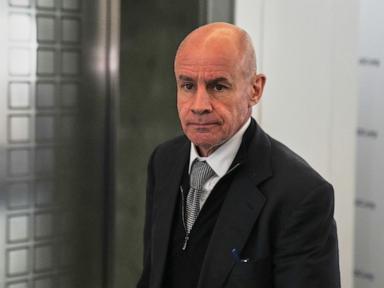
Ski racing doesn't usually look like a corporate boardroom thriller. You expect drama on the icy slopes of Wengen or Kitzbühel, not in a conference hall in Belgrade. But right now, the biggest fight in winter sports is happening off the snow. Johan Eliasch, the billionaire tech-and-gear mogul who took over the International Ski and Snowboard Federation (FIS) in 2021, faces a massive rebellion as he seeks re-election.
This isn't just standard sports politics. When the greatest alpine skier of all time, Mikaela Shiffrin, and the dominant force in men’s skiing, Marco Odermatt, publicly demand your exit, you've got a major problem.
The core issue is a fundamental clash over how skiing should survive in the modern era. Eliasch wants to run FIS like an aggressive, centralized Silicon Valley startup. The traditional skiing powerhouses—and the athletes taking all the physical risks—think he's driving the sport off a cliff.
The Passive Rebellion and the Passport Plot
To understand how bitter this race has become, look at Eliasch's ballot line. He holds dual Swedish and British citizenship. Yet, neither Sweden nor Great Britain would nominate him for re-election. The British federation actively backed a rival candidate, Vikky Gosling, before she withdrew.
To stay on the ballot for the June 11 vote, Eliasch had to pull off a bizarre legal maneuver. He acquired a passport from Georgia—the country, not the state—and secured a nomination from the Georgian Ski Association. It's a legal loophole that allowed him to run, but it highlights how isolated he has become from the sport's traditional roots.
His only remaining opponent on the ballot is Alexander Ospelt, a lawyer representing Liechtenstein. Rivals from the United States, Denmark, and Britain dropped out just before the Belgrade meeting. Eliasch views the situation bluntly. "For me, this election is a win-win," he told the Associated Press. "If I win, I get to carry on... if I lose, I get my life back."
Why the Top Stars Want Him Out
Eliasch built his fortune running Head, the massive sports equipment brand. When he took over FIS, he promised to run skiing like professional tennis. He wanted to explosion-proof the sport's finances, centralize broadcasting rights, and skyrocket athlete prize money.
Instead, the athletes say things got worse.
"We haven't seen any significant changes based on much of what was promised, including intentions around prize money," Shiffrin said during the campaign. "In fact, in the coming years, it seems that FIS's contribution to prize money will actually decrease."
It's a stinging rebuke. Skiers risk their lives hitting 90 mph on injected ice, yet their earning potential pales in comparison to tennis, golf, or football players. Shiffrin and other top stars feel let down by big corporate promises that delivered zero financial upside to the starting gate.
Odermatt has been just as direct, stating there’s little choice but to make a change at the top of FIS. Eliasch dismissed the criticism, claiming Odermatt doesn't represent the general mood of the field. But when the two biggest draws in your sport openly turn on you, the cracks are impossible to hide.
The Money Trial: Where Did the Cash Go?
It’s not just the athletes who are furious. The heavyweights of winter sports—the national federations of Austria, Switzerland, Germany, Norway, Canada, and the United States—signed a scathing joint letter targeting Eliasch’s financial management.
The letter outlines a grim fiscal reality:
- Declining Reserves: FIS cash savings plummeted as Eliasch spent money to buy up properties like the Freeride World Tour and a dedicated travel agency.
- Skyrocketing Costs: Annual operating expenses soared under the new centralized regime.
- Stagnant Revenue: Broadcast and digital revenues didn’t grow at the pace Eliasch promised when he seized control of media rights from the national federations.
Eliasch defends his spending. He says he put "idle cash" to work to build a global digital brand. He points to new media initiatives, like an ESPN documentary series that aired around the Milan-Cortina Olympics, as proof that skiing is finally gaining a global footprint. He claims FIS accomplished more in five years than it did in the previous century.
But his top executives don't seem to agree. Last year, FIS hired Urs Lehmann, a former downhill world champion and one of Eliasch’s former political rivals, to serve as the organization's new CEO. Last week, Lehmann abruptly quit.
The Dictator vs. The Traditionalists
The underlying issue is Eliasch's management style. He admits he rushed things. "I don't have 25 years to devote to this," the 64-year-old billionaire noted. He believes he wasn't tough enough, arguing that trying to be diplomatic backfired on him.
The traditional federations see it differently. They see an autocrat who refuses to listen. When Eliasch was re-elected in 2022 without an opponent, 15 nations walked out of the vote because the assembly wouldn't let them vote "No" or stain their ballots with an abstention.
Furthermore, environmental concerns continue to dog his schedule choices. The current World Cup calendar forces athletes to jet back and forth across the Atlantic multiple times a winter. It ruins athlete recovery and obliterates the sport’s sustainability goals—a hypocritical look for an organization that relies entirely on freezing temperatures to exist.
What Happens Next
The Belgrade vote will decide whether skiing continues down this hyper-commercial, centralized path or returns to a cooperative model run by the core European and North American federations.
If you want to track where winter sports go from here, watch these three indicators over the coming months:
- The Media Rights War: Watch whether the major European federations (Austria, Switzerland) settle their legal disputes with FIS or break away to negotiate their own independent television deals.
- Prize Money Metrics: Look closely at the official FIS alpine prize structures for the upcoming winter season to see if athlete payouts actually drop, as Shiffrin fears.
- The World Cup Calendar: Check if the 2026-2027 race schedule reduces transatlantic flights to ease the travel burden on athletes and reduce carbon emissions.