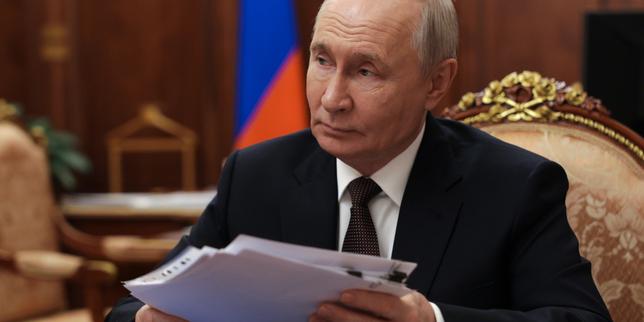
Vladimir Putin wants you to believe the war in Ukraine is wrapping up on his terms. Last week, he boasted that his troops were on the verge of taking Kostiantynivka. If you look at a map, it's easy to see why he's fixated on it. Kostiantynivka anchors the southern tip of Ukraine’s eastern "fortress belt"—a chain of four heavily industrialized cities in the Donetsk region that has blocked Russian expansion for years.
But don't buy the Kremlin hype just yet.
While small Russian infantry groups are trying to sneak into the outskirts of the city, Ukrainian forces aren't packing up. Senior commanders from Kyiv's 19th Army Corps are calling Putin's victory claims a massive exaggeration. They are currently picking off these small Russian assault teams one by one. The situation is tough, but a rapid Russian breakthrough isn't happening.
Here is what is actually going down on the ground right now, what the mainstream media misses, and why this specific stretch of dirt matters to the rest of the world.
The Reality of the Fortress Belt
The fortress belt isn't just a defensive line. It is a series of heavily fortified, interconnected industrial cities. Kostiantynivka sits at the bottom. Moving north, the chain runs through Druzhkivka, Kramatorsk, and Sloviansk. If Russia wants to control the Donetsk region—a core war goal reiterated by the Kremlin this week—they have to break this belt.
Right now, the fighting is a bloody, slow-motion meat grinder.
Russia is relying on its classic strategy: throwing raw manpower at the problem. They are using pincer movements to slowly wrap around Kostiantynivka, forcing Ukrainian defenders to make a brutal calculation. As Ruslan Mykula from the DeepState open-source mapping group points out, Russia's tactics are steadily raising the cost of defense. Soon, Kyiv will have to choose whether to raise the stakes or pull back.
But a retreat wouldn't mean a total collapse. It just means moving the fight to the next urban block. A look at the numbers shows exactly how devastating this approach is for both sides:
- 70,000: The pre-war population of Kostiantynivka.
- 2,000: The estimated number of civilians left in the city today.
- 15 kilometers: How close Russian troops are to Sloviansk and Kramatorsk, keeping them under constant aerial bombardment.
The Drone Infested Skies of Donetsk
If you want to understand why neither side can move quickly, look at the sky. It is absolutely crawling with drones.
Supply routes leading north from Kostiantynivka are under constant surveillance and attack. Russian artillery, first-person-view (FPV) drones, and guided glide bombs are hammering the roads. It has gotten so bad that standard military vehicles can't be used to evacuate the wounded or dead along certain sectors.
Ukrainian units, like the "Predator" rifle brigade, are forced to patrol these routes on foot, dodging remotely dropped mines and hunting overhead quadcopters. When everything happens on foot, operations slow down to a crawl.
This brings us to a major contradiction in Russia's current campaign.
A Strained Russian War Machine
While Russian forces are pushing hard in Donetsk, their broader war effort is showing severe cracks. This isn't a flawless, unstoppable juggernaut.
Ukrainian mid-range drone strikes have successfully hammered Russian logistics hubs. Long-range strikes on Russia's oil sector and supply lines leading to occupied Crimea have triggered a literal energy crisis on the peninsula. Russian-installed authorities in Crimea had to declare a state of emergency, completely halting fuel sales to private individuals and businesses.
Because of these logistical bottlenecks, Russian frontline assaults are often strangely small. Analysts note that many attacks consist of just one or two soldiers trying to advance across open fields. They have the manpower advantage overall, but getting those men supplied, fueled, and coordinated is a nightmare for Moscow.
Yet, the Kremlin doesn't care about the speed. Denis Pushilin, the Russian-installed head of the occupied Donetsk region, dismissed concerns about the slow progress, stating that whether it happens slowly or quickly isn't the point—the campaign is continuing regardless of the cost.
What This Means for Global Security
The grueling attritional warfare in eastern Ukraine is forcing a massive rethink of military strategy globally. European allies are realizing that the era of relying solely on expensive, high-end weapons systems is over.
At a defense conference in London, senior NATO officials openly warned that Western militaries need an immediate overhaul. The lesson from the fortress belt is clear: future conflicts require massive amounts of low-cost, mass-produced equipment, especially drones and cheap interceptors. Land warfare has fundamentally changed.
Next Steps for Following the Conflict
If you are trying to cut through the propaganda and track what actually happens next in the Donbas, stop looking at daily political headlines. Watch these specific indicators instead:
- The Druzhkivka Evacuations: Civilian life is currently collapsing in Druzhkivka, just 12 kilometers north of the active fighting. If residents flee en masse, it means the Ukrainian high command expects the defensive line to shift northward.
- Crimean Fuel Metrics: Watch whether Russia can restore fuel supplies to Crimea. If the state of emergency persists, the logistical strain will eventually choke the frontline artillery units in Donetsk.
- Pincer Geometry: Track open-source maps like DeepState. Don't worry about who controls individual buildings in Kostiantynivka; watch whether Russian forces successfully close the northern and southern flanks outside the city.