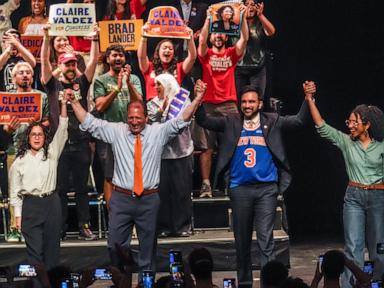
The political machinery in New York is running at a fever pitch. On Monday, voters witnessed a final, frantic burst of handshakes, subway station greetings, and high-stakes rallies as New York's congressional candidates make final case arguments ahead of Tuesday's primary elections. This is not just another local vote. The outcomes here will echo across the national stage, signaling whether the national Democratic party will lean into a fiery brand of democratic socialism or stick with traditional, business-aligned moderates.
From the wealthy high-rises of Manhattan to the working-class blocks of Brooklyn and Queens, the ideological divide is stark. A quiet primary season has transformed into a loud, expensive proxy war. Millions of dollars in outside money are pouring into specific districts, completely reshaping expectations. If you want to understand where American politics is heading for the rest of the decade, you need to look closely at what is happening on the ground in New York right now.
Why New York Congressional Candidates Face a Brutal Final Case
The primary represents an immediate test of power for New York City's young mayor, Zohran Mamdani. Just six months after taking office, the 34-year-old democratic socialist is putting his own political capital on the line. He has built a distinct group of three House candidates, trying to use the momentum from his mayoral victory to completely flip the state's congressional makeup.
Mamdani's strategy is aggressive. He isn't playing defense. Along with Vermont Senator Bernie Sanders, the mayor led a massive get-out-the-vote rally in Brooklyn to energize young, progressive voters who often skip primary elections. The message from that stage was clear: the status quo is no longer acceptable.
The progressive slate includes:
- Claire Valdez, running a grassroots campaign built on labor unions and housing organizers.
- Darializa Avila Chevalier, targeting working-class communities with a focus on systemic economic changes.
- Brad Lander, the former New York City Comptroller who has mounted a direct challenge against incumbent Representative Dan Goldman in the 10th Congressional District.
This creates a fascinating dynamic. Goldman, a wealthy moderate and former federal prosecutor, represents the deep establishment of the party. Lander represents an institutional progressive force trying to drag the district to the left. The match-up has forced both sides to spend heavily on television advertisements and field operations in the final days, making it one of the most expensive intra-party fights in recent city history.
The Million Dollar AI War in Manhattan
While the fight in Brooklyn centers on economic ideology, the race to replace retiring Representative Jerry Nadler in Manhattan's 12th Congressional District has turned into something entirely different. It is a multi-million dollar corporate battleground focused on the future of artificial intelligence regulation.
State Assembly Member Alex Bores is facing an intense wave of attack ads funded by tech billionaires. Bores recently authored the RAISE Act in New York, which stands as one of the strictest pieces of state-level AI legislation in the country. The law forces major technology firms to submit regular, detailed audits detailing their safety measures against catastrophic global risks.
A political action committee named Leading the Future has spent over $7.6 million trying to defeat Bores. The group is funded by major technology figures, including OpenAI President Greg Brockman, venture capitalist Marc Andreessen, and Palantir co-founder Joe Lonsdale. The group argues that state-by-state regulation hurts innovation and claims Bores' ideas are too extreme. They have repeatedly run ads claiming Bores is secretly working to favor rival AI corporations like Anthropic. Bores denies this, stating that tech moguls are simply terrified of independent accountability.
"This race started with AI megadonors pledging millions to stop me because they were afraid after I passed the strongest AI safety law in the country," Bores said on his final campaign stop.
The situation gets even more complicated when you look at the other candidates running in the 12th district. Jack Schlossberg, the 33-year-old grandson of President John F. Kennedy, is using his famous family heritage and a massive following on social media platforms to position himself as a modern voice for the district. Schlossberg has attacked Bores during recent debates, telling voters that the entire race has devolved into a distracting corporate civil war that does nothing to solve everyday problems like inflation or housing costs.
Micah Lasher is also in the mix. Backed by a long list of traditional New York Democratic officials, Lasher is relying on a traditional campaign structure, focusing on his deep policy experience within state government. High-profile attorney George Conway has also entered the race, adding another layer of media attention to an already packed field.
What the Voters are Actually Saying
If you step away from the television commercials and talk to people on the streets of Manhattan and Brooklyn, a clear disconnect appears. Voters are exhausted. They are tracking the big political arguments, but their immediate choices are driven by practical concerns.
A common mistake outside observers make is assuming New York voters are a monolith. They aren't. A young voter in Astoria has completely different priorities than an older homeowner in Upper West Side Manhattan. Progressive organizers are banking on the idea that high housing costs and a rising cost of living will push working-class tenants to vote for Mamdani's slate. On the other side, establishment candidates are betting that middle-class voters want stability and predictable leadership rather than a radical overhaul of the system.
Turnout will decide everything tomorrow. June primary elections in non-presidential years famously suffer from abysmal participation rates. Sometimes a mere 10% to 12% of registered voters decide who wins the nomination. In low-turnout environments, the campaign with the most disciplined ground game wins. That is why candidates spent Monday calling voters directly, knocking on doors, and positioning volunteers at major subway hubs during the morning and evening commutes.
Actionable Steps for Election Day
If you are a registered voter in New York, the political noise can feel overwhelming. Do not let the mudslinging keep you from participating. Here is exactly how to navigate the primary day successfully.
Verify your polling location
Your regular general election polling site might not be the same one used for the primary. Check the official New York State Board of Elections locator tool online before you head out the door.Confirm your party registration
New York runs a strict closed primary system. You can only cast a ballot in the primary of the political party you are officially registered with. If you are registered as an independent, you cannot vote in these congressional primaries.Know the hours
Polls across New York State open at 6:00 AM and close exactly at 9:00 PM. If you are standing in line by 9:00 PM, the law requires that you be allowed to cast your vote. Bring a valid form of identification just in case, though it is usually not required for returning voters.Look beyond the top of the ballot
While congressional seats get all the media coverage, your ballot will also feature crucial local races, including state committee seats and civil court judges. Take five minutes to review a sample ballot so you aren't surprised in the voting booth.