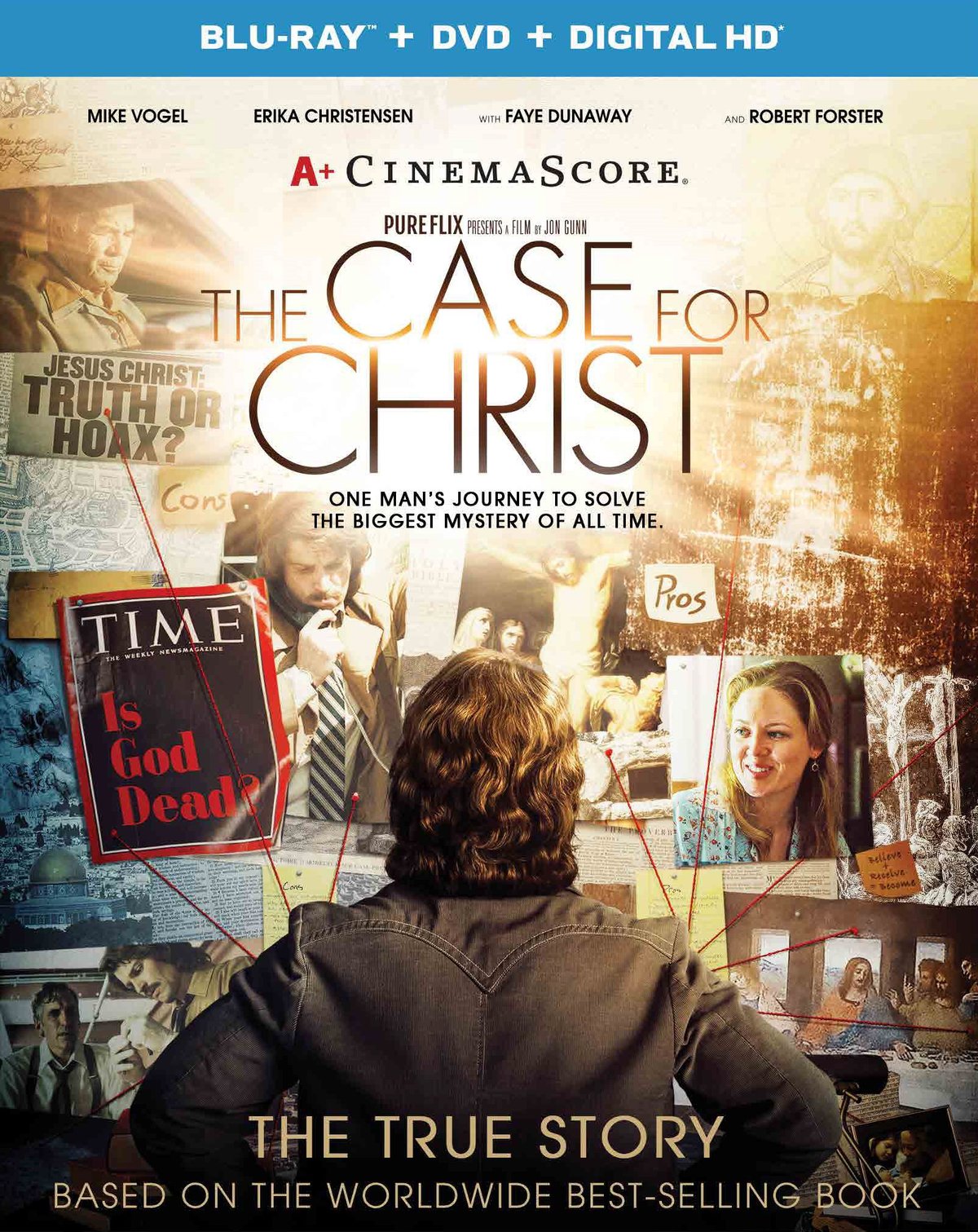
I once watched a history professor spend six months trying to debunk Lee Strobel’s work by searching for a single, smoking-gun archaeological error. He poured dozens of hours into JSTOR and physical archives, convinced that if he could just prove one date was off by a decade, the entire narrative would collapse. He treated it like a game of Jenga. By the time he hit a wall, he had wasted half a year and realized he hadn't even engaged with the actual legal and medical arguments that form the backbone of the book. He made the classic mistake: he let his personal bias dictate his research methodology. If you’re approaching The Case Of Christ Review with the intent to find a typo instead of testing the weight of the evidence, you’re going to lose time you can’t get back. I’ve seen this exact pattern play out with students, journalists, and amateur historians who think a surface-level scan of a few Wikipedia pages constitutes a deep dive.
The Mistake Of Treating Journalism Like Pure Science
The biggest trap people fall into is forgetting that Lee Strobel was a legal affairs editor for the Chicago Tribune. He didn't write this as a peer-reviewed scientific paper; he wrote it as an investigative report. I’ve seen researchers dismiss the entire project because it relies on expert testimony rather than carbon dating they can perform in their own backyard. That’s a fundamental misunderstanding of how historical inquiry works. History isn't a lab experiment you can replicate at 22°C. It’s a courtroom drama. You might also find this related story insightful: The Art of the Premature Punchline and the Return to Jump Street.
When you ignore the rules of evidence, you end up arguing against a straw man. Experts like Dr. Craig Blomberg or Dr. Bruce Metzger, whom Strobel interviewed, are operating within the framework of historiography and textual criticism. If you try to apply the scientific method to a 2,000-year-old document without using the tools of a historian, you’re bringing a knife to a gunfight. You’ll spend weeks frustrated that there isn't a "video recording" of the events, which is a ridiculous standard for any ancient figure, from Alexander the Great to Augustus Caesar.
How To Fix Your Evidence Standards
Instead of demanding impossible proof, you need to look at the "bibliographical test." This measures the number of ancient manuscripts and the time interval between the original and the surviving copies. For example, Caesar’s Gallic Wars has about 10 surviving copies, with the earliest dated 1,000 years after the events. The New Testament has thousands of Greek manuscripts, some within decades of the originals. If you reject the latter based on "lack of evidence," you have to throw out almost everything we know about the Roman Empire too. Stop moving the goalposts; use the same yardstick for all ancient texts. As extensively documented in detailed articles by Rolling Stone, the implications are widespread.
Why Your The Case Of Christ Review Must Address The Medical Data
You can't claim to have a complete perspective if you skip the chapter on the crucifixion. Most people want to argue about the theology because it's abstract and easier to dodge. But the physical reality of Roman execution is a matter of documented history and medical forensic analysis. I’ve seen critics try to hand-wave the "swoon theory"—the idea that Jesus didn't actually die but just fainted—without ever looking at the physiological requirements of Roman scourging.
I remember a skeptic who argued for three weeks on a forum that the "blood and water" mentioned in the Gospel of John was just a poetic metaphor. He didn't know that modern medicine identifies this as pericardial and pleural effusion, a direct result of severe physical trauma and heart failure. By ignoring the medical experts Strobel interviewed, like Dr. Alexander Metherell, he was fighting against biology, not just religion. That’s a fast way to lose credibility.
The Before And After Of Medical Analysis
Consider a "before" scenario: An investigator reads the accounts and assumes the spear wound was a minor detail added for drama. They spend their time looking for Roman records of a burial plot, find nothing, and declare the whole thing a myth. They’ve spent forty hours chasing missing paperwork from a chaotic military occupation.
Now consider the "after" scenario: That same investigator looks at the medical breakdown of hypovolemic shock. They realize that a man who had been beaten, deprived of sleep, and then crucified couldn't have survived to "fake" a resurrection. By focusing on the physiological data first, they save themselves months of hunting for bureaucratic records that likely never existed or were destroyed in the Siege of Jerusalem in 70 AD. They move from chasing ghosts to dealing with hard biological constraints.
Ignoring The Hostile Witnesses Is A Fatal Strategy
A common error in this field is assuming that the only evidence for the narrative comes from "the fans." If you think the only records of these events are found in the Bible, you haven't done your homework. I’ve seen people get embarrassed in debates because they didn't realize that non-Christian sources like Josephus, Tacitus, and Pliny the Younger provide an external framework for the timeline.
If you’re building a critique, you have to account for why hostile contemporary sources didn't just point to a body in a tomb and end the movement instantly. It’s a massive logical hole. You can’t just say "they forgot where the tomb was." Jerusalem wasn't that big, and the site was public knowledge. If you don't grapple with the "empty tomb" as a historical problem that even the enemies of the early church had to explain away—often by claiming the body was stolen—you’re not doing a real investigation.
The Financial And Social Cost Of Getting It Wrong
This isn't just an academic exercise. For many, a deep dive into this topic involves buying books, attending seminars, or even traveling to sites. I know a guy who spent $3,000 on a trip to Israel to "prove" the geography was wrong, only to realize he was looking at 19th-century maps instead of 1st-century topography. He could have saved that money by simply reading the archeological sections of the text more carefully.
Beyond the money, there's the social capital. If you go into a discussion and spout easily debunked myths—like the idea that Jesus was a copy of the Egyptian god Horus or the Persian god Mithras—you’ll be laughed out of the room by any serious scholar, regardless of their faith. These "copycat" theories have been thoroughly shredded by actual Egyptologists and historians. Relying on them makes you look like a conspiracy theorist, and it takes years to get your reputation back once you’ve been branded as someone who gets their "facts" from memes.
Failing To Discern The Psychology Of The Disciples
You have to look at the "why" behind the behavior of the followers. A mistake I see constantly is the assumption that the disciples were just "tricked" or "hallucinated." That’s a weak argument when you look at the sheer number of people involved and the variety of settings. I’ve talked to people who spent years trying to find a psychological disorder that explains mass hallucinations, only to find out that such a thing doesn't actually exist in clinical literature. Hallucinations are like dreams; they don't happen to groups of 500 people at the exact same time.
- People don't die for a lie they know is a lie.
- The transition from "hiding in a locked room" to "preaching in the streets" happened in a matter of weeks.
- Former skeptics like James (the brother of Jesus) and Saul of Tarsus had no reason to convert unless they saw something undeniable.
If you don't have a better explanation for the radical shift in the behavior of these men—who went from cowards to martyrs—your The Case Of Christ Review is incomplete. You’re ignoring the human element of the data set.
Misunderstanding The Role Of Oral Tradition
Most people living in a digital age think that information passed by word of mouth is like the game of "Telephone," where the message gets garbled instantly. That's a modern bias that ignores how ancient cultures functioned. I’ve seen critics dismiss the Gospels because they were written 30 to 60 years after the events, claiming that’s too long for a reliable memory.
In reality, oral cultures had highly developed techniques for memorization. Rabbis and their students would memorize entire books of the Torah. They didn't just wing it. If you apply the "Telephone" logic to a culture that lived and breathed memorization, you’re making a category error. You’re assuming ancient people were as forgetful as we are today, despite the fact that they relied on their memories for their very survival.
The Fix: Study The Creedal Dating
The real breakthrough happens when you look at the creeds found within the New Testament, like the one in 1 Corinthians 15:3-7. Most scholars, including skeptics like Gerd Lüdemann, date this specific creed to within two to five years of the crucifixion. It’s a formal statement that was passed around while the witnesses were still alive. When you realize the timeline isn't "decades of silence" but rather "months of formal transmission," your entire perspective on the reliability of the story has to shift. You’re no longer dealing with a legend that developed over centuries, but a report that was locked in almost immediately.
The Reality Check
Let's be honest about what this actually requires. If you want to do a proper job, you can’t just read a summary or watch a two-minute video. You have to be willing to read the footnotes. You have to look up the credentials of the people being interviewed. You have to be willing to admit when a piece of evidence doesn't fit your pre-existing worldview.
I've seen people spend years circling the drain of this topic because they were afraid of where the evidence might lead them—or because they were so desperate to prove it right that they ignored the difficult questions. Both sides are guilty of intellectual laziness.
If you’re going to do this, do it right. Here is what it takes:
- Commit to at least 50 hours of reading across multiple disciplines: history, law, medicine, and linguistics.
- Stop using secondary sources from people who have an obvious axe to grind. Go to the primary texts.
- Acknowledge that there is no "neutral" ground. Everyone has a bias, including you, and including the experts. The goal isn't to be unbiased; it's to be honest about your bias and see if the evidence can overcome it.
Don't expect a lightning bolt from the sky or a "gotcha" moment that ends the debate forever. History is messy. The evidence is cumulative. If you're looking for a simple, one-sentence answer that solves the mystery of the ages, you're going to be disappointed. Success here looks like a slow, painstaking process of weighing probabilities. Most people won't do that work. They’ll stay on the surface, make the same three or four mistakes I’ve outlined, and wonder why they never feel like they have the full picture. If you want to be the exception, you have to stop looking for shortcuts and start doing the heavy lifting.