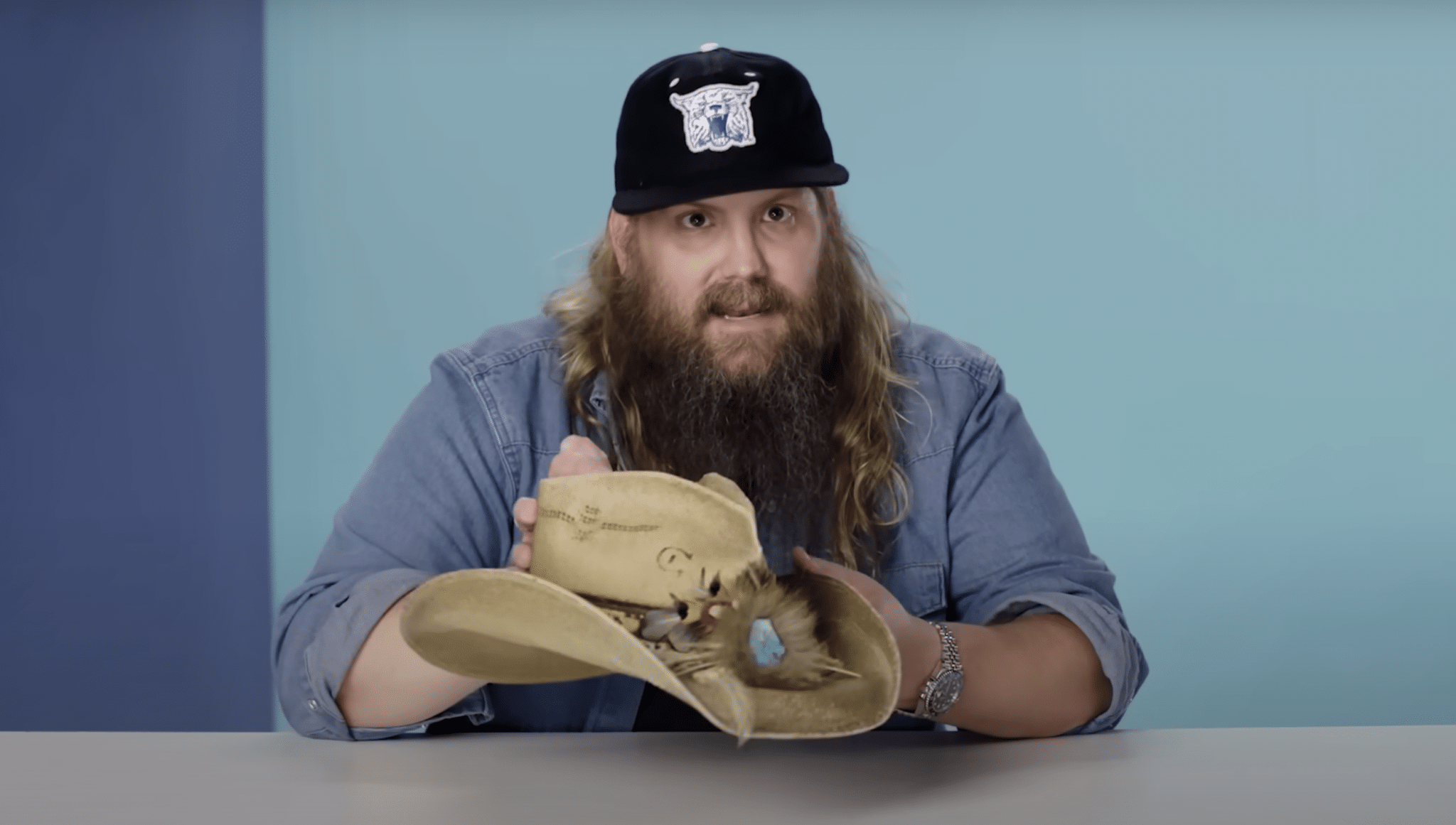
You know the look. That massive, mountain-man thicket of hair that seems to house at least three Grammys and a spare guitar slide. It’s become a cornerstone of modern country music’s visual identity. But if you’re looking for photos of Chris Stapleton Without A Beard, you’re basically embarking on a digital archaeological dig. It’s a jarring sight. Seeing that famous jawline is like seeing a superhero without their mask, or a legendary stadium without its lights. We’ve grown so accustomed to the outlaw aesthetic that the bare-faced reality feels like a parallel universe.
The obsession with this specific look isn't just about gossip. It’s about the branding of an icon. Before he was the "Tennessee Whiskey" powerhouse, he was a Nashville songwriter-for-hire, churning out hits for everyone from George Strait to Adele. Back then, the look was different. The hair was shorter. The chin was visible. Understanding the evolution of his style helps us understand his transition from a behind-the-scenes workhorse to the focal point of the genre. You might also find this similar story interesting: Why David Harbour Breaking His Silence on Lily Allen Is More Complicated Than It Looks.
Why The World Is Obsessed With Chris Stapleton Without A Beard
The internet has a strange fixation on celebrity transformations. We want to see the "before" because it humanizes the "after." When it comes to this specific artist, the beard isn't just grooming; it’s armor. It represents the gritty, unfiltered shift in country music that happened in the mid-2010s. Seeing the man beneath the foliage reminds us that even the most stoic figures in music had a beginning phase where they were still finding their voice—and their barber.
The Early Days In The SteelDrivers
If you go back to roughly 2008 or 2010, the facial hair wasn't the sentient entity it is today. During his tenure with the bluegrass band The SteelDrivers, he sported a much more groomed look. Sometimes it was a goatee. Sometimes it was just heavy stubble. You can actually see the structure of his face in old live performance clips from The Grand Ole Opry. His eyes look different when they aren't framed by two pounds of ginger-brown whiskers. He looked like a guy who might work at a high-end wood shop or teach a cool history class. He didn't yet look like the mythical creature that emerged on the CMA stage with Justin Timberlake in 2015. As highlighted in detailed articles by Reuters, the effects are worth noting.
The Songwriter Era Aesthetic
Before the solo stardom, he was a member of the Jompson Brothers. This was a rock-heavy project that leaned into a 70s vibe. Even then, the grooming was in flux. Nashville insiders from that era remember him as the guy who could write a hit in thirty minutes but hadn't yet committed to the full "mountain man" persona. It’s fascinating because it shows that the image we associate with his soul-crushing vocals was a slow burn. It wasn't a calculated marketing move dreamed up by a label executive in a glass office. It was a natural progression of a man who simply stopped shaving as his music got deeper and more raw.
Tracking The Evolution Of The Iconic Look
The transition wasn't overnight. If you track photos year by year, you see the volume increase in direct proportion to his chart success. It’s almost as if every time he sold another million records, the beard gained another inch of power. By the time Traveller dropped, the transformation was complete. The face we saw on the cover of that album became the definitive version of the artist.
The Impact Of The 2015 CMA Performance
That night changed everything. When he stepped out to perform with Timberlake, the world didn't just hear the voice; they saw the hat and the hair. That silhouette became a brand. If he shaved tomorrow, it would be a national news story. It would be like Dolly Parton showing up without the wig. People feel a sense of ownership over these visual markers. They provide a sense of stability in an industry that usually prizes polished, airbrushed perfection. He chose the opposite. He chose the tangled, the messy, and the real.
Maintenance Of A Musical Identity
You’d be surprised how much work goes into looking like you don't do any work. A beard of that magnitude requires oils, balms, and the occasional trim to keep it from becoming a total disaster. While he clearly isn't spending hours in front of a vanity mirror, there’s a level of upkeep required to ensure it doesn't interfere with his microphone technique or his guitar playing. Fans often joke about what he might be hiding in there, but the reality is that it’s become a physical manifestation of his "no-frills" approach to the industry. He isn't interested in the glitz. He’s interested in the dirt and the soul.
The Cultural Significance Of Facial Hair In Country Music
Country music has a long, complicated relationship with hair. Back in the day, the Nashville establishment was strictly clean-cut. Think of the 1950s and 60s stars in their Nudie suits with perfectly pomaded hair. Then came the Outlaw movement. Willie Nelson and Waylon Jennings broke the mold by letting it grow. They used their hair as a middle finger to the "rhinestone" culture of the city.
Chris Stapleton Without A Beard would have fit right in with the 1990s era of "hat acts," but the full beard places him firmly in the lineage of the rebels. It signals to the audience that he’s not here to play the "pretty boy" game. He’s here to sing songs about heartbreak, whiskey, and the hard truths of life. The hair tells you the story before he even opens his mouth.
The Psychology Of The Mask
Psychologically, heavy facial hair can act as a shield. For a guy who is notoriously private and somewhat shy despite his massive fame, the beard provides a layer of anonymity. He can walk through a grocery store in a different hat and maybe, just maybe, pass for a regular guy. It separates the performer from the person. When the beard is on, he’s the titan of country soul. When it’s trimmed or hidden, he’s just Chris from Kentucky.
Comparing The Past To The Present
When you look at the rare photos of the artist with a visible chin, the most striking thing is his youth. The beard adds a sense of ancient wisdom. It makes him look like he’s lived a thousand lives. Without it, he looks remarkably younger and perhaps a bit more vulnerable. It’s a reminder that the "legend" status is something he earned over decades of grinding in the Nashville machine. He wasn't born a grizzled veteran; he became one.
Practical Lessons From A Style Icon
What can we actually learn from this? It’s not just about hair growth. It’s about consistency and authenticity. He didn't change his face to fit a trend. He grew into himself. If you’re trying to build a personal brand or just find your own style, there are a few takeaways here that don't involve a razor.
- Commit to your vibe. Once he found the look that felt right, he stuck with it. He didn't flip-flop between styles to chase the latest Nashville craze.
- Let the work speak first. The beard became iconic because the music was legendary. If the songs were bad, the hair wouldn't matter.
- Don't fear the "before" photos. Everyone has an awkward phase or a period where they haven't quite found their groove. Those old photos of him aren't "bad"; they’re just chapters in the book.
How To Style Your Own Look
If you're inspired to grow your own "Stapleton-esque" beard, you need to understand the logistics. You can't just stop shaving and hope for the best. You need a quality beard wash to prevent the skin underneath from becoming a desert. You need a boar-bristle brush to train the hairs to grow downward rather than out in every direction. Most importantly, you need patience. A beard like that takes years to cultivate. It’s a marathon, not a sprint.
Common Mistakes In Grooming
Most guys give up during the "itchy phase." That’s usually around week three or four. If you can push past that, you're golden. Another mistake is trimming the neckline too high. If you go too high, you end up with a look that’s more "suburban dad" than "outlaw country." You want to keep the lines natural. Look at the way his hair blends into his sideburns and his chest. It’s a seamless transition that looks organic.
Where To Find The Best Rare Photos
If you’re still hunting for those elusive bare-faced images, your best bet is to look at archived news stories from the early 2000s or fan sites dedicated to his early bands. Public databases like Getty Images often have professional shots from red carpets before 2012 that show a much more manicured version of the star. These photos are a trip. They remind us that fame is a process and that identity is something we build over time.
The Power Of A Signature
Every great artist has a signature. For Johnny Cash, it was the black suit. For Dolly, it’s the hair. For Stapleton, it’s the beard. It becomes a shorthand for the fans. You see that silhouette on a t-shirt or a concert poster, and you immediately know what you're getting. You're getting honesty. You're getting power. You're getting some of the best songwriting in the history of the genre.
What The Future Holds
Will he ever shave? Probably not. At this point, it would be a bigger shock than if he announced he was switching to EDM. The look is too tied to the legacy. But even if he did, the voice would remain. That’s the real secret. The hair is the packaging, but the soul is the product. Whether he’s rocking a full forest on his face or he’s totally clean-shaven, the man is a generational talent.
What To Do If You’re Chasing This Look
If you're serious about the aesthetic, start by evaluating your genetics. Not everyone can grow a beard that thick. If yours is patchy, don't force it. Go for a shorter, more intentional look. If you do have the follicles for it, invest in a high-quality oil. Avoid the cheap stuff at the drugstore that’s filled with synthetic fragrances. Look for natural ingredients like jojoba oil or argan oil. Your skin—and anyone who has to get close to your face—will thank you.
- Stop shaving entirely for at least three months. Don't even think about a trimmer.
- Use a dedicated beard shampoo. Regular hair soap will strip the natural oils from your face.
- Brush daily. This stimulates blood flow to the follicles and keeps things tidy.
- Accept the gray. Part of the charm of the modern Stapleton look is the "salt and pepper" vibe. It adds character and authority.
You've got to appreciate the journey of an artist who stays true to himself. Whether he's hidden behind a wall of hair or standing exposed in an old 2005 press photo, the talent is undeniable. The beard is just the icing on a very soulful cake. Stop worrying about what’s underneath and just listen to the music. That’s where the real man lives anyway.
If you're looking for more info on his gear or his touring schedule, check out the Official Chris Stapleton Site for the latest updates. He’s constantly on the road, and seeing that beard in person is a much different experience than seeing it on a screen. The sheer scale of it is impressive, much like his vocal range. Don't miss out on a live show if you get the chance. It's the only way to truly appreciate the legend in all his glory.