Smashing up property to make a political point isn't new. But getting locked up as a literal terrorist for doing it is a massive shift in British law enforcement.
On June 12, 2026, a London judge handed down staggering prison sentences to four Palestine Action activists. They didn't just get normal sentences for vandalism or assault. The court officially slapped them with a terrorist connection tag. Learn more on a connected topic: this related article.
If you think this is just another standard news story about a Gaza protest, you're missing the bigger picture. The ruling at Woolwich Crown Court signals a historic expansion of counter-terrorism laws. It fundamentally alters the boundary between direct-action protest and national security threats. For anyone who has ever held a placard, blocked a road, or marched for a cause in the UK, the stakes just got incredibly high.
What Actually Happened at the Elbit Factory
Let's look at the facts of the raid. In the early hours of August 6, 2024, a group of activists drove an old prison van straight through the gates of the Elbit Systems UK facility in Filton, near Bristol. Elbit happens to be Israel's largest military manufacturer. Further journalism by NPR delves into similar views on this issue.
Once inside, the activists didn't just sit down and chant. They wore red boilersuits and used sledgehammers and crowbars to tear the place apart. They smashed up computers, servers, and vital drone manufacturing components. According to court records, the group destroyed 41 military assets, causing £1.2 million in damage.
Things turned incredibly ugly when the police arrived. Samuel Corner, a 23-year-old former Oxford student, swung a seven-pound sledgehammer and struck Police Sergeant Kate Evans twice on the back. The attack left the officer with a fractured spine.
The activists claimed they had a moral duty to act. They argued that dismantling these drones was a direct, necessary step to save civilian lives in the Gaza Strip. The jury didn't buy the defense of necessity. Last month, they convicted the group of criminal damage, and they found Corner guilty of inflicting grievous bodily harm.
The Hammer Falls The Sentences in Detail
Mr. Justice Johnson did not hold back during the sentencing hearing. He made it clear that a grievance with government policy or international law does not grant a license for targeted destruction.
The sentences reflect a drastic escalation from typical protest-related punishments:
- Samuel Corner (23): Received seven years and eight months for criminal damage and grievous bodily harm. The judge noted he used "extreme and gratuitous force" against a vulnerable officer.
- Charlotte Head (30): Sentenced to five years for her role, which included driving the van through the facility gates.
- Leona Kamio (30): Sentenced to five years for criminal damage.
- Fatema Rajwani (21): Sentenced to four years and eight months. The judge gave her a slightly shorter term because she was 20 at the time of the raid.
On top of the prison time, each defendant faces an extra year on licence. Far more severely, they are now subject to 15 years of terrorist notification requirements. This means that for the next decade and a half, these individuals will be monitored by the state like high-risk threats, facing tight restrictions on travel, finances, and living arrangements.
The Chilling Precedent of Section 69
The real legal earthquake lies in the judge’s use of Section 69 of the Sentencing Act 2020. The prosecution explicitly pushed for the judge to find a terrorist connection, a move that defense lawyers called unprecedented for a protest involving property damage.
Justice Johnson agreed with the Crown. He argued the raid met the legal threshold for terrorism because it involved serious property damage, was carried out to advance an ideological cause, and was designed to intimidate both the UK government and a section of the public.
This ruling sets off massive alarm bells for civil liberties groups. Historically, the British justice system maintained a clear line: you could prosecute protesters for breaking windows, but you didn't call them terrorists. Amnesty International UK’s Chief Executive, Kerry Moscogiuri, warned that treating criminal damage as terrorism because it happens at a protest marks a terrifying new low for public dissent.
Prominent figures like author Sally Rooney, activist Greta Thunberg, and actor Steve Coogan signed an open letter condemning the move, calling it a blatant miscarriage of justice. Defense attorneys pointed out that under this exact logic, the historical suffragettes and anti-nuclear campaigners of Greenham Common would be classified as terrorists today.
The Chaos Outside the Courtroom
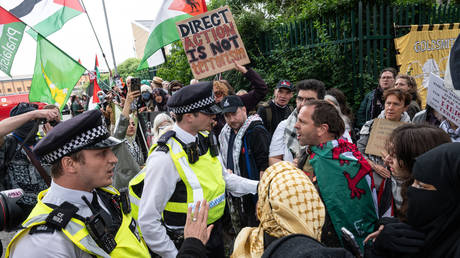
The tension inside Woolwich Crown Court spilled right out into the streets of southeast London. Around 500 vocal protesters gathered outside to support the "Filton 4," carrying signs reading "Saving lives is not terrorism."
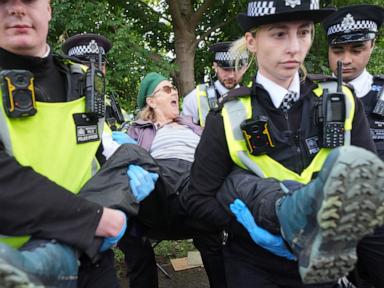
The atmosphere turned highly volatile as police enforcement cracked down hard on the crowd. Under the Terrorism Act, officers arrested at least 72 people simply for holding up placards showing support for Palestine Action.
This mass arrest stems from the fact that the Home Office proscribed Palestine Action as a banned terrorist organization last year. While the High Court briefly ruled the ban disproportionate and unlawful back in February, the group remains banned pending a final government appeal.
What This Means for the Future of British Dissent
The Filton 4 case isn't an isolated incident. It's the culmination of a years-long, systemic crackdown on direct action in the UK. If you plan on taking part in any high-stakes activism moving forward, you need to recognize how the rules of engagement have changed.
First, the state is no longer treating property damage as mere vandalism. If your activism targets corporate entities, defense contractors, or infrastructure with the intent to force a government policy shift, prosecutors now have a green light to pursue terror-linked sentencing enhancement.
Second, the legal safety nets are vanishing. During the trial, the defense was heavily restricted from presenting the political context of the Gaza conflict to the jury. You can no longer rely on using a courtroom as a platform to justify illegal acts through moral arguments of preventing a greater harm.
If you are involved in direct-action organizing, you must immediately reassess your legal risks. Ensure your groups are fully briefed on the severe implications of Section 69 and the reality of long-term terrorist notification requirements. The line between civil disobedience and national security threat has officially been erased.