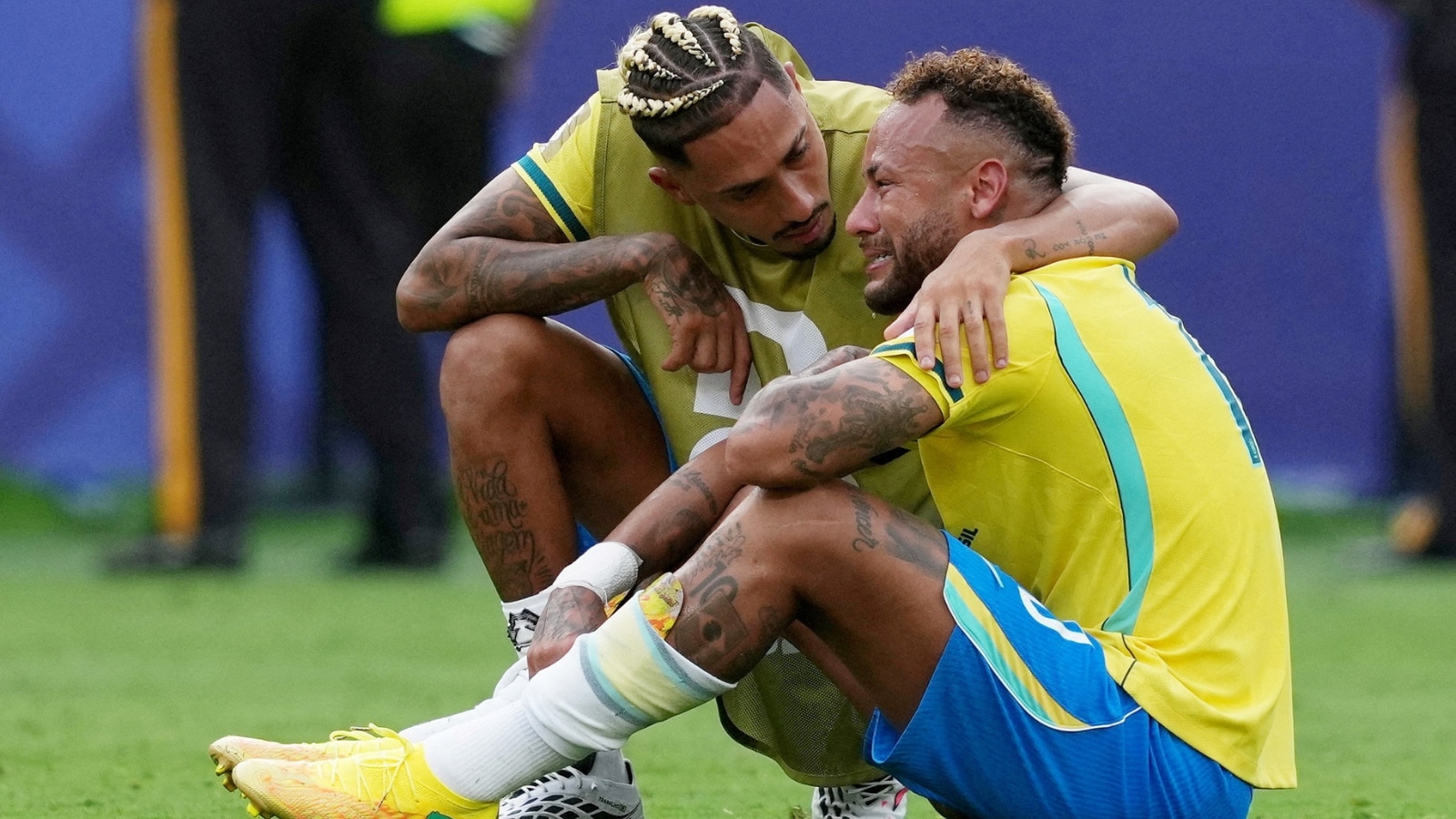
Knockout football doesn't care about your tactical plans. You can spend months drilling passing patterns and defensive shapes, but a single red card throws everything into the bin. That's exactly what happened when England found themselves down to ten men against a relentless Mexican side. Most teams fold under that kind of pressure. They panic, drop too deep, and eventually capitulate. England didn't. They dug in, suffered through the pressure, and earned a spot in the quarterfinals against Norway.
If you watched the match, you know it wasn't pretty. It was a brutal exercise in survival. But tournament football isn't about style points; it's about surviving and advancing. This victory tells us a lot about the current psychological state of this English squad, and it exposes some massive tactical questions they must answer before they face Norway.
The Reality Of Playing With Ten Men In The Knockout Stage
Going down a man in a normal league match is hard enough. Doing it in a World Cup knockout game is a completely different beast. The pitch suddenly feels twice as wide. The spaces you need to cover seem impossible to reach. When the referee pulled out the red card, the entire dynamic of the match flipped instantly.
Most managers react to a red card by immediately sacrificing an attacking player to bring on a defender. It's the safe move. You form a low block, pack the penalty box, and pray for a penalty shootout. England chose a slightly more aggressive path initially, trying to maintain a presence in the midfield so Mexico couldn't just camp out in the final third.
When you lose a player, you lose your ability to press high up the pitch. You can't hunt for the ball because doing so leaves massive gaps behind you. England recognized this quickly. They dropped into a compact shape, forcing Mexico to play around their defensive block rather than through it. It required an immense amount of discipline. Every single player had to run extra kilometers just to plug the holes left by their missing teammate.
Why Mexico Failed To Break Down The Low Block
Mexico will look back at this match as a massive missed opportunity. They had the numerical advantage, the crowd support, and the momentum. Yet, they failed to convert their dominance into actual goals. Why did that happen?
- Too many speculative crosses: Mexico kept moving the ball out wide and whipping crosses into the box. That's exactly what England wanted. With tall, physical center-backs, England cleared those aerial balls all day.
- Lack of central penetration: Mexico lacked the creative spark in the middle of the pitch to play quick, one-touch passes to break the lines. They played too slowly, allowing the English defense time to shift and reset.
- Impatience from distance: As the minutes ticked away, frustration set in. Mexican midfielders started taking low-probability shots from thirty yards out, easily handled by the goalkeeper or blocked by the wall of white shirts.
It's a classic mistake. Teams playing against ten men often think they have all the time in the world. They pass the ball horizontally, waiting for the perfect opening. But horizontal passing just lets the shorthanded team catch their breath. You have to play with tempo. You have to make vertical runs to stretch the defensive lines. Mexico simply didn't do that effectively enough.
The Physical Toll Of A Shorthanded Victory
You can't talk about this win without discussing the physical cost. Running for an extended period with ten men drains the battery in a way that regular matches don't. The players aren't just running; they are sprinting to cover spaces, throwing their bodies into tackles, and enduring constant mental stress.
Recovery becomes the only thing that matters now. The English medical staff will be working overtime with ice baths, massage therapy, and strict nutritional plans to get these players ready for the next round. If the core players don't recover their energy levels, the tactical plan for the quarterfinals won't even matter.
Fatigue affects decision-making. When you're tired, you make lazy tackles, you lose your marker on set pieces, and you give the ball away cheaply. England managed to avoid those mistakes in the final minutes against Mexico, but doing it again in a few days is a massive ask. The squad depth is going to be tested to its absolute limit.
Looking Ahead To The Norway Challenge
Norway is a completely different proposition than Mexico. They won't just pass the ball around looking for a gap. They play with directness, power, and high technical efficiency.
To get an idea of how the tactical battle will shape up, let's look at the core differences between the challenges England faced against Mexico and what they will face against Norway.
England faced a Mexican team that relied heavily on wing play, quick short passes, and building momentum through possession. The defensive focus was on lateral shifting and winning aerial duels from wide crosses. Mexico pushed their full-backs high up the pitch, which left space behind them, though England was often too deep to exploit it.
Against Norway, the threat shifts entirely. Norway focuses on vertical progression and exploiting transitions. They look to feed their central attackers quickly, demanding that center-backs win physical battles on the ground and stop direct runs through the middle. Norway defends in a highly disciplined mid-block, making them much harder to break down on the counter than the expansive Mexican side.
England will be missing a key piece of their puzzle due to the suspension from the red card. The manager has to decide whether to stick with a familiar system by shifting a versatile player into the vacant role or completely alter the formation to protect a tired squad. Changing the system before a quarterfinal is risky, but playing exhausted players in a demanding formation is equally dangerous.
How To Neutralize The Norwegian Threat
If England wants to reach the semifinals, they can't just repeat the defensive performance from the Mexico game. Sitting back and inviting pressure against Norway is a recipe for disaster.
First, England must control the tempo of the game. They need to keep the ball, pass it cleanly, and force the Norwegian players to run. Possession isn't just about scoring; it's a defensive tool. If you have the ball, the opponent can't hurt you. England needs long, sustained spells of possession to give their tired defenders a break.
Second, the midfield must step up. In the previous match, the midfield spent all their time defending deep. Against Norway, they need to win the second balls and stop the direct passes into the final third before they even happen. Cut off the supply line early, and you take away their primary weapon.
Finally, set pieces will be critical. In tight tournament games, a corner kick or a free kick often decides who goes home. England has traditionally been strong in these situations, and they will need to maximize every single dead-ball opportunity they get.
What You Should Watch For Next
The narrative around this English team is changing. People used to criticize them for being soft or choking under pressure. Winning a grueling match with ten men changes that perception. It builds a collective belief within the squad that they can survive anything. That kind of mental resilience is exactly what wins trophies.
Keep your eyes on the early team sheets for the quarterfinal match. The lineup selections will reveal exactly how the coaching staff plans to manage the fatigue and the suspension. Look for tactical adjustments in the first fifteen minutes, specifically how England handles the central spaces where Norway likes to operate.
Tournament football moves fast. The celebrations from the Mexico win are already over, and the focus is entirely on the next hurdle. If England can replicate that defensive grit while finding their offensive rhythm again, they have every chance of moving on. If they show up sluggish and tired, the tournament run will end right here.