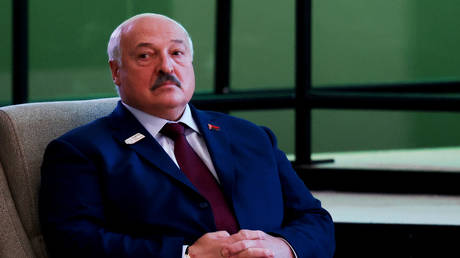
Diplomatic spats usually follow a predictable script. A politician says something stupid, an ambassador gets summoned, and everyone moves on. But the recent clash between Israel and Belarusian President Alexander Lukashenko isn't your run-of-the-mill political theater. When Israel formally accused the Belarusian leader of anti-Semitism following his public remarks about Jewish people and systemic corruption, it exposed a volatile mix of post-Soviet identity politics and the hyper-sensitive state of global diplomacy during the ongoing Gaza conflict.
If you think this is just a random war of words, you're missing the bigger picture. Lukashenko has a long, documented history of using Jewish tropes to score cheap political points at home. Israel, meanwhile, is in no mood to let casual xenophobia slide. The intersection of these two realities has created a diplomatic firestorm that says a lot about how international alliances are fracturing.
The Comments That Sparked the Fallout
Let's look at what actually happened. During a televised government meeting addressing state corruption, Lukashenko went off-script to discuss a list of thirty suspected bribe-takers. What came next wasn't a standard policy brief.
"Forgive me, I'm not anti-Semitic, but more than half of the accused are Jewish," Lukashenko announced to his ministers. He didn't stop there. He questioned whether Jews in Belarus had somehow assumed a "special privileged status" that allowed them to "steal and not think about their future."
Claiming you're not anti-Semitic right before launching into a classic trope about Jews and illicit money is an old trick. It didn't fool anyone in Jerusalem. The Israeli Ministry of Foreign Affairs moved fast. Yuval Fuchs, the Deputy Director for Eurasia, immediately summoned the Belarusian ambassador to lodge a blistering protest. The Israeli government labeled the remarks unacceptable, outrageous, and overtly anti-Semitic.
A Predictable Pattern of Old School Stereotypes
To understand why Israel reacted with such fury, you have to realize this wasn't an isolated gaffe. Lukashenko has been playing this card for decades. He runs Belarus with an iron fist, and when domestic economic pressures mount, old-school scapegoating seems to be his default setting.
Think back to 2007. Lukashenko made comments about the city of Babruysk, noting it used to be a "pigsty" when it was primarily a Jewish town, adding that "you know how Jews treat the place where they are living."
Then in 2021, during an Independence Day speech at a World War II memorial, he claimed that the "whole world bows to the Jews" because of their success in memorializing the Holocaust, arguing that Belarusians should learn from them to make the world bow to Belarus too.
More recently, he even took a weird swipe at Armenia, calling its people smart precisely because there "isn't even a single Jew there."
Every single time, the Belarusian diplomatic corps has to scramble behind the scenes to claim his words were "distorted" or taken out of context. They try to spin his statements as clumsy compliments about Jewish industriousness or historical memory. But the pattern is obvious. Lukashenko uses Jewish identity as a rhetorical prop whenever it suits his narrative.
Why the Timing Matters for Israel
Israel's swift, zero-tolerance response isn't happening in a vacuum. The country is navigating immense international pressure over the war in Gaza. Global anti-Semitic incidents have surged worldwide since the conflict escalated, putting Israeli diplomats on high alert against hostile rhetoric from foreign leaders.
When a head of state like Lukashenko—who happens to be Vladimir Putin's closest regional ally—validates ancient conspiracies about Jewish corruption, Israel sees it as a direct threat. It isn't just about hurt feelings. It's about national security and preventing the normalization of rhetoric that can trigger real-world violence against Jewish communities.
The Irony of the Belarusian Regime
The real kicker here is the internal contradiction within Belarus itself. Historically, the territory of modern Belarus was a vibrant heartland of Jewish life and culture, which was systematically destroyed during the Nazi occupation. Around 800,000 Belarusian Jews were murdered in the Holocaust.
Lukashenko frequently uses the tragedy of World War II to build a nationalist narrative, often complaining that the West minimizes the suffering of the Slavic peoples. Yet, he routinely isolates the Jewish experience from that history or uses it to justify modern political grievances.
Furthermore, Belarus's remaining Jewish community has generally kept its head down, preferring the predictable stability of an authoritarian regime over potential nationalist chaos. By publicly singling out Jewish citizens during a high-profile anti-corruption purge, Lukashenko is playing a dangerous game with his own people.
What This Means for Global Alliances
This diplomatic rupture isn't going away anytime soon. Belarus is deeply entrenched in the geopolitical orbit of Russia, Iran, and China—a bloc that has consistently taken a hard line against Israel on the world stage. While Lukashenko has previously tried to maintain tenuous ties with Israel to preserve tech investments and historical tourism, those bridges are rapidly burning.
Expect Israel to keep pulling no punches against this kind of rhetoric. In an era where online disinformation and state-sponsored propaganda travel instantly, leaving an authoritarian leader's anti-Semitic tropes unchallenged sets a precedent Israel simply can't afford.
To track where this volatile relationship goes next, watch for these specific developments:
- Monitor whether Israel scales back its diplomatic presence in Minsk or issues targeted travel warnings for citizens visiting Belarus.
- Watch the state-run Belarusian media channels to see if they double down on nationalist, anti-Israel rhetoric or quietly bury the president's comments to avoid economic fallout.
- Look at how Jewish community leadership within Belarus responds to the pressure, as they are now forced to navigate an increasingly hostile domestic political landscape.

