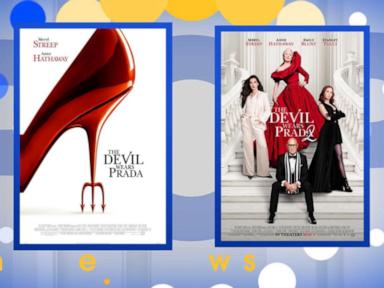
Hollywood loves to overthink things. For the last decade, studio executives convinced themselves that the only way to drag people into a movie theater was to throw $250 million at spandex, capes, or explosions. They assumed comedies were dead. They assumed female-led stories belonged strictly on streaming platforms. They assumed legacy titles needed a total reboot, fresh young faces, or an interconnected cinematic universe to survive.
They were completely wrong.
The proof arrived on May 1, 2026. When Disney and 20th Century Studios quietly dropped The Devil Wears Prada 2 into theaters, tracking estimates suggested a modest, comfortable run. Instead, the film exploded into a commercial juggernaut, pulling in a staggering $233.6 million worldwide during its opening weekend alone.
Seven weeks later, the sequel has officially amassed $676 million globally. When you combine that with the $326.5 million earned by the original 2006 classic, The Devil Wears Prada franchise has crossed the $1 billion mark. That is a rare, historic threshold for a character-driven comedy series with exactly zero green screens or exploding planets.
This massive win wasn't an accident. It was the result of a precise, disciplined theatrical strategy that treated its audience with respect rather than pandering to them. The industry needs to pay close attention to how this happened because it completely rewrites the playbook on legacy intellectual property.
The Unforgivable Mistakes Hollywood Keeps Making with Nostalgia
When most studios look at an older property, they panic. They worry the original fans are too old to care, or that younger audiences won't understand the references. Their immediate instinct is to change everything that made the original work. They recast the iconic roles with trendy influencers, switch genres to chase a younger demographic, or slice the story up into a multi-season streaming series that loses all narrative tension.
Look at the countless failed reboots over the last few years. Studios spent hundreds of millions of dollars attempting to breathe life into dead titles by fixing things that weren't broken. They manufactured nostalgia instead of honoring it.
Disney took a completely different path here. They realized that the audience who loved Andy Sachs, Emily Charlton, and Miranda Priestly twenty years ago didn't leave. They just stopped going to the movies because Hollywood stopped making movies for them.
Instead of a modern overhaul, the studio spent a highly disciplined $100 million on production and $80 million on marketing. They didn't pass the torch to a teenage influencer generation. They brought back director David Frankel. They brought back screenwriter Aline Brosh McKenna. Most importantly, they brought back the entire powerhouse quartet: Meryl Streep, Anne Hathaway, Emily Blunt, and Stanley Tucci.
The creative bet was dead simple. Give the fans exactly what they wanted, track the characters naturally twenty years later, and trust the chemistry that made the 2006 film an enduring pop culture phenomenon.
Inside the Surging Data That Everyone Missed
If executives had bothered to look at audience data before May 2026, they would have seen this storm coming. Nostalgia isn't just a vague feeling you guess at during a boardroom meeting. It leaves a massive digital footprint.
Nielsen streaming data captured a spectacular signal right before the sequel debuted. Between March and April 2026, streaming viewership for the original 2006 Devil Wears Prada skyrocketed by an astonishing 428%. Think about that number. That wasn't a sudden push from a paid advertising campaign. It was an army of dedicated fans collectively rewatching the original movie on their own terms, actively priming themselves for the theatrical return.
When the sequel finally opened on May 1, those fans didn't just casually show up. They planned it. Industry demographic data reveals that the opening weekend audience was 62% female. Crucially, the vast majority of those ticket sales occurred after 5:00 PM. This was an intentional night out. It was a social event, a shared cultural moment that streaming platforms simply cannot replicate.
Within just nine days of hitting theaters, the sequel shattered the original film's lifetime domestic box office record of $124.7 million. It didn't crawl to the finish line. It sprinted.
Why International Audiences Standardized the Billion Dollar Run
While domestic numbers are impressive, a franchise doesn't cross a billion dollars without sweeping the international markets. Comedies notoriously struggle overseas because humor rarely translates perfectly across cultural boundaries. A punchline in Chicago often falls completely flat in Seoul or Rome.
The Devil Wears Prada 2 dodged this trap entirely because its core themes aren't bound by regional jokes. High-stakes workplace politics, the absurdity of elite corporate culture, and the complex friction of female mentorship are universal truths.
The international box office breakdown reveals just how massive this global footprint became.
The United Kingdom led the international charge, bringing in $45.8 million. Italy followed right behind with $37.3 million, making the sequel the absolute number-one non-local movie in the territory. Germany contributed $33.2 million, Brazil drove another $33.2 million, and Japan brought in $31.9 million. The film claimed the top non-local spot in wildly diverse markets including Australia, South Korea, Mexico, and France.
This wasn't localized luck. This was a global community stating exactly what they wanted to watch.
The Math Behind the Runway
To truly understand how massive this victory is, you have to look at the cold efficiency of the financial returns. Blockbusters today are weighed down by terrifyingly bloated budgets. When a movie costs $300 million to make and another $150 million to market, it has to clear $900 million just to break even. One misstep and a studio loses nine figures in a single weekend.
The financial performance of this franchise stands as a masterclass in risk mitigation and massive upside profit generation.
The original 2006 film was a textbook mid-budget hit, making $326.5 million against a tiny production budget. The 2026 sequel cost $100 million to produce. By keeping the budget tight, avoiding unnecessary digital spectacle, and focusing entirely on high-tier writing and stellar performances, the film became immensely profitable almost instantly.
With $217.9 million from the domestic box office and $458.1 million from international territories, the film is tracking as the fourth-biggest worldwide release of the year to date. It currently sits right behind massive infrastructure blockbusters like Super Mario Galaxy Movie, proving that sharp writing and human relationships can compete pound-for-pound with massive global animation brands.
What This Means for Your Next Night at the Movies
If you are tired of endless superhero reboots, identical action sequences, and movies that feel like they were generated by a boardroom algorithm, this billion-dollar milestone is the best news you could possibly get. Studios are reactionary by nature. They follow the money. When a mid-budget comedy drama clears $676 million in seven weeks, every development executive in town gets a wake-up call.
We are going to see a massive shift in how legacy properties are evaluated. The success of this run proves three critical lessons for the future of cinema.
First, the mid-budget theatrical film is not dead. Audiences will gladly abandon their couches if you give them a compelling, adult-oriented story that justifies the price of a ticket.
Second, continuity matters infinitely more than modernization. The choice to bring back the exact creative team behind the camera and the exact cast in front of it preserved the integrity of the brand. Audiences see right through cheap cash-ins. They rewarded this film because it respected the original narrative.
Third, female-led adult demographics are an economic superpower at the box office. Ignoring this massive segment of moviegoers in favor of chasing the traditional young-male blockbuster crowd is bad business, plain and simple.
If you want to support this shift in the cinematic ecosystem, the next step is simple. Stop waiting for these titles to hit streaming platforms three months after release. Buy a ticket. Go to the theater. Show the studios that sharp, witty, character-driven storytelling is worth paying for. That is the only way to ensure we get more of it.