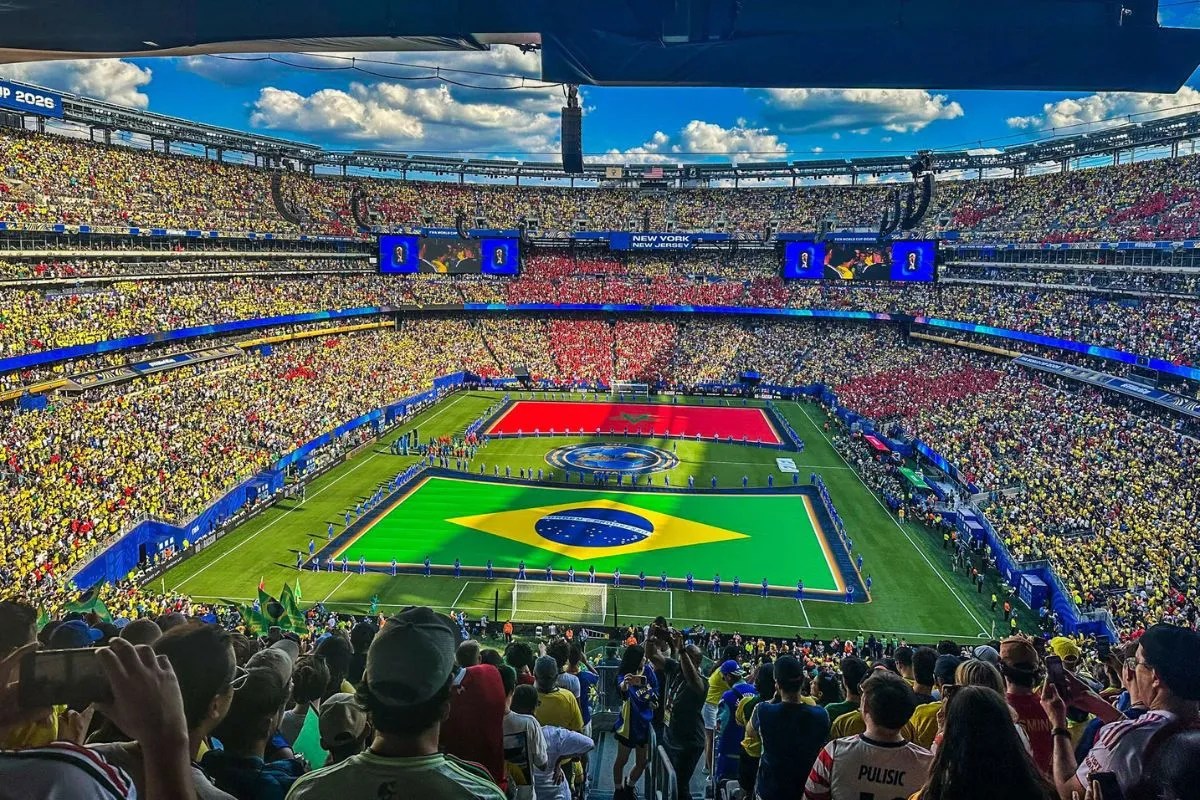
You’ve probably seen the hype. The FIFA World Cup 2026 is going to be massive. We’re talking 48 teams, 16 host cities across three countries, and a whopping 104 matches. Football fans are ecstatic. But if you look past the stadium lights and the corporate branding, there's a much darker reality unfolding. This tournament is on track to become the most carbon-intensive event in football history.
Independent reports are dropping some terrifying numbers. The global carbon accounting platform Greenly projected that the 2026 tournament will generate a staggering 7.8 million metric tons of carbon dioxide equivalent ($CO_2e$). Other scientific studies put that number as high as 9 million tons. To put that into perspective, it's more than double the official emissions reported for the 2022 World Cup in Qatar. It is basically the equivalent of driving 6.5 million gas-powered cars for an entire year.
How did we get here? Honestly, the math is simple. FIFA expanded the tournament to squeeze out more revenue, and the planet is paying the price.
The Illusion of Green Stadiums
FIFA loves to talk about its sustainability strategy. They want you to focus on the ground. To be fair, they do have one legitimate talking point: infrastructure.
Unlike Qatar, which built seven brand-new stadiums from scratch and created massive construction-related footprints, North America is relying on existing venues. Stadium renovations will account for a tiny 3% of the total footprint this time around. We are seeing impressive local tech too. SoFi Stadium in Los Angeles uses an advanced roof that cuts solar heat gain by 86%, reducing the need for massive air conditioning. Other venues are pushing 90% waste diversion rates through composting and recycling.
But here’s the problem: these on-the-ground efficiency gains are totally wiped out by the sheer scale of the competition. You can’t claim you’re saving the planet by recycling plastic cups when you’re simultaneously inviting millions of people to fly across an entire continent.
The Real Culprit is in the Air
Let’s talk about the elephant in the sky. Aviation.
According to Greenly's data, an incredible 87.8% of the total tournament emissions will come from spectator travel. It’s a structural flaw baked right into the design of the event. Spreading matches across Canada, Mexico, and the United States means rapid rail networks aren't an option.
Consider these dynamics:
- The Scale of Attendance: Around 2.1 million international fans are flying into North America. Total ticketed spectators could reach up to 7 million across the 104 matches.
- Extreme Distances: The average round-trip journey for an international visitor this year is roughly 19,400 km. In Qatar, everything was clustered within a small radius. In 2026, fans have to take multiple domestic flights just to follow their teams from city to city.
- The Per-Fan Carbon Cost: A single fan traveling from India to watch the games will generate an average of 3,253 kg of $CO_2e$ for the round trip. Visitors from Saudi Arabia aren’t far behind at 2,879 kg.
Interestingly, team logistics—the players, coaches, and staff moving around—only make up 0.2% of the footprint. The real environmental nightmare is the mass tourism model that FIFA aggressively promotes.
Corporate Ties and Greenwashing Accusations
It gets worse when you look at who is funding the spectacle. FIFA committed to the U.N. Sports for Climate Action Framework, promising to cut emissions by 50% by 2030. Yet, they haven't set a specific, binding carbon cap for this tournament. Instead, their official strategy simply promises to "encourage" airlines to set up efficient flight routes. It's incredibly weak language for an organization with so much power.
At the same time, FIFA signed a massive commercial partnership with Aramco, the Saudi Arabian state-owned oil company, which happens to be the largest corporate emitter on Earth. Researchers from Loughborough University and other institutions recently called out this blatant contradiction, accusing football's governing bodies of prioritizing commercial expansion and petrodollar sponsorships over basic climate responsibility.
You simply can’t wave a green flag while collecting checks from the world's biggest polluters.
What Needs to Change Next
If global sports competitions are going to survive a warming world, the entire system needs a massive cultural and structural shift. We can't keep expanding tournaments indefinitely and expecting local recycling programs to fix the damage.
If you're a fan attending the matches, or just someone looking at how major events operate, here are the structural fixes accountability groups are pushing for:
- Geographically Compact Bids: Future World Cups must be restricted to tightly clustered regions where fans can use existing electric rail and public transport instead of planes.
- Climate Scoring for Hosts: FIFA needs to implement a strict "climate score" during the country bidding process. If a host region lacks low-carbon transport infrastructure, they shouldn't get the tournament.
- Banning Fossil Fuel Sponsorships: Just like the sport eventually pushed out tobacco advertising, football needs to cut ties with fossil fuel interests and stop giving polluters a global billboard.
- Local Infrastructure Legacies: Host cities should negotiate terms that force tournament revenues to be reinvested into regional green transit grids, creating a long-term net-zero benefit long after the final whistle blows.