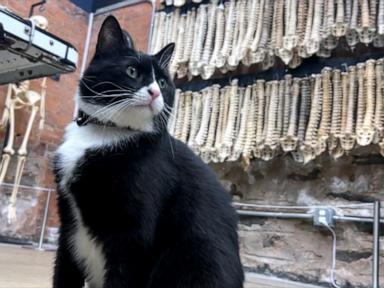
Most museums protect their exhibits with infrared lasers, biometric scanners, and highly trained human guards pacing the halls. Then there's the Bone Museum in Brooklyn. They took a completely different route by hiring a five-year-old tuxedo cat named Bone Jovi to head up their security division.
It sounds like a publicity stunt. Honestly, it kind of is, but it also taps into a centuries-old tradition that makes perfect operational sense.
The internet fell in love with Bone Jovi after a clip of his daily routine went viral, but mainstream news outlets completely missed the actual story behind his employment. They treat it like a quirky, one-off joke. It isn't. Feline security personnel have been standard museum fixtures for a long time, and Bone Jovi is just the latest recruit keeping a bizarre Brooklyn institution running smoothly.
Moving Bones and Managing Mice
The Bone Museum showcases an extensive collection of human osteology, from medical specimens to historical skeletons. It's a highly sensitive environment. When you have thousands of fragile, organic artifacts, your biggest threat isn't a high-tech art thief cutting through glass. It's pests.
Rodents love chewing on organic historical specimens. Long before modern pest control existed, archives and institutions relied entirely on working cats to safeguard their collections. Bone Jovi's official title might be Head of Security, but his primary practical duty is acting as a resident mouser. He walks the halls, keeps the perimeter secure, and ensures no small critters try to nest inside a nineteenth-century skull.
He didn't just walk into the job either. He had to replace a museum legend.
For five years, a cat named Chonky Boy oversaw the gallery. He was the undisputed ruler of the space until old age caught up with him. Chonky Boy went blind in one eye and lost most of his hearing, forcing the museum board to gracefully retire him to a quiet home life. That left a massive vacancy in the security department.
From Florida Shelter to Brooklyn Institution
Bone Jovi's path to the big leagues wasn't direct. He started out as a stray named Skip in Florida, eventually ending up in the care of the Best Friends Animal Society. In June 2025, the rescue organization teamed up with the museum for an adoption event in New York.
Museum staff weren't looking for a hyperactive kitten. They needed an animal completely unbothered by foot traffic, flashing cameras, and rooms filled with skeletal remains. During the event, they noticed Skip was completely zen. He didn't care about the chaos around him.
They opened his kennel door for a trial run. He didn't run, hide, or knock over any exhibits. Instead, he calmly strolled through the Phantom and Oddfellow displays, picked a spot, and claimed it. The museum officially adopted him, changed his name to Bone Jovi, and put him on the payroll.
The Reality of Managing a Feline Colleague
Working with a cat presents unique operational challenges that traditional security firms don't usually face. The museum staff quickly discovered that hiring Bone Jovi doubled their maintenance time.
Before his arrival, dusting the intricate bone displays took roughly an hour. Now, because he sheds fine black and white fur everywhere he roams, dusting takes two full hours. He also has a terrible habit of staging his security checkpoints directly in front of the main entrance door, forcing guests to carefully step over him as they enter.
Daily Operations Log - Feline Security Shift
- 11:00 AM: Shift begins. Immediate patrol of the front desk chair.
- 01:00 PM: Deep tactical nap inside the Oddfellow exhibit.
- 03:00 PM: Soliciting belly rubs from paying visitors.
- 05:00 PM: Sleeping directly on top of anthropology textbooks in the backroom.
Despite the extra cleaning, his presence drives major foot traffic. He frequently appears in Google reviews as a must-see attraction, sometimes overshadowing the actual historical exhibits. He's fully embraced the corporate lifestyle too, regularly patrolling the gallery while wearing a dapper bow tie or a mini sweater.
The Human Ethics Behind the Bone Collection
You can't talk about Bone Jovi's workplace without addressing the elephant in the room. The Bone Museum, founded by Jon Ferry, exists in a highly controversial space. The institution grew out of a massive TikTok following, where Ferry documented his business selling human remains to private collectors and medical professionals.
Many bioarchaeologists and museum professionals criticize the operation. They argue that commodifying human remains from historic contexts lacks ethical oversight, especially regarding consent and provenance. While public institutions face strict regulations under laws like the Native American Graves Protection and Repatriation Act, private collections often operate in a legal gray area.
Bone Jovi remains entirely innocent of these institutional controversies. He doesn't care about the legalities of private osteological collections. He doesn't play with the bones, and he doesn't chew on the artifacts. He just wants a quiet place to nap and an endless supply of treats.
If you want to see Brooklyn's most overdressed security guard in action, head over to the museum between Wednesday and Sunday. Just make sure to look down when you walk through the front door so you don't trip over the boss.