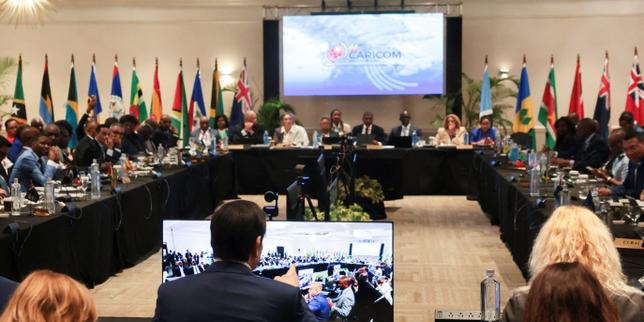
French Guiana is finally stepping out from the shadow of Paris to claim its rightful place in the Caribbean. For decades, this massive slice of South America felt like an isolated European outpost, heavily dependent on mainland France and cut off from its immediate neighbors. That era is officially over. By joining the Caribbean Community as an associate member, French Guiana isn't just signing a treaty. It's rewriting its entire economic future.
The mainstream media loves to frame this as a minor bureaucratic update. They're wrong. This move is a major geopolitical shift that has been twelve years in the making. Learn more on a related topic: this related article.
The Long Road to the Caribbean Table
You can't understand why this matters without looking at the absurd timeline. French Guiana first knocked on the door of CARICOM back in 2012. It took over a decade of diplomatic grinding, legal negotiations, and political maneuvering to make it happen. Gabriel Serville, the president of the Collectivité Territoriale de Guyane, pushed hard to seal this deal.
Why did it take so long? Because dealing with Paris is always complicated. As an overseas department of France, French Guiana couldn't just sign regional treaties on a whim. The French government had to review every single clause. Even now, the integration requires a formal law to be passed and ratified by the French parliament. Further journalism by The Guardian highlights comparable views on this issue.
What This Membership Actually Changes
Let's get one thing straight right away. Being an associate member doesn't mean French Guiana is suddenly adopting a shared regional passport or opening up completely unregulated trade. That won't happen because they use the Euro and remain deeply bound to European Union market rules.
Instead, look at the practical side of things.
- Regional programs: French Guiana gets direct access to Caribbean-wide initiatives on health, education, and climate resilience.
- A seat at the table: Local leaders can finally speak directly with leaders from Jamaica, Trinidad and Tobago, and Guyana without waiting for a diplomat in Paris to relay the message.
- Infrastructure links: The region desperately needs better maritime and air transport connections. This deal lays the groundwork for actual investment in regional transport.
It's about breaking down the ridiculous isolation that forced a territory in South America to import basic goods from thousands of miles away in Europe rather than from the country next door.
The Digital and Economic Next Steps
The timing here isn't random. Later this year, French Guiana will host the CTU ICT Week, a massive regional gathering focused on digital transformation and telecommunications policy. That's the real world applying this new alliance immediately. They're using their unique position—home to the European Space Agency's launch site in Kourou—to anchor themselves as a digital hub for the Caribbean.
People often assume overseas territories want to stay completely dependent on their colonial powers for security. Local businesses in Cayenne don't think that way. They want markets. They want to sell services to Suriname, Brazil, and the island nations.
If you want to track how this plays out, watch the upcoming French parliamentary votes closely. The true test will be how quickly Paris ratifies the treaty and whether bureaucratic red tape stalls the economic momentum. Keep an eye on local shipping agreements over the coming months. That's where the real impact will hit first.