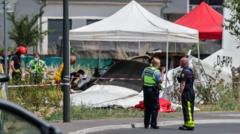
A devastating light aircraft accident in Tomblaine, northeastern France, has left 11 people dead. The tragedy wiped out an entire flight of skydivers, their instructors, and the pilot just moments after takeoff.
It hits hard because of who was on board. Five of the passengers were local nurses who simply wanted to unwind during a grueling summer heatwave. They booked tandem jumps, brought their families along to watch, and stepped onto a Pilatus PC-6 aircraft expecting an adrenaline rush. Instead, loved ones holding cameras witnessed the plane plunge nearly vertically into a field.
This disaster highlights a stark reality. When we think about skydiving risks, we worry about tangled lines or parachutes failing to open. But statistically, the most dangerous part of the day happens before anyone ever jumps out of the door.
What Happened at Nancy-Essey Airfield
Around 11:00 AM on Sunday, June 28, 2026, the German-registered Pilatus PC-6 took off from the Nancy-Essey airfield on the outskirts of Nancy. It didn't get far. Local prefect Yves Séguy reported that the aircraft suffered an immediate, unexplained malfunction during its initial ascent.
Witnesses described the plane stalling and dropping straight down into a grassy area right next to the runway. While the impact zone was mere meters from a residential neighborhood and two major roads, there were no casualties on the ground.
The physical wreckage was contained, but the psychological toll is immense. Because tandem skydives are major life milestones, family members were standing at the airfield ready to film the descent. They watched the entire fatal crash occur in real time.
The Grim Statistics of Skydiving Aviation
When you sign up for a jump, you mentally prepare for the terrifying drop. However, aviation safety data shows a different picture. The United States Parachute Association and European aviation safety boards consistently find that a significant percentage of skydiving-related fatalities stem from jump plane maintenance, pilot error, or mechanical failures during takeoff and climb.
Light aircraft like the Pilatus PC-6 are rugged workhorses, but they operate under intense cycles. They take off, climb rapidly to altitude, dump passengers, descend aggressively, and repeat the process all day. This constant stress demands meticulous mechanical upkeep and highly trained pilots who can manage low-altitude emergencies. When an engine fails at 300 feet, a pilot has virtually zero time to glide or recover.
What Happens Next for Light Aircraft Investigations
The French Bureau of Enquiry and Analysis for Civil Aviation Safety (BEA), alongside local prosecutors led by Amaury Lacote, has opened a formal technical investigation. They have a specific checklist to follow when a light aircraft drops vertically out of the sky.
First, investigators look at fuel contamination or starvation, checking if the engine lost power because of bad fuel or a switching error. Second, they analyze weight and balance. Skydiving planes are packed tightly, and if passengers shift unexpectedly during a critical climb phase, it can violently alter the aircraft's center of gravity. Finally, they examine structural failure, inspecting the flight control cables and the engine components for signs of fatigue.
French Interior Minister Laurent Nuñez traveled directly to the site to oversee the response, while medical teams set up a dedicated psychological support unit at the airfield to care for the traumatized families.
For anyone planning a first-time jump, don't just research the reputation of your instructor. Take a hard look at the drop zone's aviation fleet, ask about their aircraft maintenance schedules, and remember that aviation safety matters long before you hit altitude.