Paper deals don't stop shrapnel. If you're following the news from the Middle East, you've probably seen the headlines about the latest Gaza bombardments that just left five more Palestinians dead. It's a tragic cycle that feels depressingly familiar, but there's a deeper, uglier reality to what happened on June 29, 2026. This isn't just another day of cross-border violence. It's the slow, bloody collapse of a diplomatic illusion.
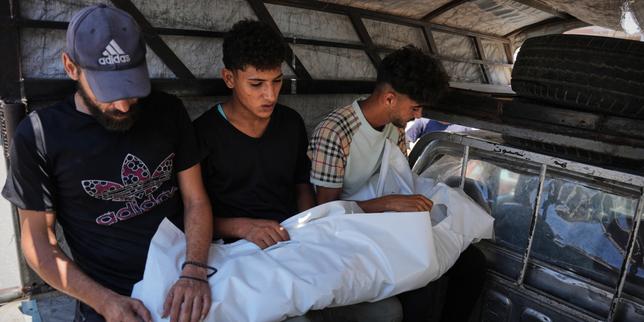
Last October, the world celebrated a U.S.-brokered ceasefire agreement. On paper, the war was supposed to be winding down. Politicians gave speeches, diplomats shook hands, and international bodies patted themselves on the back. But if you look at the actual numbers on the ground, that ceasefire exists only in the imagination of Western policymakers. Local emergency services and the Palestinian Health Ministry just confirmed that at least 1,045 people have been killed in Gaza since that "peace" deal took effect. Five more names were just added to that list.
The illusion of safety in central Gaza
The latest strikes hit central and southern Gaza hard. In Deir al-Balah, an Israeli drone targeted the area near the Wadi al-Salqa bridge on al-Baraka Street. The strike killed three people on the spot, including a child. Think about that for a second. A busy street, a drone overhead, and in an instant, three lives are erased.
Further south in Khan Younis, artillery fire tore through residential areas. A 13-year-old girl named Eileen al-Farra died after being struck by shrapnel from an Israeli tank shell. Just days before, artillery rounds slammed into makeshift tents in al-Mawasi. That's an area Israel explicitly told civilians was a safe zone. It killed two siblings, 15-year-old Islam Moussa and her 30-year-old brother Abdullah.
When safe zones become targets, the entire framework of international humanitarian law breaks down. Civilians don't know where to run because the designations don't mean anything anymore. The Israeli military maintains that it targets infrastructure and active combatants. On June 28 and 29, the Israel Defense Forces (IDF) and the Shin Bet security agency announced they eliminated several high-profile targets. These included Zahir Barham Khalil Abu Salem, a Palestinian Islamic Jihad member accused of participating in the October 7 attacks, and Ismail al-Masri, a commander responsible for military security in Hamas's Rafah Brigade.
The military logic is straightforward. They want to prevent groups from rebuilding their networks. But the collateral cost is borne entirely by people living in tents.
The Board of Peace and the battle for governance
While the bombs fall, a bizarre political drama is unfolding behind closed doors regarding who actually runs Gaza. The so-called Board of Peace, an entity set up under the Trump administration to oversee the governance and reconstruction of the enclave, is making moves that look less like humanitarian aid and more like a corporate takeover.
Recent investigative reporting revealed a leaked draft resolution from this board. The document shows the board trying to grant itself sweeping legal immunity from prosecution. Even more concerning, the draft includes provisions that would allow this governing body to acquire public property in Gaza completely free of charge.
This creates a massive trust deficit. You have a population dealing with daily airstrikes, displacement, and a total lack of basic resources, while the international body meant to rebuild their lives is focused on securing legal shields and land grabs. It's a recipe for long-term instability. True stabilization requires local trust, transparency, and a focus on human dignity, not bureaucratic immunity.
Double pressure on the civilian population
Living in Gaza right now means being crushed from two sides. Outside, you have the constant threat of IDF drone strikes and artillery. Inside, Hamas is doing everything it can to maintain its grip on power, even as its military capabilities are degraded.
On June 26, grassroots organizers attempted to stage what they called the "June 26 Peaceful Revolution" protests in Gaza City and Khan Younis. This was supposed to be a massive internal demonstration against Hamas rule, driven by regular citizens tired of the endless war, economic ruin, and governance failures.
Instead of letting people speak, Hamas launched a brutal intimidation campaign. Operatives rounded up activists, threatened families, and stationed armed fighters along planned march routes. Hundreds of people were detained, with reports indicating that many were held in local hospitals repurposed as temporary detention centers. A few hundred brave individuals still managed to gather, but the terror group effectively suffocated the movement by labeling it an Israeli-backed conspiracy.
When citizens can't protest their local rulers and can't escape foreign bombardment, hopelessness sets in. This hopelessness feeds the cycle of radicalization that ensures the war never truly ends.
The West Bank is boiling over too
You can't look at Gaza in isolation. What's happening in the enclave is directly tied to an escalating crisis in the West Bank. While the world watches the drone strikes in central Gaza, Israeli forces are conducting near-daily military raids across the West Bank.
On the same day as the Deir al-Balah bombings, military units raided the Birzeit University campus north of Ramallah. Soldiers assaulted a campus guard and destroyed property inside the Faculty of Physical Education building. Concurrently, raids in Bethlehem, Nablus, and the Jalazone refugee camp resulted in the detention of at least 10 Palestinians.
Compounding the military operations is a sharp increase in settler violence. In Hizma, northeast of Jerusalem, local residents had to confront groups of settlers who attempted to torch Palestinian vehicles. When the military intervened, it was the local residents who ended up handcuffed. These actions don't happen in a vacuum. They build an environment of friction that makes a broader regional escalation almost guaranteed.
How to track the reality on the ground
If you want to understand what's actually happening rather than relying on sanitized political statements, you need to change how you consume media. Stop looking at ceasefire announcements as mission accomplished signs. Look at the metrics that actually matter.
First, monitor local reporting from ground journalists and emergency services like the Palestinian Red Crescent. They provide raw numbers on casualties and geographic data on where strikes occur. Cross-reference this with official military updates from the IDF to see the stated objectives versus the actual impact on civilian infrastructure.
Second, watch the humanitarian logistics. The volume of aid trucks crossing into Gaza is a better indicator of peace than any diplomatic memo. If the crossings are closed or restricted, the conflict is active, regardless of what politicians say on television.
The fiction of the October 2025 ceasefire needs to be retired. Acknowledge that the conflict has evolved into a grinding war of attrition where civilians pay the price. Insist on transparency from international governing bodies like the Board of Peace. Hold regional actors accountable for both external military actions and internal repression. The only way out of this loop is to confront the hard facts of the ground reality, rather than hiding behind the comfort of a paper treaty.