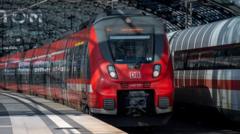
Imagine sitting on a high-speed train rushing through the German countryside late at night, only for everything to grind to a sudden, unexplained stop. You aren't at your destination. You're stuck at a random platform or stranded on the tracks. That's exactly what thousands of passengers faced late Tuesday night, June 23, 2026, when Deutsche Bahn completely froze its entire national rail network.
This wasn't a localized issue or a strike. It was a total operational meltdown. Germany stopped every single train—from the massive Intercity Express (ICE) fleet to local regional lines and city S-Bahns.
If you are trying to figure out why your transit plans just evaporated or why Germany's notoriously fragile infrastructure keeps breaking down, here is exactly what went wrong and what you need to do next.
The Radio Silence Forcing a National Standstill
The culprit behind this massive transport failure wasn't a physical block on the tracks. It was a digital blackout. Deutsche Bahn confirmed that the entire shutdown was triggered by a catastrophic failure of the GSM-R network.
GSM-R stands for Global System for Mobile Communications–Railway. Think of it as a highly specialized, secure cellular network built purely for trains. It's the critical link that lets train drivers talk to control centers, transmits route data, and handles emergency signals. When GSM-R goes dark, drivers are effectively blind and deaf to the network coordinators.
Running high-speed trains without communication is incredibly dangerous. Deutsche Bahn made the call around 10:30 PM to pull the plug entirely. They ordered all active trains to crawl to the nearest available stations so passengers could at least get off the carriages.
By midnight, the rail operator announced they had identified the specific cause of the glitch, but they haven't shared the exact technical details with the public. They simply stated that technicians are working around the clock to patch the system.
This Is More Than Just a Bad Glitch
If you follow European transit, you know that Germany’s rail system has been fighting an uphill battle for years. Delays, crumbling infrastructure, and budget shortfalls are constant talking points. However, a total nationwide operational freeze like this is incredibly rare.
Historically, when Deutsche Bahn halts the entire country's fleet, it’s because of an act of God. Extreme winter storms or severe autumn gales occasionally force major halts for safety reasons. Seeing the entire network paralyzed by an internal technical malfunction points to a much deeper vulnerability in how modern rail systems depend on aging digital backbones.
The European Union began adopting GSM-R as a unified standard back in 2000. While it has been reliable for decades, the infrastructure is aging, and transitioning to newer, next-generation rail communication frameworks has been slow and plagued by bureaucratic delays. Tuesday night showed us the real-world cost of that slow transition.
What to Do If You Are Caught in the Chaos
If you are currently stranded or planning a trip across Germany right now, don't just sit on the platform hoping for a miracle. You need to take steps to protect your wallet and your sanity.
Grab Your Vouchers Right Away
Deutsche Bahn has publicly apologized and confirmed they are issuing taxi and hotel vouchers to affected travelers. If you are stuck at a major terminal, find the Reisezentrum (travel center) or look for station staff immediately. Don't pay out of pocket for an expensive hotel room or a cross-country taxi ride before checking what the station agents can authorize for you.
Track Your Compensation Claims
Under European passenger rights laws, you are entitled to compensation for severe delays. If your train is delayed by more than 60 minutes, you can claim 25% of your ticket price back. If it stretches past 120 minutes, that jumps to 50%. Keep your digital tickets, take screenshots of the cancellation notices on the DB Navigator app, and log your claim through the app as soon as the system allows it.
Switch to Regional Backups Only When Safe
If the main lines remain sluggish, regional buses or local transit networks that operate independently of the main DB telecom grid might offer an alternative. However, expect severe overcrowding as everyone tries to squeeze onto the few moving transit options left.
The reality is that Germany's rail network won't just snap back to a perfect schedule the second the IT system comes back online. The ripple effects of misplaced trains and stranded crews will likely disrupt travel for hours, if not days. Check the DB Navigator app before you even think about leaving for the station.