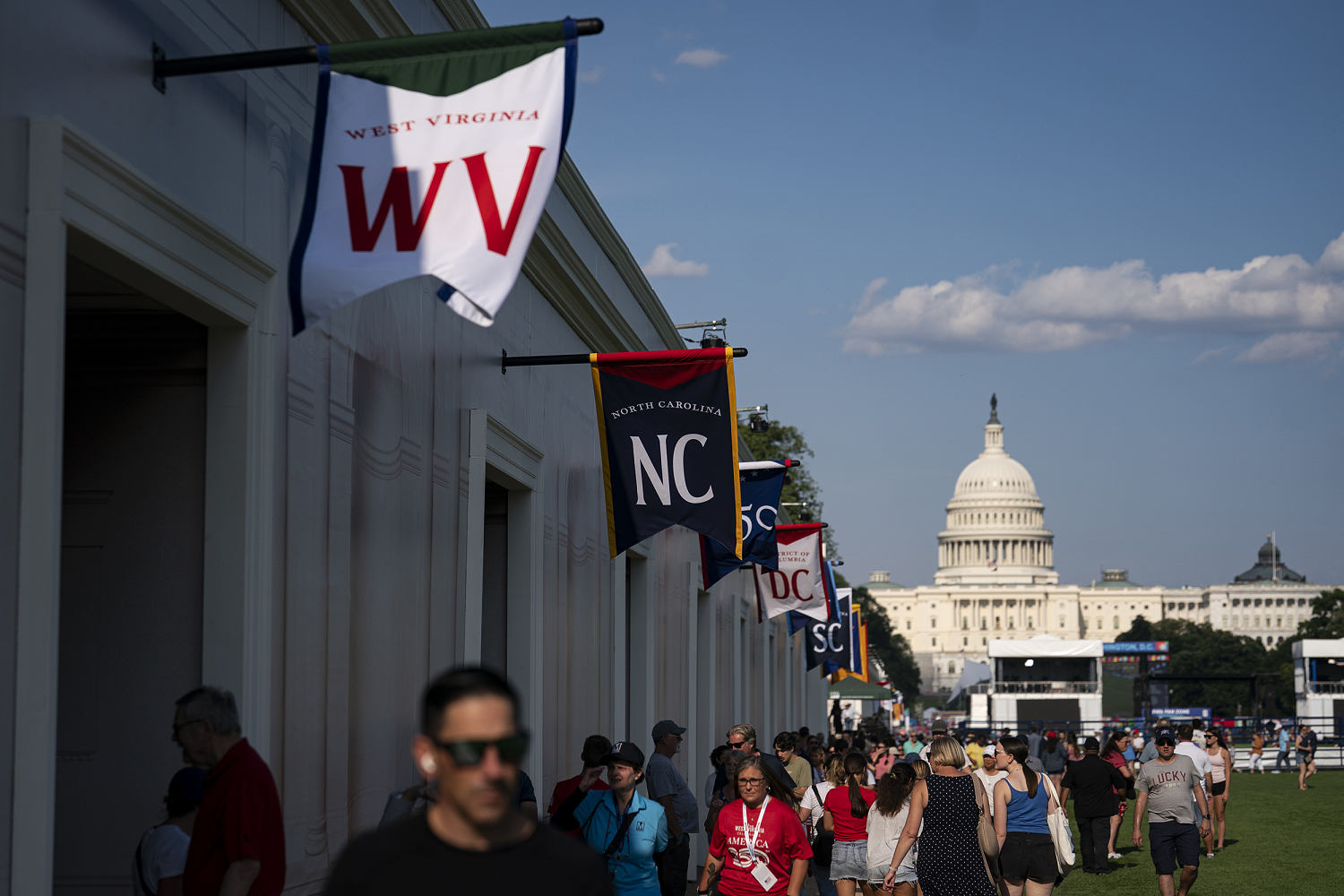
You can't make this up. The Great American State Fair on the National Mall in Washington, D.C., was supposed to be a massive 250th birthday party for the United States. Instead, opening week kicked off with melted ice cream, massive power outages, and a full-blown PR disaster involving a Confederate flag.
If you're wondering how a symbol of the Confederacy ended up in an official-looking pavilion representing North Carolina, the answer is a mix of political boycotts, private vendor cash, and absolutely zero oversight. It's a mess.
When a video surfaced on social media showing a digital monitor displaying the Confederate flag right next to the North Carolina state flag, people noticed immediately. Within hours, the image was wiped from the screen, but the damage was done. The incident reveals exactly what happens when politics overrides basic organization at a national event.
The Vendor Mess Behind the North Carolina Booth
Here's the kicker. North Carolina didn't even want to be there.
Governor Josh Stein's administration, along with officials from several other states, originally declined to participate in the 16-day fair, citing cost concerns and logistical issues. When states opt out of a massive national expo, you'd think their booths would just stay empty. But organizers allowed private companies and third-party vendors to step in, buy up the space, and fly the state's banner anyway.
That's how we got a rogue digital display pushing a Confederate image under the guise of an official state exhibition.
When the footage hit the internet, the pushback was swift. Governor Stein’s office released a blunt statement denouncing the display, stating clearly that the flag doesn't represent the state. They got it pulled down fast, but it shouldn't have been there in the first place.
What makes this especially embarrassing for whoever programmed that monitor is a glaring historical error. The digital graphic tried to claim the North Carolina state flag used elements of the Confederate flag. It doesn't. North Carolina’s official flag has never incorporated the Confederate battle flag. It's a basic historical fact that a simple internet search could have cleared up.
When Private Cash Replaces State Representation
This whole situation highlights a massive flaw in how the Great American State Fair is being run.
Organizers wanted a complete "Passport to America" experience where visitors could walk the National Mall and get a stamp from every single state. When states like North Carolina and Washington pulled out, organizers faced a choice. They could leave the booths empty, or they could hand the keys over to unvetted private groups. They chose the cash.
The result is a bizarre, fragmented experience. While North Carolina's booth was busy generating national controversy, Washington state's booth sat almost completely vacant. Republican Representative Michael Baumgartner actually had to go down to the Mall himself to man the empty Washington table and stamp passports for disappointed tourists.
When you let random private entities run a state's official likeness without any state oversight, you lose control of the narrative. You get historical inaccuracies, political statements, and a chaotic look on a national stage.
What This Outcry Says About Our Current Moment
People are exhausted by these unforced errors. The National Mall is supposed to be a unifying space, especially during a milestone anniversary like the Semiquincentennial. Bringing a divisive symbol into a space meant to celebrate American unity is a textbook way to alienate your audience.
The swift removal of the image shows that organizers knew they messed up big time. In 2026, corporate sponsors and public figures don't have the patience to sit through a prolonged debate about Confederate imagery at a family-friendly fair. The blowback is instant, brutal, and bad for business.
If you're planning to head down to the National Mall to catch the rest of the fair, don't expect a seamless corporate rollout. Between the severe weather shutdowns, the grid failures that knocked out the Ferris wheel, and these vendor blunders, it's turning into a wild ride.
If you visit the state pavilions, keep an eye on who is actually running the table. Ask the staff if they're state employees or just hired hands from a private marketing firm. The answer might surprise you, and it'll definitely change how you view whatever they're selling.