Vladimir Putin called Crimea an unsinkable aircraft carrier and a sacred place for the Russian state. For over a decade, Moscow treated the occupied peninsula as an untouchable crown jewel of its empire building. That illusion is officially dead. Ukraine is methodically turning Crimea into a logistical trap, forcing the Kremlin to face an uncomfortable reality. You can't hold territory if you can't feed it, fuel it, or defend its entry points.
Kyiv isn't waiting for a massive amphibious assault to retake the land. Instead, Ukrainian forces are executing what military planners call a chokehold strategy. They are cutting the physical arteries connecting Crimea to the Russian mainland. The goal isn't just to score symbolic victories. It's to make the cost of Russian occupation completely unsustainable.
The Sudden Collapse of Normalization
For years, the Kremlin used Crimea to project a sense of stability. They encouraged tens of thousands of Russian tourists to spend their summers on Black Sea beaches. It was a massive propaganda effort to show that life under occupation was normal. This summer, that narrative shattered.
Sustained Ukrainian drone and missile strikes against the peninsula's energy and supply networks forced severe local restrictions. Russian-installed governor Sergei Aksyonov took the drastic step of completely suspending civilian fuel sales. For days, ordinary people couldn't buy petrol. Aksyonov announced that fuel would strictly be reserved for government agencies and military security.
The crisis didn't stop at the gas pumps. Local occupation authorities cut off street lighting across major sections of the peninsula to conserve power. They cancelled all public events. Instead of relaxed beachgoers, the world saw massive gridlocks. Terrified tourists queued for hours at empty petrol stations, desperate to escape back to Russia. Panic spread directly to Russian state television, where pro-war commentators openly worried about a total logistical cutoff.
Starving the War Machine of Fuel
Armies run on diesel and gasoline. By targeting Russia's storage network, Ukraine is starving both the military machine and the civilian infrastructure that supports it. The strategy relies on highly accurate, medium-range strike systems that find gaps in Russian air defenses.
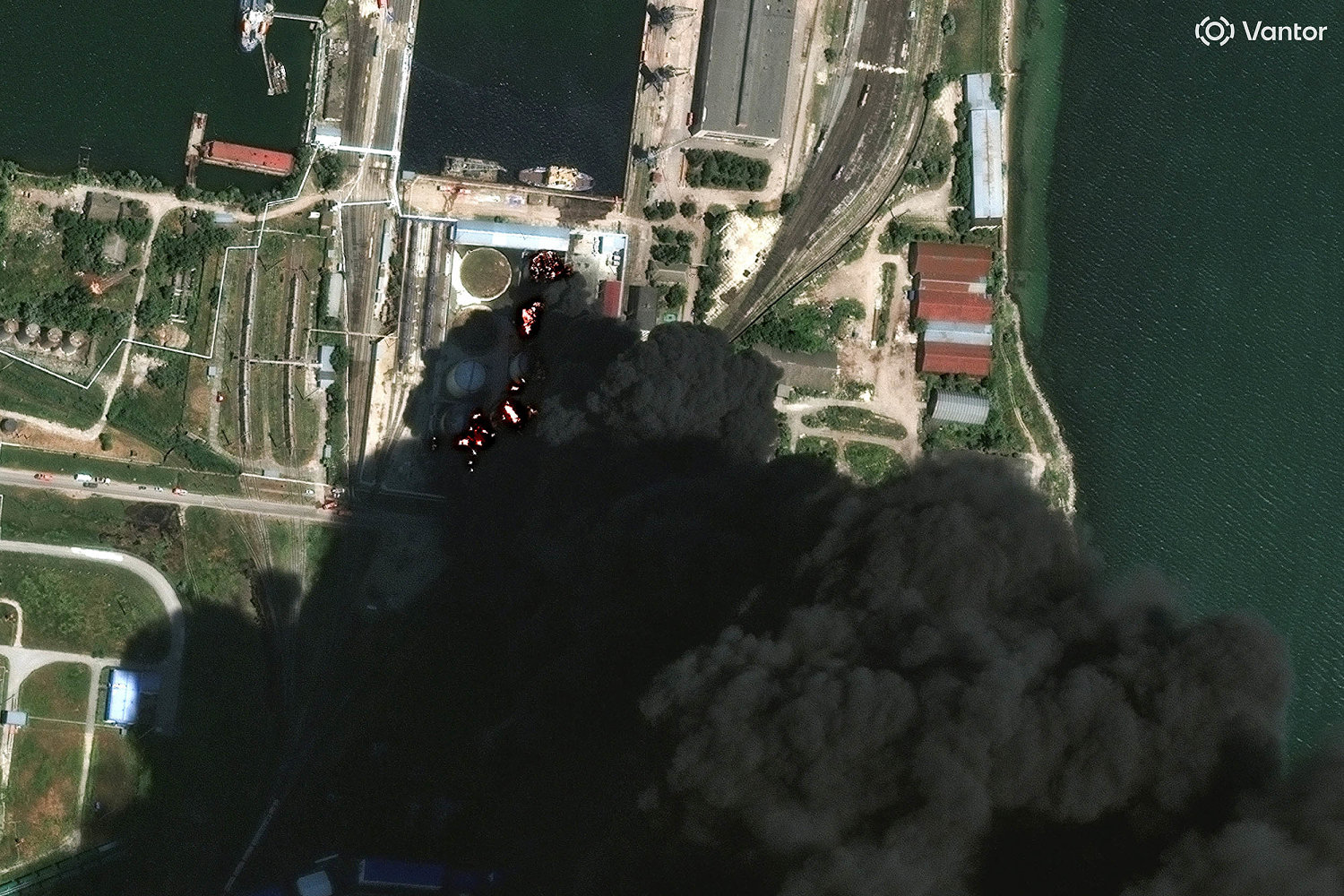
Recent satellite imagery confirmed severe damage at key fuel hubs across the region, including major depots in Feodosia and Edi-Kuy. When a drone strikes an oil terminal, it doesn't just destroy the fuel inside. It ruins the specialized pumping infrastructure, which takes months to replace under international sanctions.
The strikes function as a form of long-range economic and military sanctions. By removing the ability to store and distribute fuel locally, Ukraine forces the Russian military to rely on direct deliveries from the mainland. That creates an immediate bottleneck. Every tank, armored vehicle, and supply truck must wait for a rolling fuel line that is constantly under threat.
Choking the Main Land Corridor
When Ukraine heavily damaged the famous Kerch Bridge in late 2022, Russia shifted its military freight to a land bridge running through occupied southern Ukraine. This route centers on the Novorossiya highway, linking the Rostov region to Crimea via the occupied cities of Melitopol and Mariupol. Moscow thought this land corridor was safe. It wasn't.
Ukrainian drone units now maintain consistent fire control over this highway. Cheap, highly efficient strike drones hunt Russian supply vehicles day and night. The impact on Russian military logistics has been devastating.
Major Robert Madyar Brovdi, commander of Ukraine's Unmanned Systems Forces, shared hard data showing the extent of the lockdown. Within a single two-week period of focused drone operations, Russian military cargo traffic on key supply routes plummeted by 71 percent. Freight volumes dropped from roughly 3,800 vehicles per day to just 1,100.
The Bridge Problem
Russia relies on three primary pathways to move heavy equipment into Crimea. Ukraine is breaking all three.
The Kerch Bridge
The 12-mile-long crossing was Putin's personal pride. After the 2022 explosion that set a fuel train ablaze, Russia largely stopped using the bridge for heavy rail fuel shipments. The structure remains too fragile to handle the weight of massive military trains safely. It's heavily restricted and acts more as a psychological symbol than a reliable military artery.
The Chonhar Bridge
This critical bridge connects northern Crimea to the Ukrainian mainland. Recent precision strikes smashed the crossing, leaving gaping holes in the roadway. Without Chonhar, Russian military convoys have to take long, dangerous detours through western routes, exposing them to even more drone attacks.
The Marine Ferries
With the bridges damaged or restricted, Russia tried using civilian and military ferries to shuttle vehicles across the Kerch Strait. Ukraine anticipated the move. Targeted strikes recently hit at least three Russian ferries operating on the crossing, effectively paralyzing the backup plan.
The Strategic Choice Facing Moscow
The Institute for the Study of War notes that these attacks are part of a highly coordinated campaign. Kyiv is forcing the Kremlin into a series of impossible dilemmas.
Where does Russia put its best air defense systems? If they pull anti-aircraft batteries from the front lines to protect Crimean oil depots, the army in the Donbas gets hammered by air strikes. If they keep air defenses on the front lines, Crimea's infrastructure burns.
Geography is a brutal master in warfare. Crimea is essentially an island with a few narrow entry points. It requires massive amounts of external input to survive. By turning the transport networks into a dangerous zone, Ukraine is turning Putin's prized territory into an expensive, indefendable liability.
Actionable Next Steps for Tracking the Conflict
If you want to understand where this campaign is heading next, don't just watch the front-line map. Look at the logistics indicators.
- Monitor Telegram channels of pro-war Russian bloggers. Channels like Rybar often report on logistical strains and transport bottlenecks weeks before official state media acknowledges them.
- Track satellite imagery updates. Watch for smoke plumes or structural damage around the Chonhar and Kerch bridges, as well as the remaining oil facilities in Krasnodar.
- Watch the ferry traffic. The revival or total absence of ferry transport across the Kerch Strait will show whether Russia can bypass its broken bridge network.