When the Hong Kong government drops its annual Honours List, the headlines usually lean heavily toward the city’s elite. We get a predictable rundown of billionaire bankers, well-connected politicians, and university vice-chancellors receiving medals for their decades of service. But the 2026 Honours List feels different. Amidst the expected political back-scratching and corporate accolades, one name stands out, shifting the entire weight of this year’s awards from corporate achievement to raw, selfless sacrifice.
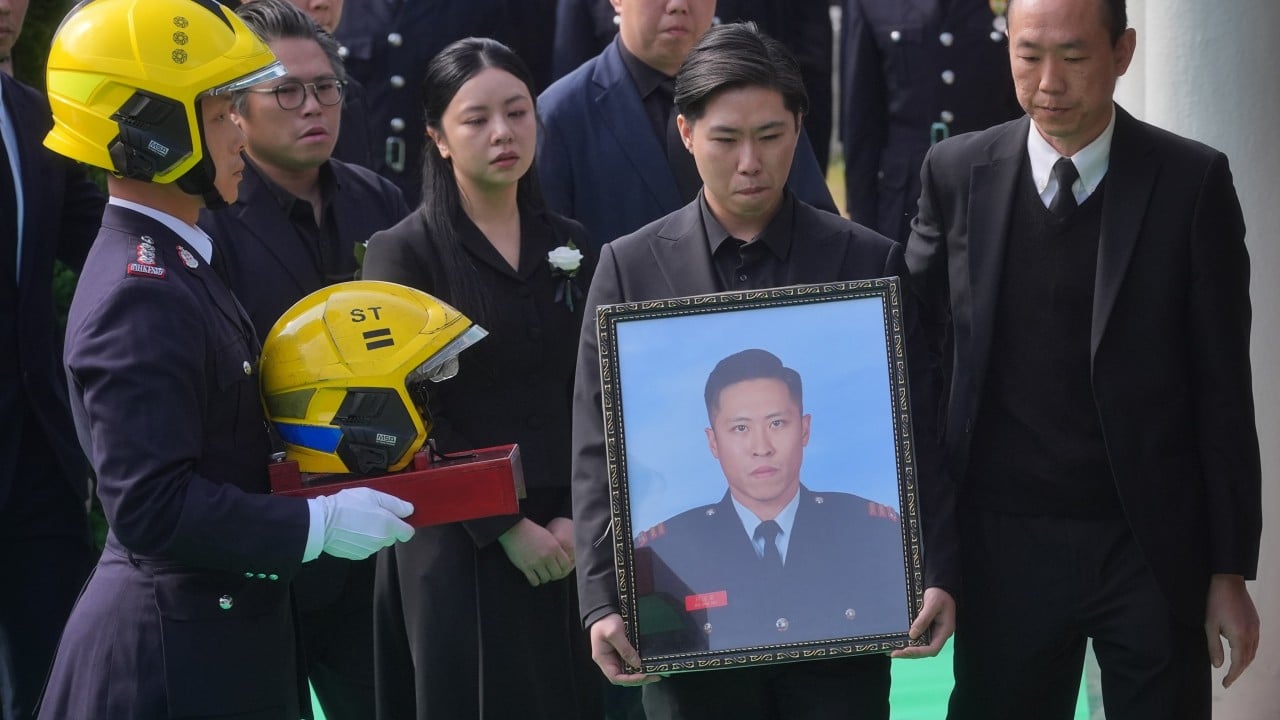
Senior Fireman Ho Wai-ho has been posthumously awarded the Medal for Bravery (Gold). If you liked this piece, you might want to look at: this related article.
Ho didn’t spend 30 years sitting in a boardroom or navigating legislative committees. He was a 37-year-old first responder who ran directly into a hellscape. While the city's highest civilian honor, the Grand Bauhinia Medal, went to a triad of institutional heavyweights, it is Ho’s posthumous golden medal that carries the true emotional and moral weight of Hong Kong's 2026 civic awards.
The Reality of the Tai Po Tragedy
Let’s cut through the standard bureaucratic jargon used in government press releases. The fire at Wang Fuk Court in Tai Po last November wasn't just a routine emergency. It was a massive, terrifying No. 5 alarm inferno that ultimately claimed 168 lives and displaced roughly 5,000 residents, marking it as one of the deadliest blazes the city has faced in generations. For another look on this story, see the latest coverage from Reuters.
Ho was part of the first wave of rescuers arriving at the scene. When everyone else was fleeing the suffocating smoke, Ho and his crew moved inward. According to official citations, he faced extreme, blistering heat and a rapidly spreading, unpredictable blaze. He didn’t back down. He kept pushing forward with rescue operations, prioritizing the lives of trapped residents over his own safety. He sustained severe injuries during the operation and tragically lost his life in the line of duty.
Chief Executive John Lee Ka-chiu noted that Ho showed "gallantry of the highest order," but the reality is simpler than that. Ho did his job with absolute devotion when the stakes were life and death. He leaves behind a legacy of nine years of dedicated service, having joined the Fire Services Department in 2016. He was buried with full honors at Gallant Garden, the final resting place for Hong Kong's public servants who fall in the line of duty.
Who Else Formed the 2026 Class
While Ho’s sacrifice anchors the list in grim reality, the rest of the 2026 Honours List reflects the city's broader economic and political machinery. A total of 466 people were recognized this year, showing a massive spread across various sectors.
Three individuals walked away with the top-tier Grand Bauhinia Medal.
- Lawrence Lau Juen-yee: The eminent economist and former Chinese University vice-chancellor was recognized for his academic contributions and his advisory role in stabilizing Hong Kong’s financial systems during external economic pressures.
- Chan Kin-por: A veteran Executive Council member and former lawmaker, Chan has a 35-year track record in the insurance industry and served as the chairman of the Legislative Council's Finance Committee. Interestingly, Chan also sits on the independent committee currently tasking itself with investigating the very Tai Po fire that took Ho’s life.
- Lam Kwong-siu: A banking heavyweight with over six decades in the sector, recognized for his work bridging local, overseas, and mainland enterprises to maintain the city's status as a global financial hub.
Further down the hierarchy, the government handed out eight Gold Bauhinia Stars. Recipients included Dennis Lo Yuk-ming, the Vice-Chancellor of the Chinese University of Hong Kong, Henry Fan Hung-ling, chairman of the Hospital Authority, and lawmaker Chan Hak-kan, who heads the Democratic Alliance for the Betterment and Progress of Hong Kong.
Everyday Heroes Deserve the Real Spotlight
Look past the high-level political stars and you find the real stories of grit that actually make a city function. The 2026 list recognizes an array of everyday heroes who stepped up during moments of crisis.
Six police officers were awarded the Medal for Bravery (Bronze). During the severe onslaught of Typhoon Wipha in July last year, these officers actively braved explosions and crashing waves inside the Causeway Bay Typhoon Shelter. Their quick actions successfully saved five people trapped aboard a vessel.
The sports world also got its due, though at a more modest tier. Fencer Ryan Choi, who clinched a historic gold medal as part of the men's foil team, received the Medal of Honour alongside three-time gold medal-winning cyclist Lee. Choi's teammates, Lawrence Ng Lok-wang and Leung Chin-yu, received the Chief Executive's Commendation for Community Service.
We also saw extensive recognition for the administrative gears behind the scenes. Fifty-nine civil servants were commended for their grueling logistics work preparing for the National Games, while another 51 public officers were recognized for pushing through the high-stakes commissioning of the new Kai Tak Sports Park.
Redefining What Value Looks Like
It is easy to look at an honors list and see it purely as an exercise in institutional compliance. It is modeled on the old British system of chivalric orders, after all, and it naturally tends to reward the people who already hold structural power.
But a legacy isn't built on boardroom points or policy memos. The inclusion of Senior Fireman Ho Wai-ho reminds everyone that the true foundation of a society relies on the individuals willing to stand between the public and complete disaster. When you look over the 466 names honored on this Establishment Day, remember that while economic stability and athletic gold medals matter, it's the quiet, unyielding bravery of first responders that keeps the city alive.