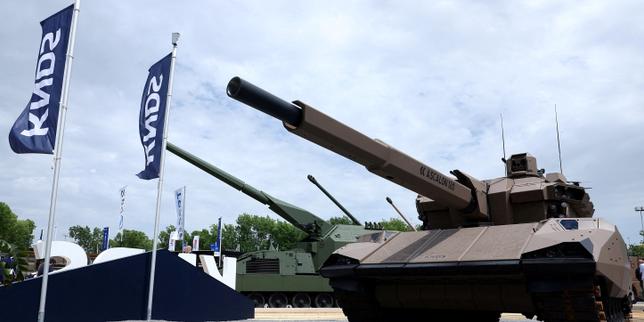
European defense deals look like a gold mine right now. Governments are throwing billions at military budgets, order books are full for the next decade, and defense stocks have been flying high. But the sudden halt of the KNDS public listing proves that the market won't just swallow any price tag you throw at it.
When the Franco-German tank maker tried to test the public markets with a valuation pushing past twelve billion euros, investors blinked. They didn't just blink. They walked away. This wasn't a minor disagreement over a few million euros. It was a fundamental reality check on whether the current defense boom can sustain tech-style market valuations.
Understanding why this massive deal fell apart tells you everything you need to know about the state of European manufacturing, defense spending, and market greed today.
The Twelve Billion Euro Mismatch
KNDS isn't a startup. It's a heavy-industry giant formed by combining Germany's Krauss-Maffei Wegmann and France's Nexter. They make the Leopard 2 tank, the Caesar self-propelled howitzer, and massive amounts of artillery ammunition. Business should be perfect. Demand is higher than it has been since the Cold War.
Yet the initial public offering hit a wall.
The core issue comes down to expectations. The owners wanted a premium valuation based on the massive backlog of orders generated by European rearmament. Public investors looked at the same spreadsheet and saw something different. They saw a company that builds massive, complex, steel machines. These machines take years to produce. The margins are heavily regulated by governments.
You can't scale tank production like you scale software.
When bankers tried to price the company at over twelve billion euros, the market simply refused to buy the growth story. Investors know that full order books don't magically translate into immediate cash flow when supply chains are clogged and skilled labor is impossible to find.
What Everyone Gets Wrong About the Defense Boom
The biggest mistake analysts make right now is assuming that geopolitical tension equals automatic profits for shareholders. It doesn't work that way in the defense sector.
Government contracts are notorious for capped profit margins. When a state signs a multi-billion euro contract for hardware, they build strict pricing controls into the deal. They want to avoid accusations of war profiteering. KNDS operates under the watchful eyes of both Paris and Berlin. That means double the bureaucracy and double the political pressure to keep profit margins modest.
Think about the actual manufacturing process. Building a main battle tank requires specialized steel, complex electronics, and high-end optics. The supply chain for these components is incredibly fragile. You can't just spin up a new factory overnight.
Investors looked at the twelve billion euro sticker price and realized they were being asked to pay for future growth that might take fifteen years to materialize. High interest rates mean money today is worth much more than a promise of profit in 2035.
The Franco-German Cultural Divide Inside KNDS
To really understand why the market balked, you have to look at the internal structure of the company. KNDS is a corporate marriage born out of political necessity rather than corporate harmony.
The split between the French and German sides has historically created governance headaches. Berlin controls export regulations tightly. France wants to export to anyone who will buy. This constant friction affects operational speed.
Private equity and institutional investors hate messy governance. When you ask for a premium valuation, your corporate structure needs to be crystal clear. The dual-headed nature of a Franco-German defense champion makes public investors nervous. They worry that political fights between Paris and Berlin will always take priority over shareholder value.
Where the Defense Market Goes From Here
The KNDS postponement sends a chilling message to other defense firms eyeing the public markets. The easy money era for defense stocks is shifting into a more critical phase.
This failed listing doesn't mean the defense sector is in trouble. It means the valuation bubble is deflating. Companies will have to price their offerings realistically based on current factory output rather than hypothetical backlogs.
If you want to track where the sector goes next, watch the smaller component manufacturers instead of the massive system integrators. The companies making the chips, the sensors, and the specialized materials have much higher margins and fewer political headaches than the tank builders. They don't have to worry about two different governments arguing over who gets to build the turret.
Next Steps for Market Observers
If you're tracking defense investments or analyzing corporate finance trends, stop looking at order backlogs as a guaranteed win. Start looking at delivery times and margin pressure.
Keep a close eye on the stock performance of established peers like Rheinmetall or BAE Systems. If their multiples begin to contract, it proves that the KNDS failure wasn't an isolated incident, but rather the beginning of a broader market correction.
Watch for whether KNDS tries to return to the market with a stripped-down valuation or turns to private capital instead. A private credit injection or a targeted stake sale to a sovereign wealth fund would signal that public markets remain closed to heavy defense infrastructure at these prices.