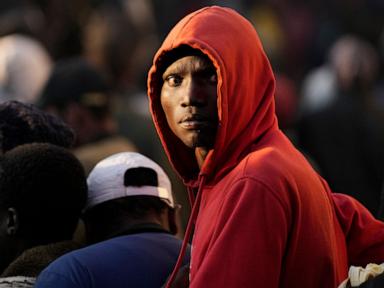
Thousands of African immigrants are packing their bags and fleeing South Africa right now. They aren't leaving because they want to. They're fleeing out of pure terror.
An ominous, fabricated date is driving this mass exodus: June 30, 2026.
If you're trying to understand why South Africa is on a knife-edge, don't look to the government for the origin of this ultimatum. The state didn't set this date. Vigilante organizations and anti-immigrant movements did. Groups like the "March and March Movement" and Operation Dudulla have weaponized a fake administrative deadline, turning it into a chilling ultimatum for undocumented foreign nationals to vacate the country or face a "national shutdown."
The panic is real, and the consequences are already unfolding. Malawi, Ghana, Nigeria, and Mozambique have already begun emergency repatriations, flying and busing thousands of their terrified citizens out of the country. On the ground, the air smells like the pre-dawn of major civil unrest, with memories of the devastating July 2021 riots hanging heavily over everyone's heads.
The Fake Government Notice That Sparked Real Chaos
A lot of the current madness traces back to a highly professional-looking digital poster that spread like wildfire across TikTok, X, and Facebook. It featured the official South African coat of arms and shouted in capital letters: "All illegal foreigners must leave South Africa by June 30th."
It looked completely official. It wasn't.
The South African Police Service (SAPS) had to take the unusual step of dropping a giant red "FAKE" stamp over the image on their official channels. Acting Police Minister Firoz Cachalia and other officials have explicitly stated that the state has issued no such directive. But honestly, once that kind of fear takes root in vulnerable communities, a police press release isn't enough to pull it out.
The deadline is an artificial construct born out of meetings between right-wing pressure groups and government security ministers. Organizations like March and March, led by figures like Gauteng convener Sandile Dube, essentially gave the state a deadline to remove undocumented people. When the state didn't immediately launch mass expulsions, these groups turned the target directly toward the immigrants themselves, promising citizens would "take matters into their own hands" if the calendar hit July without change.
Smashing the Scapegoat Myth with Actual Numbers
Walk through the streets of Diepsloot or the townships of KwaZulu-Natal, and the rhetoric from anti-immigrant organizers sounds simple. They blame foreign nationals for the crushing 32% unemployment rate, failing municipal water systems, regular rolling blackouts, and rampant violent crime.
But the actual data doesn't back up the rage. Let's look at the hard numbers from the official 2022 census:
- Total Population: 62 million people.
- Foreign-Born Population: 2.4 million people.
- Percentage of Population: Less than 4%.
The narrative that millions of immigrants are choking the life out of South Africa's economy is a mathematical impossibility. South Africa's real economic villain isn't the Zimbabwean shopkeeper or the Malawian farmworker. The country's gross domestic product (GDP) has grown by an average of less than 1% annually for a decade. The economy is stagnant because of massive structural corruption, failing state infrastructure like Eskom, and deeply entrenched inequality.
Politicians and populist leaders know this. Shifting the blame to a visible, vulnerable minority is just the oldest trick in the political playbook.
The Burning Streets and the Risk of July Riots 2.0
This isn't just an online war of words. The violence has already started. In a small coastal town earlier this month, two Mozambican nationals were killed during a wave of xenophobic rioting that saw more than 50 immigrant homes torched.
Because of these targeted attacks, makeshift refugee zones are popping up out of necessity. In Durban's Sherwood suburb, a temporary camp swelled to over 10,000 desperate people seeking safety near foreign consulates and police stations. The provincial government in eThekwini had to scramble to build a secondary makeshift camp just to relieve the catastrophic overcrowding.
The real fear keeping intelligence agencies awake at night is that June 30 will trigger a repeat of the July 2021 riots. Those riots, which followed the imprisonment of former President Jacob Zuma, left over 300 people dead and destroyed thousands of businesses.
Today, the political landscape is even more combustible. Internal security analysts from the Bureau for Economic Research have openly warned that elements of these anti-immigrant movements are growing increasingly close to Zuma's MK Party. If the June 30 "national shutdown" links up with partisan political grievances, the country could see widespread civil burning on a scale that the current police force is simply not equipped to handle.
Can the State Actually Maintain Order?
The government is trying to project absolute strength, but its own house is messy. Defense Minister Angie Motshekga put the army on standby, and the state is burning through R600 million to deploy massive police contingents to volatile hotspots in Gauteng and KwaZulu-Natal.
But inside the police force, things are rocky. The ongoing Madlanga Commission of Inquiry has revealed deep structural instability, corruption, and leadership battles at the very top of South Africa's security apparatus. When the police force itself is fractured, its ability to stop coordinated, multi-city vigilante violence is highly questionable.
Major labor unions are actively trying to cool the temperature. The Congress of South African Trade Unions (COSATU) issued an urgent directive telling South African workers to ignore the June 30 shutdown and report for duty. Their message was blunt: chasing foreign nationals out of your neighborhood won't reopen broken factories, it won't fix municipal water pumps, and it won't magically create a single sustainable job.
What to Do If You Are on the Ground Right Now
If you live in, work in, or are currently traveling through South African commercial hubs or township areas, treating June 30 as a standard Tuesday is a mistake. Take these immediate, practical steps to protect your safety:
- Secure 72 hours of essentials: Stock up on basic groceries, chronic medications, and clean water before Friday, June 26. If a national shutdown materializes, supply chains and neighborhood shops will close instantly.
- Avoid transit hotspots: Stay entirely away from major Home Affairs offices, transport interchanges (like taxi ranks in Johannesburg and Durban), and central business districts where marches are scheduled to terminate.
- Monitor non-governmental channels: Don't just rely on state media broadcasts. Follow localized community policing forums (CPFs) and verified independent journalism platforms like the Daily Maverick or Africa Check to distinguish real security threats from the massive flood of online disinformation.
- Establish an emergency protocol: If you are an expatriate or foreign national, ensure your passport is secure, keep emergency cash on hand, and establish a clear communication check-in schedule with your home country's embassy or consulate line.