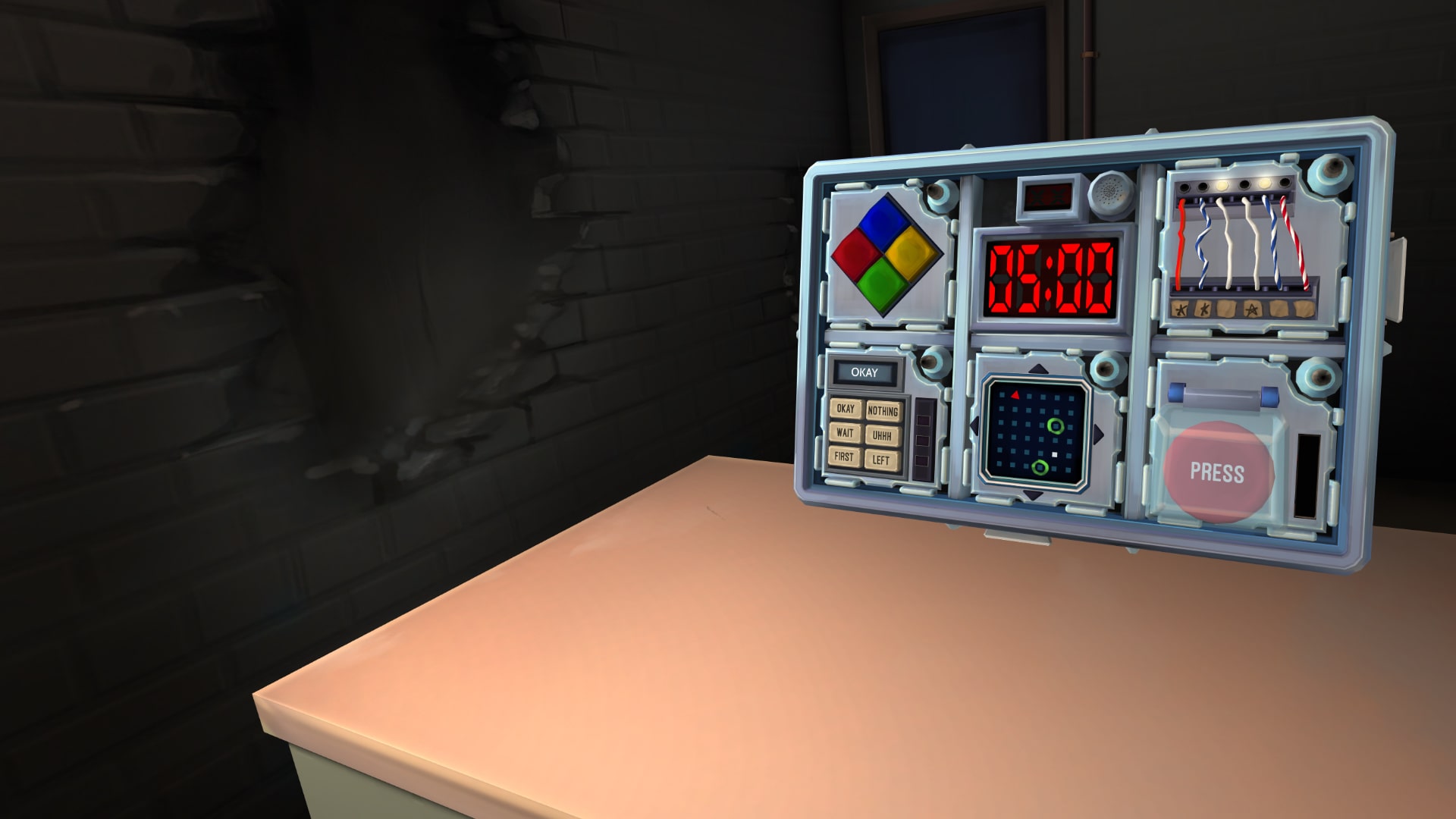
The independent development studio Steel Crate Games reported a significant increase in enterprise-level engagement for Keep Talking and Nobody Explodes VR following its expansion to multiple head-mounted display platforms. Originally released as a conceptual prototype during a 2013 Global Game Jam event, the title requires one player to wear a virtual reality headset to manipulate a digital explosive device while others provide instructions from a physical manual. This asymmetrical design shifted the focus from solo immersion to collaborative communication, a transition that several educational institutions now use to study group dynamics under pressure.
Data released by the developers indicated that the software reached over one million sales across all platforms by 2019, with a substantial portion of those users opting for the high-immersion virtual reality version. The core mechanic relies on the total visual isolation of the primary user, who cannot see the "Bomb Defusal Manual" held by their teammates. According to a technical retrospective published by Steel Crate Games, the necessity of verbal clarity became the primary driver of the experience, as the digital interface provides no automated assistance to the person handling the device.
The Evolution of Keep Talking and Nobody Explodes VR
The development of the project began as an exploration of the hardware limitations inherent in early consumer headsets like the Oculus Rift DK1. Allen Pestaluky, Ben Kane, and Brian Fetter designed the experience to solve the "isolation problem" where a single user in a headset often leaves others in the room without an activity. By delegating the critical information to those outside the simulation, the team created a shared environment that functions regardless of the number of observers involved in the process.
The transition to a commercial product involved refining the procedural generation algorithms that create the puzzles found on the digital modules. Each session generates a unique combination of wires, buttons, and Morse code transmitters, ensuring that players cannot simply memorize the solutions through repetition. This variability has made the software a staple in academic studies regarding high-stakes communication, as researchers can track the time it takes for a team to establish a standardized vocabulary for abstract symbols.
Integration of Virtual Reality Hardware
The implementation of spatial tracking allowed the developers to add a layer of physical complexity that the standard two-dimensional version lacks. Users in the virtual space must physically lean in to inspect small details on the casing or turn the entire device to access modules located on the rear panels. These interactions are tracked via motion controllers or gaze-based selection, depending on the specific hardware being utilized at the time.
Industry analysts at International Data Corporation have noted that software utilizing this type of local multiplayer interaction helps lower the barrier to entry for virtual reality technology. Because only one headset is required for a group of any size to participate, the cost of deployment for social or professional settings is significantly reduced. This financial factor has contributed to the long-term relevance of the title even as newer, more graphically intensive simulations enter the marketplace.
Cognitive Load and Communication Strategies
Psychological research into the effects of the simulation suggests that the time-constrained environment significantly alters how individuals process verbal data. Dr. David J. Roberts, a professor of telepresence and remote collaboration, has referenced the game in discussions regarding how humans build mental models of objects they cannot see. The "expert" players must describe complex visual patterns to the "defuser" using only precise, unambiguous language to avoid triggering a failure state.
The simulation uses an escalating audio-visual feedback system to increase the perceived stress of the participants as the timer nears zero. An audible heartbeat and an accelerating countdown clock serve as environmental stressors that test the emotional regulation of the group. According to studies on team-building exercises, these stressors are instrumental in identifying "bottlenecks" in a chain of command, as the hierarchy of information flow often breaks down under the pressure of the simulated explosion.
Variations in Manual Complexity
The "Bomb Defusal Manual" itself is a document that has undergone numerous iterations to increase the difficulty of the communicative task. It includes intentionally confusing instructions, such as buttons that must be pressed based on the presence of specific serial numbers or the color of a blinking light. These logic gates require the person in the headset to provide meta-data about the bomb that they might not initially think is relevant to the specific module they are solving.
Forcing the defuser to look for serial numbers or battery counts on the sides of the device encourages a comprehensive situational awareness that is often missing in standard gaming experiences. This secondary layer of information gathering ensures that the expert players are constantly asking questions, rather than just reading a set of instructions. The resulting dialogue creates a feedback loop where the accuracy of the outcome depends entirely on the quality of the verbal exchange.
Educational and Corporate Training Applications
Several organizations have adopted the software as a formal tool for teaching soft skills in the workplace. The University of Washington and other academic centers have explored the use of the game in medical and emergency response training programs. In these contexts, the bomb serves as a proxy for any high-pressure task where a technician must receive remote guidance from a specialist who is not physically present at the scene.
The software's ability to mirror the challenges of remote assistance has made it a favorite for companies focusing on "distributed cognition," where knowledge is spread across a group rather than held by one person. Corporate trainers utilize the experience to demonstrate the "curse of knowledge," a cognitive bias where the person with the manual assumes the person in the headset understands more than they actually do. By reviewing the failures that occur during a session, teams can identify specific areas where their internal communication protocols are insufficient.
Accessibility and Cross-Platform Support
A major factor in the continued use of the program is its wide availability across different operating systems and hardware configurations. It currently supports Windows, macOS, and Linux, as well as mobile and console platforms, which allows the "manual" to be viewed on almost any digital device or printed as a physical book. This flexibility ensures that the game can be played in diverse environments, from boardrooms to classrooms, without requiring specialized IT infrastructure beyond the primary headset.
The developers also introduced a "Freeplay Mode" that allows users to customize the difficulty and duration of their sessions. This feature is particularly useful for trainers who want to isolate specific modules for targeted skill development, such as logic processing or rapid-fire data entry. By adjusting the number of strikes allowed before a failure, instructors can tailor the intensity of the experience to match the skill level of the participants.
Criticisms and Technical Limitations
Despite its widespread popularity, the experience has faced criticism regarding the steep learning curve associated with the manual's more complex sections. Some users report that the difficulty spikes in the later levels can lead to frustration rather than a constructive learning experience. Critics argue that without a formal tutorial system, new players are often overwhelmed by the volume of information they must process in their first few minutes of play.
Technical issues have also been noted in relation to the setup of various headsets. In some configurations, the "screen mirroring" function must be disabled to prevent the experts from seeing what the defuser sees, which would invalidate the core mechanic of the game. Ensuring a true "information gap" requires specific hardware settings that are not always intuitive for non-technical users. Furthermore, the reliance on a separate PDF manual means that players must manage two different interfaces simultaneously, which can lead to logistical friction during a session.
The Impact of Sensory Isolation
The complete sensory isolation of the virtual reality environment remains a point of contention for some researchers. While it enhances the immersion and the pressure on the defuser, it can also lead to motion sickness or disorientation for certain individuals. Most VR implementations of the title use a seated, stationary perspective to minimize these effects, but the psychological intensity of the "ticking clock" can still trigger physical stress responses in sensitive users.
Documentation from various VR safety guidelines suggests that users should take frequent breaks to mitigate the effects of prolonged immersion. However, the nature of the game encourages back-to-back sessions as teams attempt to beat their high scores or complete increasingly difficult missions. This conflict between the software's addictive loop and the physical limitations of the hardware is a recurring theme in user reviews and professional assessments of the platform.
Future Developments in Asymmetric VR
The success of the title has inspired a new genre of "social VR" games that prioritize interaction between the person in the headset and those outside of it. Developers are increasingly looking for ways to involve the "couch audience" in the virtual experience, recognizing that the isolation of the headset is a significant barrier to mainstream adoption. This trend suggests that the legacy of the original project will continue to influence how multiplayer experiences are designed for years to come.
As for the future of the specific franchise, the developers have focused on maintaining compatibility with new hardware as it enters the market. The official Steam store page for the title continues to receive regular updates to ensure that the software remains functional on the latest generation of headsets. This commitment to longevity has allowed the game to survive several cycles of hardware evolution, maintaining its status as a benchmark for the asymmetric genre.
Keep Talking and Nobody Explodes VR in a Shifting Market
The landscape of virtual reality is moving toward standalone devices that do not require a connection to a high-powered computer. This shift has allowed for even more portability, making Keep Talking and Nobody Explodes VR a common sight at tech conferences and pop-up events. As the hardware becomes lighter and more accessible, the opportunities for using such communicative simulations in casual settings continue to expand.
The long-term impact of the software is seen in how it redefined the "user" in a virtual reality context. By treating the observers as active participants with their own unique interface, the developers proved that virtual reality does not have to be a solitary activity. This model of shared responsibility is currently being adapted for use in more complex industrial simulations, where multiple experts provide real-time data to a single technician on a factory floor.
The next phase of development for these types of communication tools will likely involve augmented reality integrations. This would allow the "experts" to see digital overlays on the physical world, potentially bridging the gap between the manual and the bomb even further. Whether the original team at Steel Crate Games plans to implement these features remains a subject of speculation among the title's dedicated community of players.
Industry observers will be watching to see if the studio announces a formal sequel or a major content expansion in the coming year. While the current version remains highly functional, the demand for new modules and more complex puzzle types remains high among veteran players. The unresolved question is how the studio will balance the need for new content with the goal of keeping the manual simple enough for a printed format.