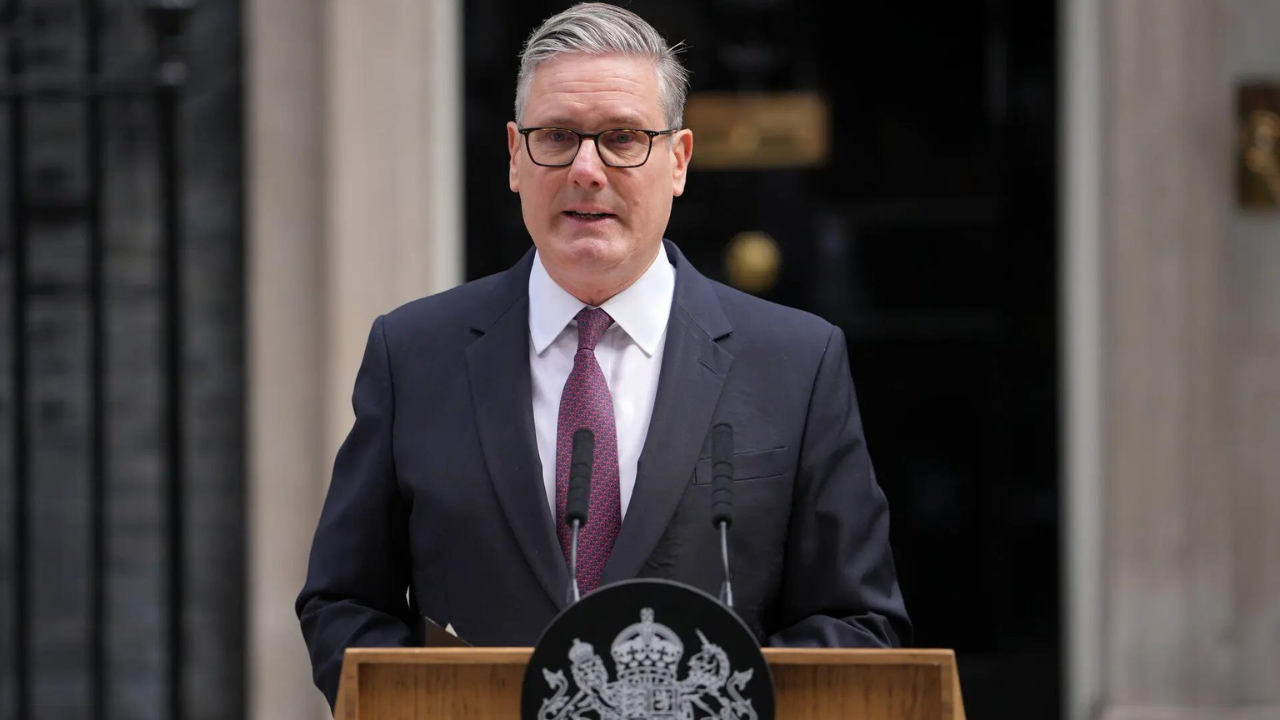
Keir Starmer is out. Less than two years after leading the Labour Party to a historic landslide victory that wiped out 14 years of Tory rule, the Prime Minister stood outside 10 Downing Street on Monday morning and threw in the towel. It is a stunning, historic collapse. He is now set to become the second shortest-serving Labour prime minister in British history.
If you watched his emotional morning broadcast, you saw a man trying to frame his exit as an act of selfless patriotism. He claimed he heard the answer of his parliamentary party and accepted it with good grace. He talked about putting the country first. But let's be real here. This wasn't a noble sacrifice. This was a brutal, coordinated internal coup execution. Starmer didn't walk away because he wanted to spend more time with his family; he walked away because his own MPs held a political gun to his head.
The immediate trigger was a chaotic weekend of backroom plotting following Andy Burnham's dramatic return to Westminster via the Makerfield by-election. But the dry rot inside Starmer's administration has been festering for months. Britain is now staring down the barrel of its seventh prime minister in a single decade. For a country desperate for stability, the political merry-go-round just keeps spinning faster.
The Burning Fuse Behind the Downing Street Exit
You don't lose a historic parliamentary majority overnight. Starmer’s downfall happened slowly, then all at once. The rot started in earnest during the local and regional elections in May, where Labour suffered devastating losses. The results sent shockwaves through the backbenches. MPs realized the public's patience had evaporated. Even worse, Nigel Farage's Reform UK was eating into traditional working-class Labour strongholds, while the Green Party picked off voters on the left.
Then came the internal rebellion. Anas Sarwar, the Scottish Labour leader, broke ranks back in February to call for Starmer's head. While the cabinet initially closed ranks, the dam broke when Health Secretary Wes Streeting and Defence Secretary John Healey quit the government. Healey left over deep disputes regarding military spending strategy, while Streeting openly blasted Starmer's chronic indecision. Streeting openly bragged he had the 81 lawmaker signatures required to trigger a formal leadership challenge.
When Andy Burnham won the Makerfield by-election on Friday, Starmer's fate was sealed. Burnham, the former "King of the North" and Greater Manchester Mayor, provided the rebellious backbenchers with exactly what they lacked: a credible, vote-winning alternative leader. Starmer initially vowed to stand and fight. By Sunday night, after more than half a dozen cabinet ministers privately told him his time was up, he folded.
The Mandelson Problem and the Broken Promises of 2024
Voters wanted change when they elected Labour in 2024. They got stagnation. Starmer's government repeatedly stumbled on the economy, leaving the public feeling completely abandoned. Worse, his policy agenda became a series of embarrassing retreats. He watered down Labour's ambitious net-zero green investment plans. He shelved highly visible proposals for digital ID cards. The electorate quickly grew tired of a government that seemed to stand for absolutely nothing.
Then came the scandals that destroyed his "Mr. Clean" image. The absolute breaking point for many traditional voters was Starmer's toxic decision to appoint Peter Mandelson as Britain's ambassador to the United States. Mandelson's historical links to Jeffrey Epstein triggered instant outrage. For a Prime Minister who built his entire brand on cleaning up public life after the sleaze of the Tory years, the appointment looked like rank hypocrisy. It severely damaged his personal approval ratings and made him an easy target for both the political right and left.
Combined with rocky international relations—including a highly turbulent dynamic with US President Donald Trump and immense domestic blowback over his handling of the wars in Ukraine and Iran—Starmer became a liability. His inner circle spent Saturday drafting a resignation speech because the arithmetic of survival no longer worked.
The Main Contenders in the Race for Number 10
The race to replace Starmer starts immediately, even though the official timetable mapped out by Labour's National Executive Committee opens nominations on July 9. Starmer will stay on as a caretaker Prime Minister until the summer recess concludes, meaning he will still represent the UK at the upcoming NATO summit in July. But the battle lines at home are already drawn.
Andy Burnham
The undisputed frontrunner. Burnham's path back to Westminster feels less like a coincidence and more like a carefully orchestrated coronation. By securing the Makerfield by-election victory, he removed the main barrier to his leadership ambitions. Burnham has immediate, massive appeal among working-class voters who felt alienated by Starmer's rigid, technocratic style. His supporters argue he is the only figure capable of neutralizing the existential threat posed by Reform UK.
Wes Streeting
The former Health Secretary is a brilliant media performer and a darling of the party's right wing. He shook the Westminster establishment by declaring he had the numbers to topple Starmer, but he surprised everyone on Monday by throwing his weight behind Burnham. Streeting stated that instead of spending the summer exaggerating small internal differences, the party needs to roll its sleeves up. He is playing the long game, likely positioning himself for a powerful Treasury or Foreign Office role under a Burnham premiership.
Angela Rayner
The Deputy Prime Minister remains a powerhouse with the party's soft-left base. Rayner has consistently pushed for faster, more radical improvements for working people. While she has stayed quiet during the immediate fallout of the resignation, she hasn't ruled out a run if a full-scale contest materializes. She could easily act as a kingmaker or form a powerful joint ticket with Burnham to keep the party from fracturing.
Shabana Mahmood
The Home Secretary has quiet but deep support among influential party insiders on the right. She has built an impressive reputation for policy execution. However, critics argue her centrist views are too similar to Starmer's failed approach and would do little to heal the wounds with the party's disgruntled left wing.
What the Westminster Chaos Means for Your Money
If you have money in UK assets, you need to prepare for an extended period of volatility. The markets hate instability, and Britain is establishing a terrible reputation for political churn. Following the announcement, the pound swung wildly. The 10-year gilt yields hovered around 4.84%. That is significantly higher than international peers, proving that global investors are demanding a steep risk premium to hold British debt.
Susannah Streeter, the chief investment strategist at Wealth Club, warned that investing in UK assets carries permanent scars from this ongoing political instability. Investors are deeply wary of Andy Burnham's economic positions. The market wants a clear, competitive leadership contest to force candidates to lay out their tax and spend plans, rather than an uncontested coronation that leaves policy goals vague.
Whoever takes over in September faces a nightmare economic landscape. Public borrowing figures are grim. The union bosses are already demanding blood; Sharon Graham, the general secretary of Unite, immediately issued a warning shot demanding an end to frozen tax thresholds, a total overhaul of the energy price cap, and direct state investment in industrial jobs. The next Prime Minister cannot simply rely on minor tweaks to personal taxation. Real structural fixes are needed, or the UK economy will remain entirely stuck in the mud.
What Happens Right Now
Forget about a general election. Despite Nigel Farage loudly demanding a public vote on social media, Labour's massive parliamentary majority means they have zero obligation to call one. They will choose the next prime minister internally.
Here are the concrete next steps in this political crisis:
- July 9, 2026: Official nominations open via the Labour National Executive Committee.
- July 2026: Caretaker Prime Minister Keir Starmer travels to the United States to represent the UK at the international NATO summit.
- Late July / August 2026: If multiple candidates secure enough MP nominations, a compressed summer campaign will take place among party members. If rivals step aside for Andy Burnham, he could take over the keys to Number 10 as early as mid-July.
- September 2026: A brand new British Prime Minister takes the podium outside Downing Street before Parliament returns from summer recess.