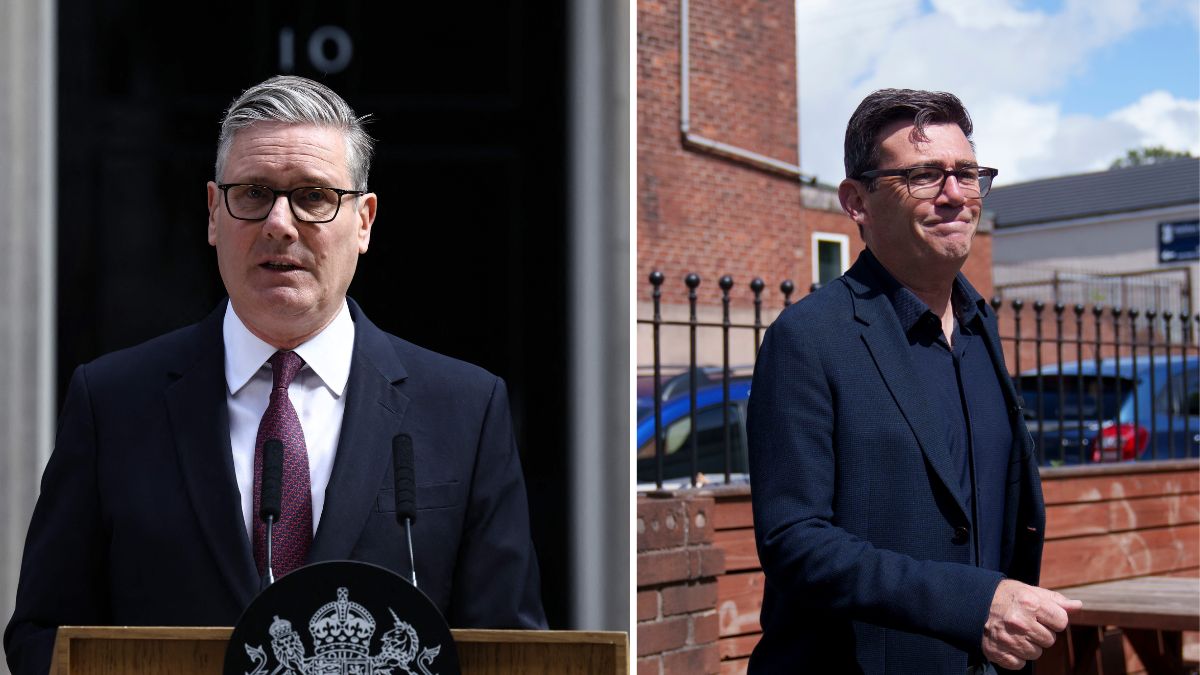
The revolving door at 10 Downing Street just spun again. Keir Starmer is out. Less than two years after a historic landslide election victory, the Prime Minister stood at the podium outside Downing Street on Monday morning and admitted his party no longer wanted him. He's the sixth British prime minister to fall in just ten years, a stunning statistic that makes the UK look more like a textbook case of political instability than a steady democracy.
The writing has been on the wall for months. Starmer’s poll numbers didn't just dip; they plummeted to historic lows, matching the worst days of Liz Truss. The economy stagnated, the cost of living bit hard, and internal party scandals tore away his remaining authority. But the final blow didn't come from a dramatic parliamentary vote. It came from a by-election in Greater Manchester, which brought his fiercest internal rival back to Westminster.
Andy Burnham is now the clear favorite to take over. The former Mayor of Greater Manchester won the Makerfield by-election last week, clearing his path back into Parliament. Almost immediately, the internal rebellion against Starmer solidified around him. With senior figures like former Health Secretary Wes Streeting dropping their own ambitions to back Burnham, a coronation looks highly likely.
The Collapse of a Landslide Premier
When Labour won big in July 2024, Starmer looked untouchable. He had turned a shattered party around and secured a massive majority. Yet, that majority was built on thin ice. Voters weren't deeply in love with Starmer’s vision. They were desperate to get rid of the Conservatives. When the new government failed to quickly fix public services or ease the financial strain on families, that voter apathy turned into active anger.
By January 2026, polls showed that three-quarters of the British public held an unfavorable view of Starmer. Things got progressively worse from there.
The turning point started early in the year. In February, Scottish Labour leader Anas Sarwar broke ranks publicly, calling Starmer a distraction and demanding he step down. While the cabinet initially rallied around the Prime Minister, the damage was done. A disastrous set of local elections in May confirmed everyone's worst fears. Labour was bleeding votes to both the left and the right, with Nigel Farage’s Reform UK surging ahead in former working-class strongholds.
Then came the cabinet mutiny. Over the past few months, the government struggled with massive internal arguments over defense spending and economic policy. Defense Secretary John Healey walked out, alongside junior ministers and aides. Starmer tried to put on a brave face, rolling up his sleeves for a major speech in May where he promised to fight on and prove his doubters wrong. The response from his own backbenchers was a collective shrug.
How Andy Burnham Forced the Issue
While Starmer tried to steady the ship, Andy Burnham was playing the long game. Known for years as the "King of the North" during his time as Manchester Mayor, Burnham built a brand completely separate from the Westminster bubble. He positioned himself as a champion of ordinary people, focusing on local transport, housing, and visible regional improvements.
To challenge for the leadership, Burnham needed a seat in the House of Commons. Prime ministers must be sitting MPs. The sudden vacancy in the safe Labour seat of Makerfield provided the perfect opportunity. Burnham resigned his mayoral post, stood for the seat, and won handily last week, beating back a fierce challenge from Reform UK.
His return to Parliament transformed the vague dissatisfaction among Labour MPs into an organized movement. Starmer’s inner circle realized over the weekend that the numbers were gone. More than half a dozen cabinet ministers told him privately that his time was up. Staff began drafting the resignation speech on Saturday.
On Monday morning, Starmer made it official. He announced he would step down as Labour leader, though he plans to remain as a caretaker Prime Minister until Parliament returns in September to ensure an orderly transition. If the party unites behind Burnham without a protracted internal fight, the handover could happen much sooner, potentially by mid-July.
What a Burnham Premiership Looks Like
A change at the top means a fundamental shift in how the UK government operates. Starmer was an ex-prosecutor, cautious, detail-oriented, and often accused of lacking a clear political narrative. Burnham is an entirely different political animal. He’s a veteran communicator who knows how to connect with voters outside London.
Expect a massive shift toward regional devolution. Burnham has spent years arguing that London holds too much power and wealth. His primary focus will likely involve handing more spending control and decision-making powers to regional mayors and local authorities across England, Scotland, and Wales.
Economic policy will also shift leftward. While Starmer and his Chancellor spent two years trying to reassure the financial markets with strict spending rules, Burnham is much more willing to advocate for public investment. He'll face immediate pressure to resolve the ongoing funding crises in the National Health Service and local government.
The biggest challenge for Burnham isn't his policy platform. It's the sheer exhaustion of the British electorate. Voters are tired of political drama. They want results. If Burnham can't deliver visible improvements to public services and living standards within his first six months, the anger that swallowed Starmer will quickly turn on him.
The immediate next steps are already in motion. Burnham is being sworn in as an MP. He needs 81 nominations from fellow lawmakers to officially run for the leadership, a threshold his allies say he will easily pass with the backing of more than 200 MPs. The UK is about to get its seventh prime minister in a decade, and the pressure on him will be immense from day one.