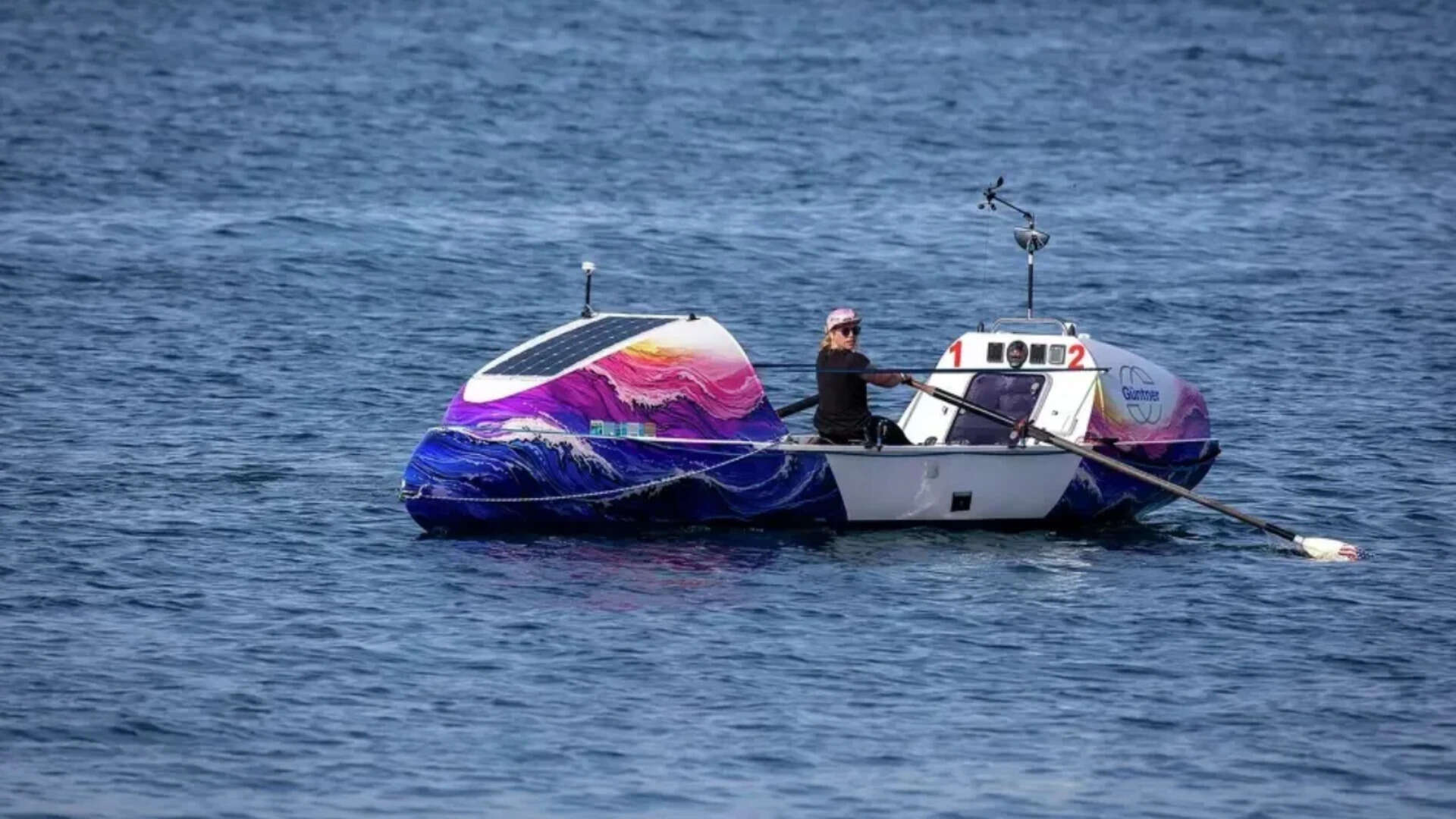
Most people can't imagine spending 43 days entirely alone. Now try doing it while rowing a 1,200-pound boat across 2,400 miles of volatile, open ocean.
Kelsey Pfendler just did exactly that. She didn't just survive the journey from Monterey, California to Honolulu, Hawaii; she absolutely demolished the existing records.
On July 3, 2026, the 32-year-old river guide rowed her 21-foot vessel, Lily, into the Ala Wai Boat Harbor. She became the first American woman to row solo from California to Hawaii.
But the real shockwave is the time. The previous women’s record stood at a grueling 86 days. Pfendler cut that in half, finishing in 43 days, 17 hours, and 51 minutes. She even beat the fastest men's solo time by more than a week.
This isn't just a win for the record books. It changes how we look at solo ocean expeditions.
The brutal reality of a solo row from California to Hawaii
Elite ocean rowing looks poetic from a distance. Up close, it's a meat grinder.
The first week is notorious for breaking spirits. Leaving the California coast means fighting immediate headwinds and relentless currents that want to push you south. Pfendler ran into a harsh weather front within days of launching on May 21. Her hands instantly erupted in deep blisters.
Then things got worse.
She lost the cap to her heavy-duty freshwater bag during a storm. Her primary source of water became a solar-powered desalination device. But when storms roll in, the skies turn dark. No sun means no solar power.
She had to ration a tiny backup supply of 25 small water bottles. Because water was scarce, she couldn't even rehydrate her freeze-dried meals properly. Eating cold, crunchy, dry camp food while rowing 18 hours a day is a special kind of hell.
Crossing the continental shelf
About 50 to 60 miles off the coast lies the continental shelf. It's a massive underwater drop-off where the ocean dynamics completely shift. For Pfendler, reaching it was an exhausting, multi-hour battle against a wall of water.
She was making a miserable 0.8 knots while pulling with everything she had. When she finally needed to sleep, her para-anchor—essentially an underwater parachute meant to keep the boat stationary—started dragging her in the wrong direction.
She had to make a terrifying choice. She slept for two hours with no anchor at all, completely at the mercy of the open Pacific. Luckily, the gamble paid off, and she didn't lose ground.
Muscle atrophy and salt sores
Your body starts deteriorating the moment you leave land.
Ocean rowers sit on a hard, sliding seat for hours on end. The constant spray of salt water creates friction against your skin. This leads to salt sores, which are essentially open, painful wounds that never get a chance to heal because they're constantly soaked in brine.
Your legs take a massive beating too. Since you aren't walking, your lower body muscles begin to waste away. You're using your legs to drive the row, but they never experience gravity or full extension on solid ground.
Pfendler managed to maintain a blistering pace of over two knots once she cleared the coastal currents. Doing that required rowing nearly around the clock, surviving on micro-naps, and managing intense physical pain.
What the internet gets wrong about solo expeditions
Social media gives a warped view of these achievements. Pfendler documented her trip on TikTok, gaining hundreds of thousands of followers who watched her laugh about her bizarre forehead hat tan lines and the absolute necessity of caffeine pills.
It looked fun. It looked quirky.
But behind those 60-second clips were hours of pitch-black darkness, terrifying swells, and total isolation. If your electronics fail, you're blind. Pfendler had to constantly manage her power usage to keep her Automated Identification System (AIS), autopilot, and chart plotters running off her solar setup. If those go down, a cargo ship could run you over in the night without ever knowing you were there.
This wasn't a reckless stunt. Pfendler has been a professional raft guide since she was 18. She spent eight years guiding multi-day trips down the Colorado River through the Grand Canyon. She also skippered a four-woman crew across the exact same Pacific route in 2024.
She knew the ocean. She knew the risks.
The ultimate takeaway from the Pacific crossing
Pfendler didn't just row for the glory. Her journey raised significant funding for the Whale Foundation, a non-profit that provides mental, physical, and financial support to the Grand Canyon river guiding community.
When she pulled into Honolulu, completely exhausted, she left the world with a piece of advice that cuts through the usual self-help garbage. She told the crowd to find their own big, hard, scary thing. You don't have to feel strong enough to finish it today; you just have to be brave enough to start it.
If you want to apply that mindset to your own life, stop waiting for the perfect conditions. They don't exist. Map out your goal, prep for the worst-case scenario, and take the first stroke.
California rower Kelsey Pfendler makes solo Pacific history provides a look at the massive crowds and emotional celebration that greeted her at the Honolulu harbor after her record-shattering 43 days at sea.