If you want to understand South Korea, you can't just look at the high-rise apartments, the hyper-fast internet, or the K-pop videos pulsing through YouTube. You have to look at how people treat each other at the dinner table. You have to notice who drinks first, who bows lowest, and why an entire nation shuts down twice a year just to sweep their ancestors' graves.
The invisible script running the country is Korean Confucianism.
Many people view it as an ancient Chinese import, a relic of a bygone imperial age. That is a massive mistake. While it originated with Confucius in China centuries ago, Korea took those ideas, amplified them, and built an entire society around them during the Joseon dynasty, which lasted from 1392 to 1910. Today, those rules still dictate corporate hierarchies, family dynamics, and even the unique linguistic endings used when speaking to someone just six months older than you.
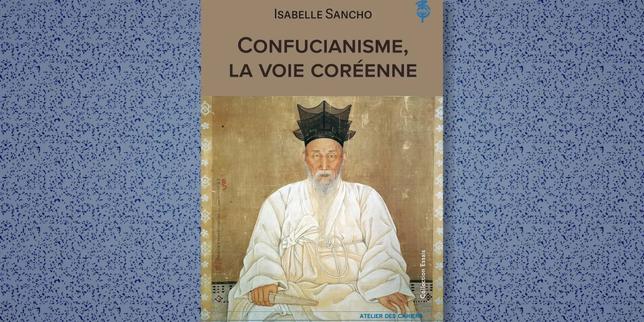
Isabelle Sancho, a renowned scholar of classical Chinese texts at the French National Centre for Scientific Research (CNRS), recently shed new light on this phenomenon in her book Confucianisme, la voie coréenne. She makes a compelling case that what we think we know about this philosophy usually misses the point. It isn't just an abstract theory about moral behavior. It's a living, breathing, sometimes suffocating set of social laws that explains the intense pressures and spectacular successes of modern Korean life.
The Ultimate Social Operating System
To get why this matters, you have to realize that Korean Confucianism is much more rigid than its Chinese counterpart ever was. When the Joseon elite adopted Neo-Confucianism, they didn't just use it as a political guide. They turned it into the exclusive ideological foundation of the state. They banned Buddhism from the capital, overhauled marriage laws, and created a hyper-stratified social order.
The core idea centers on the Five Relationships. These relationships dictate how a ruler relates to a subject, a father to a son, a husband to a wife, an elder sibling to a younger one, and a friend to a friend. Notice something about that list? Four out of those five relationships are strictly unequal.
This asymmetry defines daily life. It's why your Korean coworker will ask for your birth year within five minutes of meeting you. They aren't trying to be rude or nosy. They are calibrating the relationship. They need to know exactly how much respect to show you, what level of formal speech to use, and who sits where.
Think about the classic corporate drinking culture known as hoesik. If your boss pours you a drink, you don't just grab it and chug. You hold your glass with two hands, turn your head away from them out of respect, and drink. That isn't just polite behavior. It's a centuries-old ritual codified in text, playing out in a modern barbecue restaurant under neon lights.
What Westerners Get Wrong About the Chuseok Holiday
Every autumn, international media outlets cover the massive traffic jams exiting Seoul during Chuseok, the Korean thanksgiving holiday. Millions of people pack into trains and cars to head to their hometowns. Western journalists love to frame this as a simple family reunion, a sweet moment of gratitude for the harvest.
The reality is far more grueling.
For many families, especially the women, Chuseok is an intense marathon of domestic labor dedicated to charye, the ancestral ritual. For days, women prepare highly specific dishes that must be arranged on a ritual table according to precise geometric rules. Red fruits go on the east side, white fruits on the west. Fish goes on the east, meat on the west.
The men then perform the actual bows before the spirit tablets of the deceased. If you make a mistake in the placement of the dried pollock or the rice cakes, it's considered a profound sign of disrespect to the lineage.
This brings us to one of the biggest paradoxes highlighted by Sancho. South Korea is one of the most technologically advanced nations on Earth, yet its legal and social customs remain deeply tied to lineage defense. For a long time, the civil code explicitly banned marriages between people with the same surname and ancestral seat, a rule directly inherited from Joseon-era clan purity laws. Though that specific law was overturned in the late 1990s, the mental framework remains. You aren't just an individual human being. You are a single link in a vast chain stretching from your ancestors to your unborn descendants.
The Dark Side of Absolute Filial Piety
We see the incredible fruits of this philosophy every day. The legendary Korean work ethic, the absolute dedication to education, the intense discipline that built companies like Samsung and Hyundai from the ashes of the Korean War—all of that comes from the Confucian drive for self-cultivation and family honor. If a child studies sixteen hours a day for the suneung college entrance exam, they aren't just trying to get a good job. They are trying to elevate the social standing of their entire household.
But this pressure has a dark side.
When your worth is entirely tied to your role within a collective hierarchy, individual mental health takes a backseat. The country struggles with shockingly high suicide rates and the lowest birth rate in the world. Young women, in particular, are increasingly rejecting traditional marriage expectations. They look at the endless labor required by their mothers during ancestral rites and decide they want no part of it.
The strict hierarchy also breeds toxic workplace dynamics. The term gapjil refers to the abuse of power by superiors over subordinates. It's a direct perversion of the ruler-subject relationship. When a senior executive expects absolute obedience from an entry-level worker, they are channeling the ghost of a Joseon magistrate, ignoring the realities of a modern democratic society.
Moving Past the Myth of a Static Culture
A common mistake is treating Korean Confucianism as an unchangeable block of ancient rules. It has constantly adapted. During the early twentieth century, under Japanese colonial rule and through the devastation of the Korean War, traditional structures were smashed. Yet the core values survived by attaching themselves to new institutions.
Take the modern corporate hierarchy. When military dictators like Park Chung-hee industrialized the country in the 1960s and 1970s, they merged traditional Confucian loyalty with military discipline and capitalist corporate structures. The result was the chaebol, the family-run mega-conglomerates that dominate the economy today.
Even the education system reflects this adaptation. In the past, young men studied the Confucian classics for years to pass the civil service exams (gwago), which were the only ticket to wealth and power. Today, those classics have been replaced by English vocabulary lists and calculus formulas, but the structure of the exam hell remains identical. The hagwon (cram school) is simply the modern equivalent of the village academy.
How to Navigate a Confucian Workspace Right Now
If you are dealing with South Korean businesses, partners, or clients, you cannot afford to ignore these unspoken rules. Wishing they would act more Western won't help you close a deal. You need to adapt your behavior immediately.
- Always respect the seating chart. In a meeting room or a restaurant, the most senior person sits furthest from the door, usually facing it. The most junior person sits closest to the entrance to facilitate ordering or handling logistics.
- Use two hands for everything. When handing over a business card, pouring a drink, or receiving a document, use both hands. It signals that the interaction has your full focus and respect.
- Never contradict a superior in public. If a manager makes a factual error during a presentation, pulling them aside privately later is the only acceptable move. Correcting them in front of the team destroys their authority, violating the core principle of saving face.
Understanding these dynamics doesn't mean you have to agree with the hierarchy. It means you recognize the game being played. The tension between fierce individualism and deep-rooted collectivism is the defining narrative of modern South Korea. By recognizing the historical roots of that tension, you stop seeing the culture as contradictory and start seeing it as it truly is—a remarkably successful, high-pressure synthesis of the ancient and the hyper-modern.