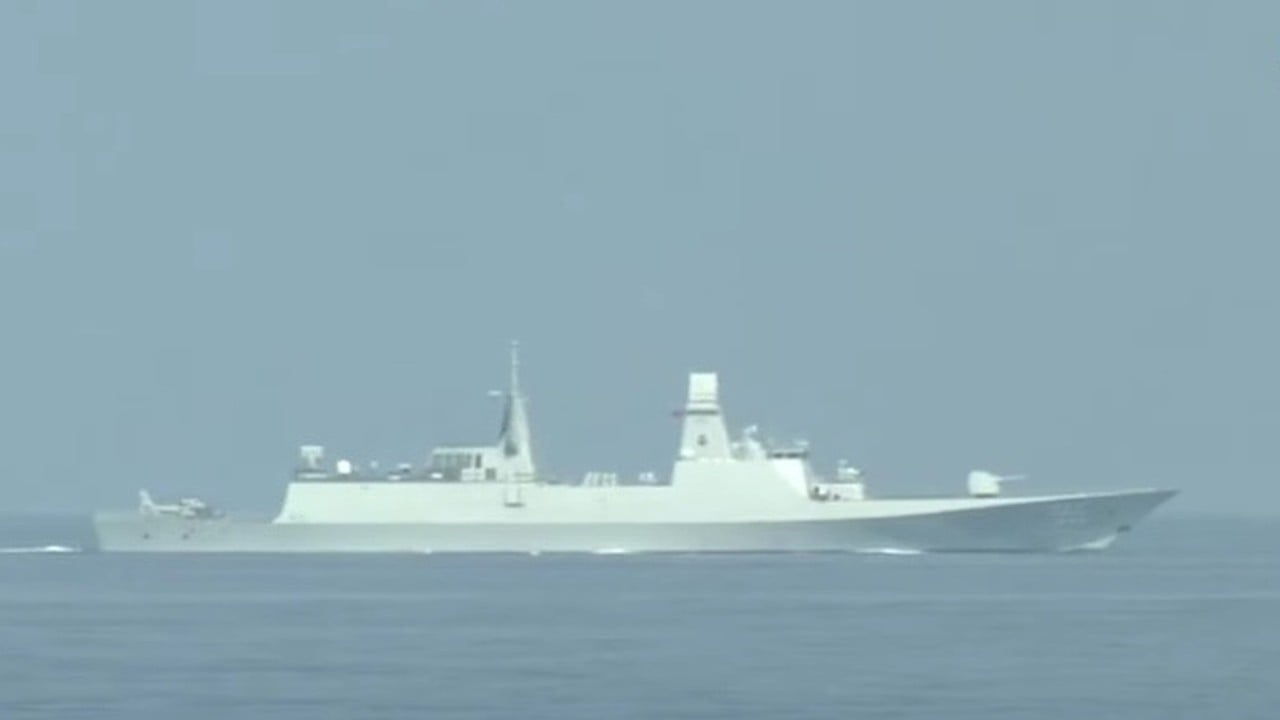
The tension in the South China Sea isn't a slow burn anymore. It's a powder keg with a remarkably short fuse. If you've been tracking the maritime back-and-forth between Manila and Beijing, you probably thought you'd seen it all. Water cannons. Intentional ramming. Aggressive laser flashing. But what just went down near the Scarborough Shoal raises the stakes to a terrifying new level.
We just witnessed a direct naval stand-off between Chinese warships and a Philippine Navy vessel. This wasn't the usual coast guard boxing match. It involved actual grey-hulled military assets facing off at sea. The incident happened right as the massive Salaknib 2026 joint military exercises wrapped up. Those drills involved over 7,000 troops from the Philippines, the United States, Japan, New Zealand, and Australia.
Beijing wanted to send a message. Manila refused to back down. Let's break down exactly what happened, why it represents a massive shift in grey-zone conflict, and what it means for the very real threat of a global conflict.
The Scarborough Shoal Flashpoint
The timeline leading up to this latest face-off matters immensely. Beijing has held de facto control over Scarborough Shoal since a tense two-month blockade back in 2012. It sits just 120 nautical miles west of the Philippine island of Luzon. That puts it squarely inside the country's 200-nautical-mile exclusive economic zone (EEZ). Yet Chinese government vessels have blocked Filipino fishermen from entering the rich lagoon for over a decade.
Things started boiling over again in late May. Satellite imagery captured a small, six-by-six-meter floating research structure anchored inside the shoal. Beijing claimed it was a routine scientific setup by the South China Sea Institute of Oceanology. Manila saw it for what it was. It was an attempt to establish a permanent physical footprint, paving the way for future militarization.
The diplomatic fallout was immediate. The Philippine Department of Foreign Affairs filed a flurry of protests. Surprisingly, a Chinese research vessel actually dismantled and removed the platform around mid-June. But the quiet didn't last. The real storm hit days later.
When Grey Hulls Meet
The core event of this latest stand-off involved the BRP Diego Silang. As the ship approached the vicinity of Scarborough Shoal, it found itself aggressively intercepted. Four Chinese warships swarmed the Philippine vessel. They cut off its path and ordered it to leave the area immediately.
The response from the Philippine crew was intense. Instead of retreating, the commanding officer ordered the ship’s onboard helicopter to launch. The aircraft flew directly over the contested waters at a mere 300 feet, providing eye-in-the-sky surveillance and documenting the encirclement.
Radio transcripts from the encounter show how high the adrenaline was running. The Chinese vessels radioed commands to exit what they called sovereign Chinese territory. The Philippine crew countered, broadcasting that they were conducting lawful operations within their own EEZ.
This marks a dangerous departure from previous incidents. Most encounters over the last few years involved the white hulls of the respective coast guards. Coast guard confrontations offer a layer of diplomatic insulation. They are treated as law enforcement disputes. When you bring navies into the mix, you lose that buffer. A single miscalculation, a nervous trigger finger, or a collision between two heavily armed warships changes everything. It triggers mutual defense treaties instantly.
The Alliance Shadow
You can't separate this naval chicken game from the geopolitical backdrop. The stand-off occurred exactly as Salaknib 2026 concluded. The scale of this year's exercise was unprecedented. It wasn't just a bilateral affair between Washington and Manila anymore. Bringing Japan, Australia, and New Zealand into active joint drills in the region signals a unified front. It's an explicit containment strategy aimed squarely at Beijing's expansive maritime claims.
Naturally, China views this multilateral alignment as a direct provocation. By deploying four warships to harass a Philippine vessel right after the drills ended, Beijing intended to show that foreign alliances don't intimidate them. They wanted to prove that when the allied fleets go home, the reality of Chinese proximity remains unchanged.
The strategic math has shifted for Manila too. Philippine Defense Secretary Gilbert Teodoro has openly discussed the country's intent to acquire serious deterrent firepower. We are talking about long-range Tomahawk cruise missiles and Typhon launcher systems from the US. Manila is also negotiating the purchase of decommissioned Abukuma-class destroyers from Japan, alongside advanced Type 88 surface-to-ship missiles. They're even integrating artificial intelligence into maritime tracking systems to predict Chinese fleet movements before they happen.
Manila is preparing for a fight. They're no longer relying purely on international legal rulings that Beijing simply ignores.
What Most People Get Wrong About This Dispute
Western observers often view these stand-offs as minor fish-and-reef arguments. That's a huge mistake. This isn't about fishing rights or small patches of sand. It's about control over global trade arteries. Trillions of dollars in commercial shipping pass through these waters every year. If Beijing successfully closes off the South China Sea, it gains a literal chokehold on the global economy.
There is also the terrifying reality of the US-Philippines Mutual Defense Treaty. Washington has repeatedly affirmed that an armed attack on Philippine public vessels, aircraft, or armed forces anywhere in the South China Sea will trigger American military intervention. By escalating confrontations from coast guard brawls to naval stand-offs, the margin of error has shrunk to zero.
Actionable Next Steps for Tracking the Crisis
Don't let this conflict slip under your radar. The situation changes week by week. If you want to keep an accurate eye on the geopolitical developments without getting bogged down in corporate media fluff, adopt a proactive tracking strategy.
First, look past the official press releases from both governments. Monitor independent satellite imagery providers and open-source intelligence analysts on maritime tracking platforms. They frequently post real-time automatic identification system data showing exactly where these naval stand-offs are occurring.
Second, pay close attention to the supply chain announcements of major tech and defense companies. The companies that rely heavily on the shipping lanes of the South China Sea are already shifting logistics routes. If you see massive logistics re-routing away from the Luzon Strait, you'll know the risk of a shooting war has spiked.
Finally, keep a close watch on the upcoming defense procurement updates from Manila. The moment the Philippines takes delivery of its first long-range missile batteries or Japanese naval assets, expect Beijing to react with an even heavier maritime blockade. The flashpoint is moving fast, and the next encounter could easily dwarf what we just saw at Scarborough Shoal.