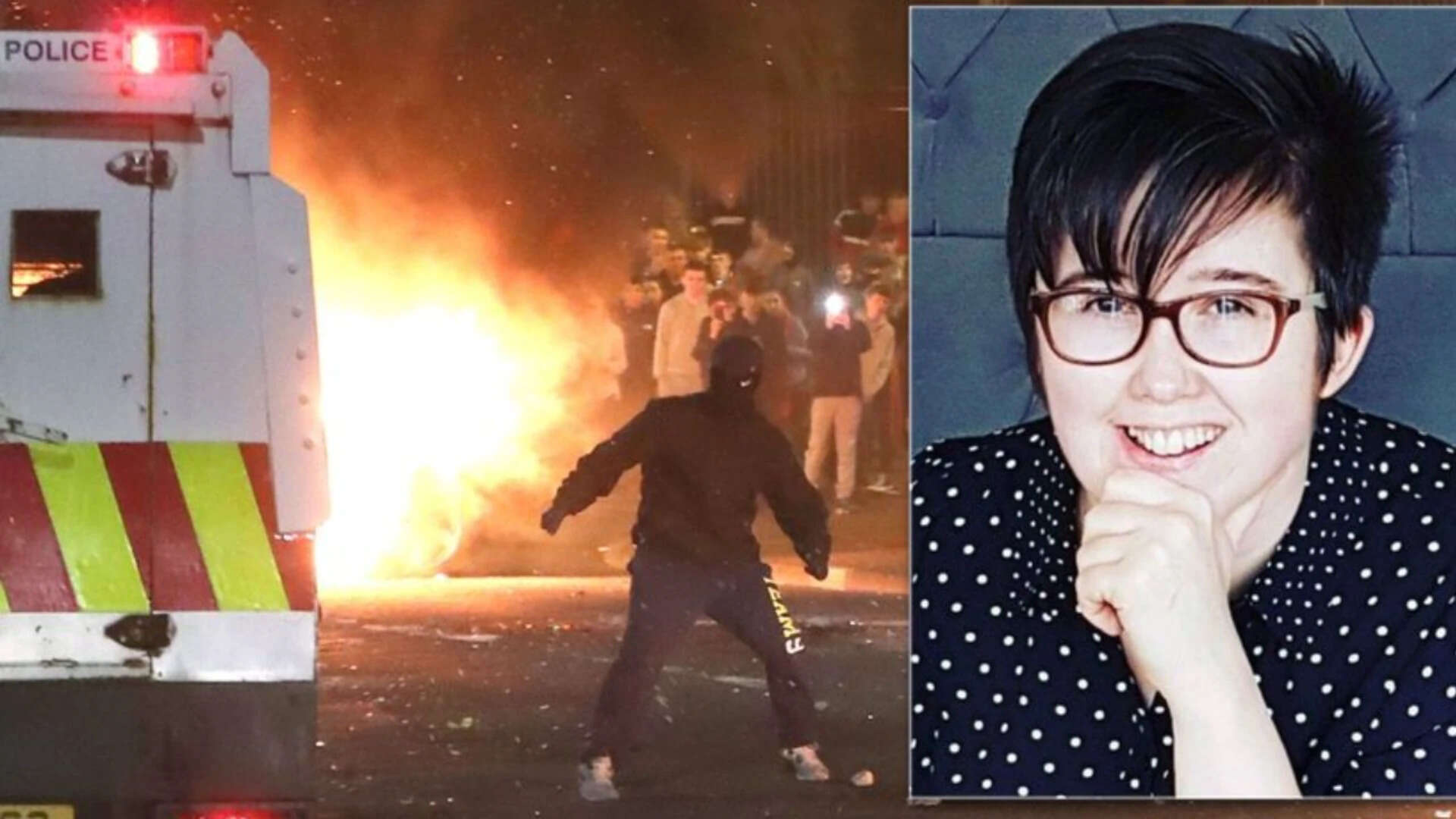
A courtroom can establish legal guilt, but it rarely delivers absolute truth. The devastating outcome at Belfast Crown Court on July 3, 2026, laid that reality bare. Three men walked free from murder charges linked to the 2019 killing of 29-year-old journalist Lyra McKee, leaving her family, her partner, and the wider press community in absolute shock.
The gunman who pulled the trigger during that April night in Derry remains completely anonymous. He's out there somewhere, shielded by a persistent wall of silence. For a different view, consider: this related article.
If you've been tracking this case since the horrific night in the Creggan estate, you probably hoped for a moment of finality. Instead, we got a stark reminder of how difficult it is to hold paramilitary violence accountable under standard legal frameworks. The verdict isn't just a blow to a grieving family; it exposes the fragile nature of justice in post-conflict Northern Ireland.
The Flawed Case of Joint Enterprise
Paul McIntyre, Peter Cavanagh, and Jordan Gareth Devine weren't accused of firing the fatal shot. The prosecution focused on a joint enterprise strategy. The state argued these men actively accompanied the masked gunman to the firing spot, intentionally encouraging and assisting the attack on police lines. Further coverage on this matter has been provided by TIME.
Mrs Justice Patricia Smyth spent nearly two years weighing the evidence in a non-jury trial that started back in May 2024. Ultimately, she ruled that the state's case didn't clear the high bar required for a criminal conviction. While she made it clear that Lyra McKee was murdered in an act of senseless violence, the circumstantial evidence tying these specific individuals to the gunman's actions fell short.
It's a massive distinction that often gets lost in public debates. In a court of law, "probably guilty" means an acquittal. Justice Smyth openly acknowledged that her ruling would offer little to no comfort to those who loved Lyra. The legal threshold protected the defendants, but it left a massive, painful void where accountability should be.
Breaking Down the Culture of Silence
The real tragedy of this trial extends beyond the legal technicalities. It brings us face-to-face with the stubborn survival of paramilitary intimidation.
The riot in Creggan wasn't a secret meeting in a dark alley. It was a highly public event, complete with petrol bombs, burning vehicles, and an MTV documentary crew filming right in the area. Dozens of people stood in close proximity when those four distinct shots rang out toward the police land rovers.
Yet, when it came time to build a case, usable eyewitness testimony was practically nonexistent.
Speaking outside the courthouse, Lyra’s sister, Nichola Corner, pointed directly at this systemic issue. She called out the culture of silence that continues to paralyze communities. People know what happened. People know who held the gun. But fear, twisted loyalty, or the deep-seated distrust of authorities keeps mouths shut. When a community refuses or fears to speak, the legal system relies entirely on circumstantial crumbs.
The Voice Northern Ireland Needed
Lyra McKee wasn't just an observer; she was the definitive voice of her generation. As a prominent freelance writer and National Union of Journalists (NUJ) member, she dedicated her work to exploring the struggles of "ceasefire babies"—the young people born after the 1998 Good Friday Agreement who still inherited the trauma, poverty, and sectarian divisions of the past.
She wrote about suicide rates, the lack of economic mobility, and the quiet ways the old conflicts refused to die. Her death was a brutal irony. She was killed by the exact residual violence she spent her career trying to dissect and dismantle.
The New IRA, a dissident republican splinter group that rejects the peace process, admitted one of its members accidentally shot her while targeting police officers. They offered an apology at the time, an empty gesture that means absolutely nothing when the group continues to hide the perpetrator.
What Happens Next for the Justice Campaign
The legal chapter at Belfast Crown Court might be over for these three men, but the McKee family refused to let this be the final word. They vowed that no stone will be left unturned.
If we want to ensure this kind of tragedy doesn't happen to another journalist or resident, we have to look past the courtroom walls. Relying purely on historical investigations isn't enough when the local environment protects the guilty.
The immediate path forward requires shifting the pressure back onto the community level and demanding real accountability from dissident political factions like Saoradh. The National Union of Journalists has already signaled that they won't let Lyra's name join a long list of forgotten cases, drawing parallels to the unsolved 2001 murder of Sunday World journalist Martin O'Hagan.
To break the deadlock, independent human rights watchdogs must increase scrutiny on paramilitary recruitment in working-class areas. True justice won't come from a surprise confession. It will happen when the social cost of shielding a murderer becomes too heavy for a community to bear.