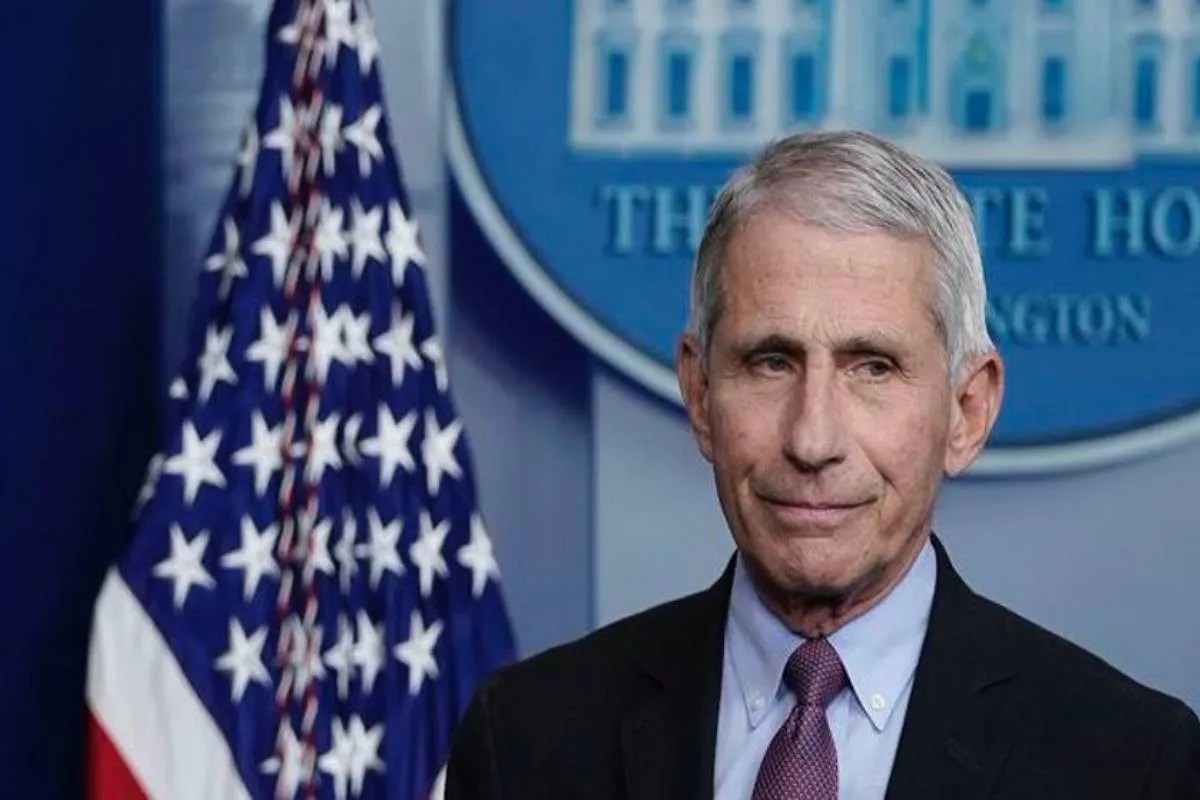
The internet is flooded with wild claims about Anthony Fauci. Sensational headlines paint him as an American mastermind who paid the Wuhan Institute of Virology to unleash COVID-19, alleging a massive deep-state cover-up that lasted seven years. It makes for a gripping thriller, but the messy reality of global virology funding is a lot more complicated than a comic book villain plot.
We need to clear up the confusion by looking at what actually happened with the money, the dangerous research, and the political battles that followed.
The Paper Trail of U.S. Dollars to Wuhan
Let's look at the actual math first. The National Institutes of Health (NIH)—specifically the National Institute of Allergy and Infectious Diseases (NIAID), which Fauci ran for decades—didn't hand a giant suitcase of cash directly to Chinese scientists to build a bioweapon.
Instead, the money flowed through a middleman.
A U.S.-based nonprofit organization called EcoHealth Alliance, led by Peter Daszak, received federal grants to study how coronaviruses jump from bats to humans. EcoHealth Alliance sub-awarded a portion of that money—about $600,000 over several years—to the Wuhan Institute of Virology.
The goal sounded practical on paper: map out wild bat viruses in caves so we could predict and prevent the next natural pandemic. But tracking wild pathogens comes with immense biological risks, and this specific setup quickly turned into a regulatory nightmare.
The Semantic Battle Over Gain of Function
The explosive core of this controversy comes down to three words: gain of function. This refers to laboratory research that alters an organism or disease to increase its transmissibility, lethality, or host range, allowing scientists to better understand potential threats.
For years, Fauci testified under oath before Congress, insisting that the NIH never funded gain-of-function research at the Wuhan lab. He argued that the specific experiments authorized by the grant were judged by qualified staff up and down the chain to fall outside that risky definition.
However, the semantic defense began to fracture during subsequent congressional hearings. In a tense session, NIH Principal Deputy Director Lawrence Tabak acknowledged to lawmakers that the experiments funded through EcoHealth Alliance did, in fact, enhance the growth of certain bat coronaviruses in mice.
While Fauci maintained that these modified strains were molecularly incapable of turning into the SARS-CoV-2 virus that caused the global pandemic, critics argued the semantic distinction was a dangerous deflection. The U.S. government had paused domestic funding for gain-of-function studies years prior due to safety concerns, yet taxpayer money was still supporting similar, loosely monitored viral engineering models overseas.
Why Transparency Failed for Seven Years
Accusations of a seven-year cover-up stem from a profound failure of oversight and bureaucratic self-preservation. It's not that a secret committee hid a bioweapon blueprint; rather, multiple institutions actively deflected scrutiny to protect their own interests.
- Oversight Failures: EcoHealth Alliance repeatedly violated its grant terms by failing to submit mandatory progress reports on time, lagging nearly two years behind deadlines. When the NIH finally requested the raw laboratory notebooks from the Wuhan experiments, the nonprofit couldn't produce them.
- Narrative Control: Behind the scenes, the public health establishment moved quickly to marginalize any discussion of a laboratory leak. Internal communications revealed that top officials actively promoted a specific academic paper—"The Proximal Origin of SARS-CoV-2"—to publicly frame the natural-origin theory as the only scientifically valid explanation.
- Bureaucratic Foot-Dragging: Congressional investigators had to spend years issuing subpoenas and conducting dozens of transcribed interviews just to pry loose basic emails. This institutional resistance created a vacuum that fueled widespread public distrust and conspiracy theories.
The Tangible Fallout of the Investigation
The fallout from these oversight failures eventually forced federal accountability. The U.S. Department of Health and Human Services officially suspended all federal funding to EcoHealth Alliance and initiated formal debarment proceedings against the organization.
Government oversight agencies also instituted stricter, less ambiguous review processes for high-consequence pathogen research. The era of writing vague grants to foreign labs with minimal day-to-day oversight has effectively ended under intense bipartisan pressure.
To understand how these events unfolded chronologically, look at the timeline of the funding and subsequent investigation.
Timeline of the Funding and Investigation
2014 — The Original Grant
The NIH awards a multi-million-dollar grant to EcoHealth Alliance to study bat coronavirus emergence, authorizing sub-grants to the Wuhan Institute of Virology for viral sampling and genetic testing.
2014 to 2017 — The Domestic Pause
The U.S. government places a temporary moratorium on domestic gain-of-function research funding due to safety risks. However, the EcoHealth project in China continues under an exemption.
2020 — Pandemic and Cancellation
COVID-19 spreads globally. Amid intense initial scrutiny regarding the virus's origins, the NIH officially cancels the remaining funding for the EcoHealth Alliance grant.
2021 — The Congressional Clashes
Fauci and Senator Rand Paul engage in fiery congressional hearings, debating the precise legal and scientific definitions of gain-of-function research.
2024 — Federal Admissions and Funding Cuts
The NIH acknowledges that funded research in Wuhan enhanced viral growth in test models. The Department of Health and Human Services officially suspends EcoHealth Alliance from receiving federal tax dollars.
Practical Next Steps for Evaluating Health News
Don't rely on hyper-partisan headlines or sensationalized social media commentary when evaluating evolving public health stories. Follow these analytical steps to verify complex scientific policy reporting:
- Track the Original Document: Read the actual declassification reports and congressional transcripts rather than relying on a media outlet's summary.
- Isolate the Middleman: Look for the specific organizations managing the funds. Government grants rarely go directly to foreign adversaries; they travel through domestic universities or research nonprofits.
- Verify the Specific Scientific Definitions: Pay close attention to when public officials use highly technical or legal definitions to answer broad safety questions.