The traditional image of military supply lines is changing. We are used to seeing massive C-17 transport jets or rugged Black Hawk helicopters flying through rough territory to drop boxes of ammunition, medical kits, or food. Those operations require highly trained pilots putting their lives on the line for routine distribution. The U.S. Army Reserve just tested a system that signals a shift away from this reality.
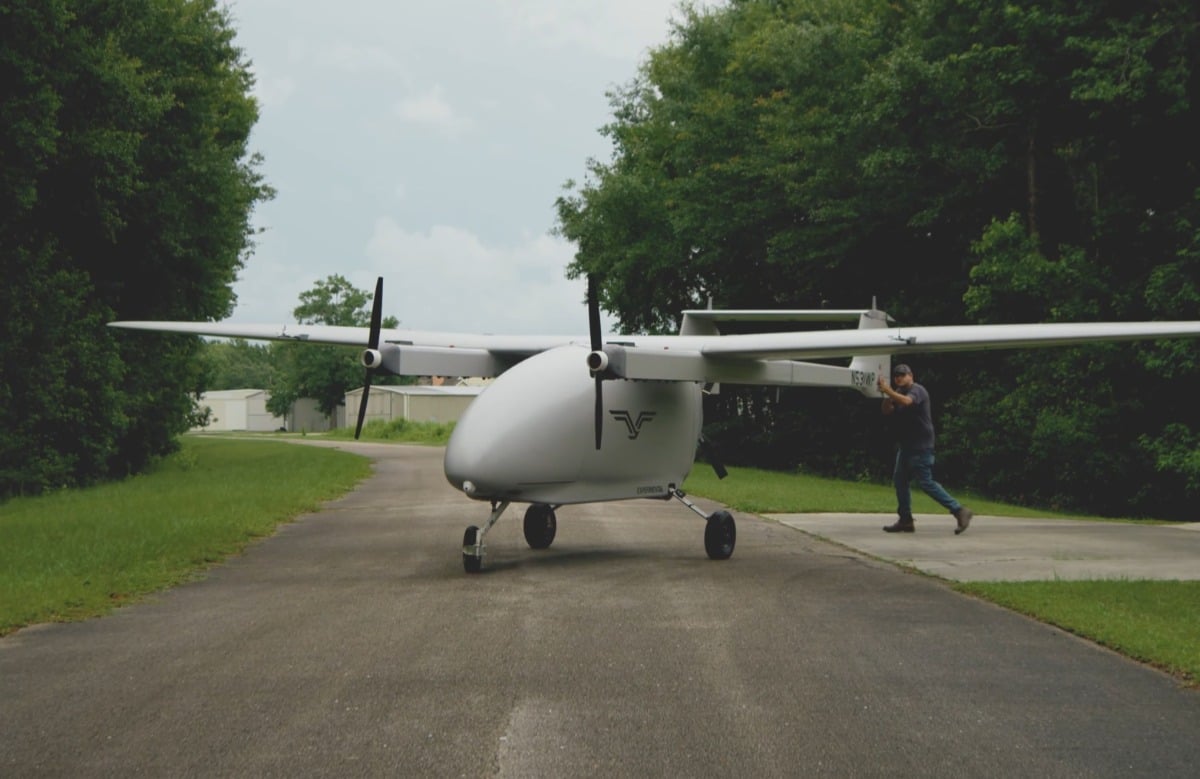
During the massive Combat Support Training Exercise (CSTX), held as part of Operation Sentinel Justice 26 in June 2026, the Army Reserve didn't just practice traditional logistics. They integrated a fully autonomous, heavy-lift aircraft built by California startup Pyka. The platform, named DropShip, features no cockpit, no steering yoke, and zero capability for a human pilot to step in and take over manually.
This wasn't a closed-door laboratory demonstration. The aircraft was handed over to ordinary soldiers who used it to execute real-world tactical profiles, including a 20-mile fully autonomous flight from Gulfport to Diamondhead, Mississippi, culminating in a 200-pound precision cargo airdrop.
The Reality of Contested Logistics
The U.S. military is currently obsessed with a concept called "contested logistics." For decades, American forces enjoyed total air superiority. Supplies landed safely at massive hubs and moved forward in trucks without much fear of air interception. Recent conflicts in Ukraine and the Middle East completely destroyed that assumption. Cheap, ubiquitous one-way attack drones and precision artillery mean that large, concentrated supply hubs are simply massive targets.
To survive, forces must disperse. Instead of one massive base, you have dozens of small, isolated units scattered across rough terrain or island chains.
If you try to feed, fuel, and rearm those scattered units using manned helicopters, you run into three massive walls.
- The Pilot Bottleneck: Pilots are expensive to train, require rest cycles, and are in short supply.
- The Cost Curve: Flying a multi-million-dollar crewed helicopter to deliver 150 pounds of blood plasma or radio batteries is a financial disaster.
- The Threat to Life: Sending a crew of four into a contested zone to deliver routine supplies is an unacceptable risk.
That's where the Pyka DropShip steps in. Built on the foundation of Pyka's commercial agricultural spraying and regional freight platforms, it is designed from the ground up without a cockpit cavity. This structural choice reduces the overall empty weight of the airframe, maximizing its structural efficiency and payload capacity.
What Happened at the Army Reserve Exercise
Operation Sentinel Justice 26 was the largest exercise in the history of the U.S. Army Reserve, drawing in over 12,000 soldiers. While the 75th U.S. Army Reserve Innovation Command focused heavily on evaluating counter-drone defense systems like handheld jammers and AI sensor fusion platforms, they also tested the offensive and logistical side of autonomous aviation.
Pyka's DropShip proved it could handle three distinct, messy scenarios that define modern tactical field operations.
1. Autonomous Precision Airdrop
The aircraft took off, navigated a 20-mile route entirely on its own, and executed a low-altitude parachute airdrop from 300 feet. The 200-pound payload landed exactly where it was supposed to. This capability relies on Pyka's custom flight control software, which continuously calculates wind drift and ground speed to release the payload without human intervention.
2. Unimproved Runway Operations
The military doesn't always have luxury runways. DropShip proved its expeditionary capability by taking off and landing on a rough, unprepared grass strip. Because the aircraft uses a high-thrust propulsion system and rugged landing gear, it bypasses the need for paved infrastructure entirely.
3. Mock Casualty Evacuation (CASEVAC)
In a notable twist, the exercise included a demonstrative casualty evacuation scenario. While the platform is built for cargo, the ability to rapidly send an uncrewed, low-risk asset to extract a casualty or deliver urgent medical tech directly to a hot zone changes how battlefield medics can plan their responses.
Commercial Pedigree Over Military Paperware
The defense sector is notorious for spending a decade and billions of dollars developing a single drone that ends up too expensive to risk in actual combat. Pyka bypassed this entirely by leveraging a platform that had already logged tens of thousands of commercial flight miles doing demanding, low-altitude agricultural spraying in South America.
The DropShip platform went from a blank sheet concept to its first flight in just six months. Two months later, it was dropping precision payloads for the military.
Pyka DropShip Core Capabilities:
- Payload Capacity: Up to 550 pounds
- Range: Up to 3,500 miles
- Operations: Runway independent (Grass, dirt, or short fields)
- Cockpit: None (100% autonomous software control)
The commercial variant, known as the Pelican Cargo, is an all-electric system that carries 400 pounds over a 200-mile range. For the military's broader operational needs, Pyka has also collaborated with traditional defense contractors like Sierra Nevada Corporation (SNC) to introduce variants like the "RUMRUNNER"—a militarized configuration designed to tackle the massive distances of the Pacific theater without requiring forward-staged bulk fuel.
The Economics of Removing the Human
The financial argument for autonomous short-haul logistics is brutal. In commercial regional air freight, the pilot's salary, training, scheduling constraints, and mandatory rest periods make up roughly half of the total operating costs on short routes. By stripping the human out of the loop, a standard short-haul flight leg that costs $400 in a piloted aircraft drops to roughly $80.
In a military framework, those savings translate to mass. If an autonomous cargo plane gets shot down by a shoulder-fired missile, you lose a piece of carbon fiber and some electric motors. You don't lose a pilot who took two years and millions of dollars to train, and you don't face the political or moral fallout of a captured or killed crew.
Actionable Next Steps for Defense and Logistics Planners
If you are tracking the evolution of unmanned systems or working within military logistics modernization, stop looking at high-altitude strategic drones and start focusing on low-altitude tactical mass. Here is how to apply the lessons from the latest Army Reserve testing.
- Evaluate the Logistics Tail: Transition your operational planning away from central hubs. Calculate the exact payload requirements for your smallest distributed units and see if they fit within the 400 to 550-pound sweet spot of Group 3 uncrewed aerial systems.
- Prioritize Software-First Platforms: Look at commercial dual-use tech. Platforms with thousands of hours of flight time in agriculture or commercial freight are inherently more reliable and cheaper to field than bespoke military-only projects.
- Build Training Around Autonomy: The Army Reserve's test shows that everyday soldiers can manage autonomous operations without needing a traditional pilot's license. Shift training focus toward mission planning software, payload securing, and quick-turnaround field maintenance rather than manual flight skills.
The era of flying a crewed helicopter to deliver routine boxes of rations is drawing to a close. The future belongs to lean, pilotless airframes built to be used, risked, and scaled.