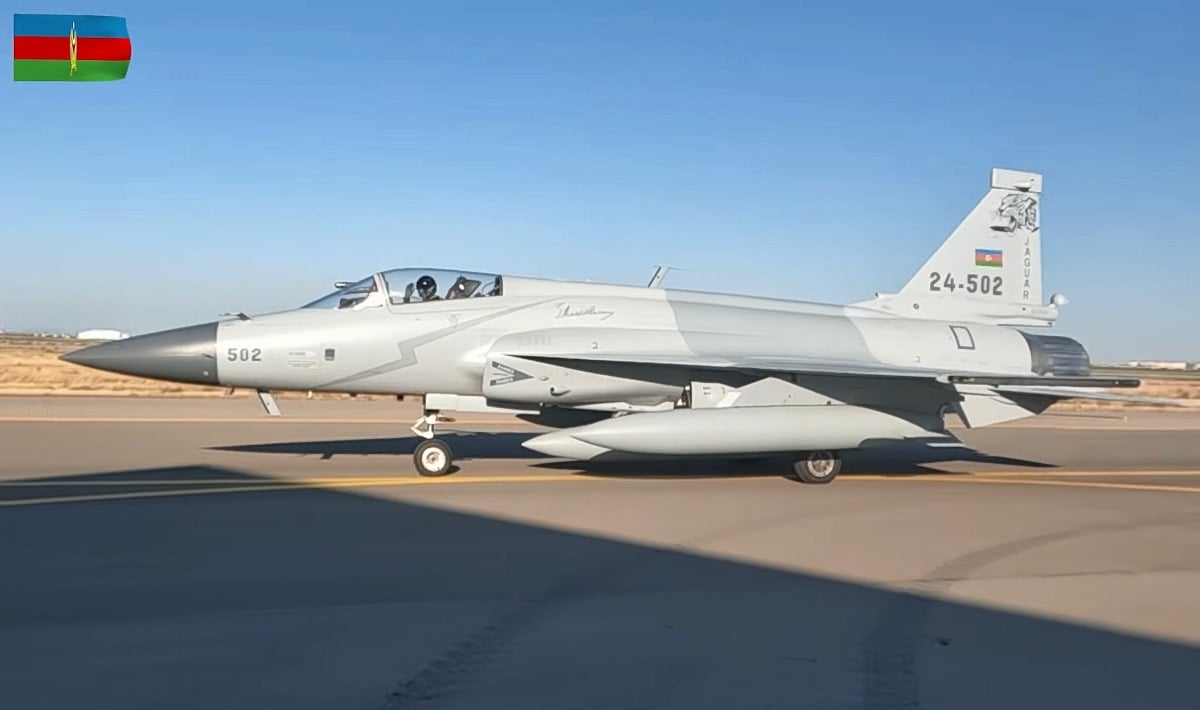
Azerbaijan just changed the military balance in the South Caucasus. The defense ministry recently released footage showing that the air force has integrated its new Chinese-Pakistani fighter jets into active duty. This isn't just a basic equipment upgrade. It's an overhaul of how Baku plans to fight future wars.
When Azerbaijan confirms JF-17 jets are officially in service, it signals the death of legacy Soviet hardware in the region. The country is trading its aging MiG-29 fleet for a platform built for modern, networked warfare. If you think this is just a minor transaction between minor states, you're missing the bigger picture. You might also find this connected article useful: Why The India Indonesia Prambanan Temple Project Matters More Than Just Diplomacy.
The Actual Scale of the US Dollar 4.6 Billion Deal
Most early analytical reports estimated that Baku would buy about a dozen planes. Those numbers turned out to be completely wrong. The expanded contract covers 40 JF-17 Block III aircraft, making this the largest defense export contract in Pakistan's history.
Baku spent over 4.6 billion dollars on this package. That money doesn't just buy airframes. It pays for an entire ecosystem, including flight simulators, extensive pilot training programs, spare parts, and advanced ordnance packages. As highlighted in detailed reports by The Washington Post, the implications are widespread.
During recent military maneuvers under the 2026 Training Plan, the air force showed off its first batch of these aircraft. Spotters and open-source intelligence analysts identified at least nine jets on the ground, including six single-seat JF-17C models and three twin-seat JF-17B variants. They're already assigned to the 408th Fighter Jaguars Squadron stationed at Nasosnaya Air Base near Baku.
What the JF-17 Block III Actually Brings to the Table
Let's look past the political handshakes and focus on what these planes can do. The Block III variant is a massive leap over the older Block I and II versions that Pakistan has flown for years. It features an active electronically scanned array radar, which lets pilots track multiple targets at longer distances without giving away their own position.
- Beyond Visual Range Dominance: The jets are compatible with the Chinese PL-15E air-to-air missile. This weapon has a reported engagement range that completely outperforms anything Armenia currently puts in the sky.
- Targeting and Precision: Baku didn't just buy a closed Chinese system. They are actively integrating Turkish technology into these platforms. The aircraft are equipped to carry Turkish Aselsan targeting pods, allowing them to drop laser-guided munitions with high precision.
- Refueling Capabilities: The visible fixed refueling probes on the newly displayed jets mean these aircraft can stay airborne far longer, giving Baku the ability to patrol critical Caspian maritime corridors for hours.
The older Soviet MiG-29s that Baku relied on for decades couldn't handle this type of digital integration. They were analog relics. The new jets use modern tactical datalinks that connect the fighters to Turkish-made unmanned aerial vehicles and ground-based radar networks.
Moving Away From Moscow
The shift to the JF-17 represents a deliberate geopolitical pivot. For decades, South Caucasus nations relied heavily on Russian military hardware. That reality is fading fast.
By choosing a joint Pakistani-Chinese platform, Azerbaijan secures an unsanctionable supply chain. They don't have to worry about Western export restrictions, and they don't have to wait on a struggling Russian defense industry that is currently consuming its own production capacity.
There's a fascinating side effect to this transition. As Baku stands up its 40-strong fleet of new fighters, the old MiG-29s are heading out the door. Analysts tracking regional defense movements suggest that some of these retired Azerbaijani MiGs could eventually find their way to Ukraine. Kyiv's air force already knows how to fix and fly them, and their need for extra airframes is permanent. While official channels remain quiet on a transfer, the factories in the Lviv region have historically handled maintenance for Azerbaijani aircraft, making an unofficial handoff highly plausible.
The Trilateral Axis in Action
You can't look at this deal without looking at the growing trilateral alliance between Baku, Islamabad, and Ankara. This partnership is reshaping regional defense.
The integration process started well before the official active duty announcement. In late 2025, Pakistani pilots brought their own aircraft to Azerbaijan for the Indus Shield Alpha exercises to help local crews get up to speed. Shortly after, Azerbaijani crews took their new planes to Türkiye for the Guardians of Skies exercises.
This trilateral cooperation creates a serious headache for regional rivals. Armenia has attempted to counter this buildup by purchasing Indian weapons and exploring partnerships with France, but the scale of Azerbaijan's modernization leaves a massive gap in capabilities. Baku now possesses an operational air combat doctrine built around electronic warfare resilience and distributed targeting networks.
Actionable Steps for Monitoring Regional Airpower
If you track defense procurement or geopolitical shifts in Eurasia, don't look at individual announcements in isolation. Use these specific indicators to monitor how this deployment progresses over the next twelve months.
- Watch the Delivery Rate: Monitor satellite imagery and spotter reports from Nasosnaya Air Base to see how quickly the remaining 31 aircraft from the 40-plane order arrive. Faster deliveries mean the integration timeline is accelerating.
- Track Turkish Munition Integration: Look for future live-fire exercise videos to confirm whether Baku successfully integrates Turkish air-to-air missiles or stand-off weapons onto the Pakistani airframe. This will reveal the true depth of their software integration.
- Monitor the Fate of the MiGs: Keep an eye on open-source flight trackers and defense export documents for any movement of retired Azerbaijani MiG-29 parts or airframes toward Eastern Europe.
The era of Soviet air dominance in the South Caucasus is officially over. Baku has chosen its side, bought its fleet, and put its new doctrine into flight.