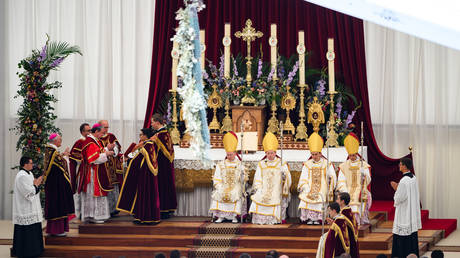
The Catholic Church just fractured right before our eyes, and it wasn’t over a modern political debate or financial corruption. It was over a centuries-old ritual. On July 1, 2026, a traditionalist group known as the Society of Saint Pius X (SSPX) openly defied Pope Leo XIV by consecrating four new bishops without his permission at their seminary in Econe, Switzerland. The Vatican warned them. The Pope begged them not to do it. They did it anyway.
This move triggered an automatic excommunication for everyone involved. It marks the first major structural crisis of Leo XIV's papacy, drawing a hard line in the sand between Rome and an ultra-traditionalist parallel church that has been growing in the shadows for decades. If you think this is just an inside-baseball argument for theologians, you’re missing the bigger picture. This split reveals a deeper ideological warfare that affects millions of believers globally. Meanwhile, you can explore other developments here: Why The Myanmar Post-coup Conflict Is Asia Deadliest Hidden War.
The Breaking Point in Econe
The atmosphere in Econe looked more like a triumphal festival than a solemn exit from the global Catholic church. Thousands of traditionalist faithful gathered under a massive tent in a misty Swiss valley. Bells tolled as hundreds of priests processed two-by-two in gold-trimmed vestments. They even passed out custom baseball caps reading "Econe2026" and sold commemorative wine bottles.
Behind the festive exterior lay a harsh canonical reality. Bishop Alfonso de Galarreta, who was himself illicitly consecrated back in 1988, laid hands on four new bishops: Pascal Schreiber of Switzerland, Michael Goldade of the United States, Michel Poinsinet de Sivry of France, and Marc Hanappier of France. To understand the full picture, we recommend the recent report by NBC News.
By doing this, the SSPX intentionally walked off a cliff. Under Catholic canon law, ordaining a bishop without a mandate from the pope results in immediate, automatic excommunication (latae sententiae). The Vatican doesn’t even need to hold a trial. The moment the ceremony finished, the spiritual tie snapped.
Why the Rebels Claim It was a Sacred Duty
To understand why the SSPX would willingly accept the harshest punishment the Catholic Church can hand down, you have to understand their worldview. They don’t see themselves as rebels. They see themselves as the last true keepers of the flame.
The SSPX was founded in 1970 by French Archbishop Marcel Lefebvre. He rejected the modernizing reforms of the Second Vatican Council, which took place in the 1960s. Vatican II changed a lot of things. It allowed the Mass to be said in local languages instead of Latin. It encouraged closer ties with other religions and promoted religious freedom. To Lefebvre and his followers, these changes weren’t progress. They were heresies that diluted the faith.
The group argues that their current defiance is born out of a "state of necessity." They currently claim to have around 750 priests, 264 seminarians, and over 600,000 followers worldwide, with massive footprints in France and the United States. Before July 1, they only had two living bishops left who were healthy enough to travel and ordain new priests. Without new bishops, the SSPX would eventually die out. Their media manager, Marc-André Mabillard, summed up their stance bluntly by saying they don't fear the punishment, because the good they seek is greater than the pain inflicted upon them.
The Pope Pleaded for Unity
This showdown is particularly painful for Pope Leo XIV, the first American pontiff. Since taking office, Leo has tried to heal the wounds left behind by Pope Francis. Francis had famously clamped down hard on the traditional Latin Mass, restricting its celebration worldwide because he felt it was becoming a tool for division. That restriction backfired. It actually pushed frustrated conservative Catholics straight into the arms of the independent SSPX.
Leo tried a softer approach, showing a willingness to grant exceptions and open up talks. Cardinal Víctor Manuel Fernández, the Vatican's doctrinal chief, even offered the SSPX a path toward formal legal recognition within the Church. The catch was simple: they had to cancel the July 1 consecrations and accept the core teachings of Vatican II.
The SSPX refused. They stated they cannot agree doctrinally with Rome if the Vatican refuses to correct the texts of the Council.
On June 29, just two days before the event, Pope Leo wrote a personal letter to Father Davide Pagliarani, the superior general of the SSPX. He praised their devotion to liturgy and priestly formation, but he practically begged them to turn back. He warned that tearing the fabric of the church is a sin of extreme gravity that would ultimately harm their own followers by cutting them off from lawful sacraments. The letter went unheeded.
A Repeat of History
If this story sounds familiar, it’s because we’ve seen this movie before. In 1988, Archbishop Lefebvre did the exact same thing. He consecrated four bishops without the permission of Pope John Paul II. The Vatican declared a formal schism and excommunicated them all.
Decades of diplomatic clean-up followed. In 2009, Pope Benedict XVI lifted those original excommunications as a gesture of goodwill, hoping to bring the group back into the fold. Pope Francis later granted their priests the temporary faculty to hear valid confessions and bless marriages legally.
All of that patient diplomacy was erased in a single morning in Switzerland. By creating a new generation of unauthorized bishops, the SSPX has ensured that its parallel hierarchy will survive for decades to come, entirely independent of Rome.
What This Means for Everyday Catholics
This isn't just about ancient languages or liturgical preferences. It's about authority. The core issue of a schism isn't always about what you believe; it's about who you obey. The SSPX claims they respect the Pope, but their actions prove they only respect a pope who agrees with their specific interpretation of history.
For conservative Catholics who love the Latin Mass but want to stay loyal to the Pope, this event makes life incredibly difficult. They are now forced to choose between a liturgy they love and full communion with Rome. The Vatican has made it clear that attending SSPX chapels and supporting this movement now means aligning with a formal schism.
Next Steps for Navigating the Catholic Fracture
If you are trying to understand how to handle this shift or want to track where the fractured pieces fall, look at these specific areas.
First, check the status of your local parish. If you attend a traditional Latin Mass, find out if the officiating priests belong to the SSPX or to groups like the Priestly Fraternity of St. Peter (FSSP). The FSSP loves the old Latin Mass but remains completely loyal to the Pope and rejects the Econe consecrations. Staying with papal-approved traditional groups keeps you clear of the canonical fallout.
Second, monitor the Vatican's official response updates. The Dicastery for the Doctrine of the Faith will likely issue specific decrees regarding the lay faithful who attend SSPX chapels. Pay attention to those documents to see how strictly Rome intends to enforce the boundaries of this schism on everyday churchgoers.
Third, watch the money and the property. The SSPX owns hundreds of schools, churches, and priories globally. Because they operate as independent legal entities outside the standard Catholic dioceses, none of these properties belong to Rome. The growth or stagnation of their independent network over the next year will show whether this radical break attracts more frustrated conservatives or scares them away.