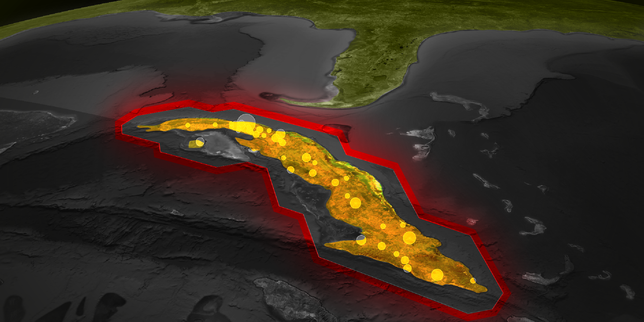
Walk outside in Havana tonight and you will stand in pitch-black darkness. It isn't a normal power outage. For weeks, Cuba has faced rolling, 24-hour blackouts that have brought the island to an absolute standstill. Food is rotting in silent refrigerators. Surgeries are being called off. Factories have completely shut down.
While it's easy to blame the island's decrepit infrastructure—and it is decrepit—the real driver behind this sudden economic tailspin is a massive, quiet shift in Washington. This isn't the old trade embargo your parents read about. Over the last six months, the US government has constructed a hyper-aggressive, airtight financial wall around the island that is systematically suffocating Cuba's economy. Meanwhile, you can read other events here: Why The Strait Of Hormuz Bottleneck Is Handing India A Massive Supply Chain Headache.
If you want to understand why Cuba's current crisis is different from any downturn before, you have to look at the math behind Washington's newest weapon: the secondary sanction.
The Tanker Standoff That Sparked a National Emergency
Cuba doesn't produce enough oil to keep its lights on. It never has. For decades, it survived on heavily subsidized petroleum shipped from Venezuela and Mexico. But earlier this year, that lifeline was abruptly severed. To understand the bigger picture, we recommend the excellent report by BBC News.
On January 29, 2026, the White House signed Executive Order 14380, declaring a national emergency regarding Cuba. This single document authorized the US government to impose crushing tariffs on imports from any foreign country that supplies crude oil or petroleum products to the island.
The strategy worked with brutal efficiency.
Mexico's state-owned Pemex quickly halted shipments to avoid getting walloped by US tariffs. Shortly after, the US began actively blocking oil tankers heading toward Cuban ports. It's the first time we've seen a highly effective naval fuel blockade on the island since the Cuban Missile Crisis in 1962. By February, Cuba's main airports had completely run out of aviation fuel, forcing them to halt refueling for international commercial flights.
When a single Russian tanker managed to slip through the dragnet in spring, the percentage of the island suffering from blackouts instantly dropped from 60% to 30%. But a single ship is just a band-aid on a severed artery. Within two weeks, the fuel was gone, and the darkness returned.
The Terrorist Label and the Threat of Disappearing Capital
The true brilliance—or cruelty, depending on how you look at it—of modern US strategy lies in keeping Cuba on the State Sponsors of Terrorism list.
The Trump administration reinstated Cuba on this list in 2021, and despite a late attempt by the departing Biden administration to remove it, the designation was immediately locked back into place on January 20, 2025.
On paper, the designation claims Cuba harbors criminal fugitives and maintains ties with foreign adversaries like Iran and Russia. In reality, the legal label serves a purely financial purpose. It triggers automatic compliance red flags for international banking networks.
Think about it from the perspective of a European or Latin American banker. If your institution handles a transaction that touches a designated state sponsor of terrorism, you risk losing access to the US financial clearing system. You face billions of dollars in fines from the US Treasury. So, what do global banks do? They run away. They refuse to process wire transfers for medical supplies, food imports, or basic commercial goods destined for Havana. Even completely legal humanitarian aid gets blocked because compliance departments don't want to take the risk.
Targeting the Military Corporate Umbrella
For years, foreign investors found a loophole by dealing with GAESA, the massive military-run conglomerate that controls roughly 40% of the Cuban economy. From luxury tourist resorts and retail chains to financial services, GAESA was the real corporate engine of the island, bringing in annual revenues that tripled the entire Cuban state budget.
That loophole closed permanently on May 1, 2026, when Washington issued Executive Order 14404.
This directive applied the exact same style of secondary sanctions to Cuba that the US uses against Russia and Iran. It targeted any foreign company or person operating in Cuba's energy, defense, financial, or mining sectors. Less than a week later, the State Department officially blacklisted GAESA and its executive president, Ania Guillermina Lastres Morera.
This move effectively criminalized international business with Cuba. If a Spanish hotel chain or a Canadian mining firm continues to operate alongside GAESA, they face a total asset freeze and a complete ban from doing business in the United States. Foreign corporations were given until June 5 to wind down their operations. Most chose their US market access over their Cuban investments.
The Human Toll of an Economic Shutdown
This isn't just a macroeconomic debate or a story about corporate balance sheets. The combination of the fuel blockade and financial isolation is shrinking Cuba's gross domestic product by an estimated 7.2% by the end of this year.
The daily reality for ordinary Cubans is bleak:
- Food Security: Without power for refrigeration, families cannot store perishable food. Combined with the collapse of domestic agriculture due to lack of fuel for tractors, basic proteins have vanished from local markets.
- Healthcare Collapse: Hospitals are running on dwindling generator power. Basic medical equipment cannot be sterilized, and complex surgeries are being delayed indefinitely.
- The Mass Exodus: The economic pressure is driving an unprecedented migration wave. More than 850,000 Cubans have fled to the United States over the past few years alone, draining the island of its youngest and most educated workers.
Washington's stated goal is to force a political transition on the island by the end of the year. Whether this pressure leads to a political breakthrough or simply deepens a massive humanitarian catastrophe on an island just 90 miles from Florida remains the critical question.
Tracking the Reality of the Crisis
Understanding the evolving situation requires looking past official political statements and monitoring specific, verifiable metrics:
- Monitor Local Fuel Prices and Blackout Schedules: Track the data published daily by the Unión Eléctrica de Cuba (UNE). Watch the percentage of "deficit generation" during peak hours; any number consistently above 40% indicates a severe shortage that directly halts local private businesses.
- Track Shipping Manifests: Use maritime tracking platforms to observe oil tanker traffic in the Caribbean. Look specifically for vessels departing from Venezuelan ports or Russian operations to see if the blockade is holding or if alternative supply lines are opening.
- Audit OFAC Enforcement Notices: Keep a close eye on updates from the US Treasury's Office of Foreign Assets Control (OFAC). The civil penalties issued against foreign banks or shipping lines serve as the best indicator of how strictly secondary sanctions are being enforced globally.