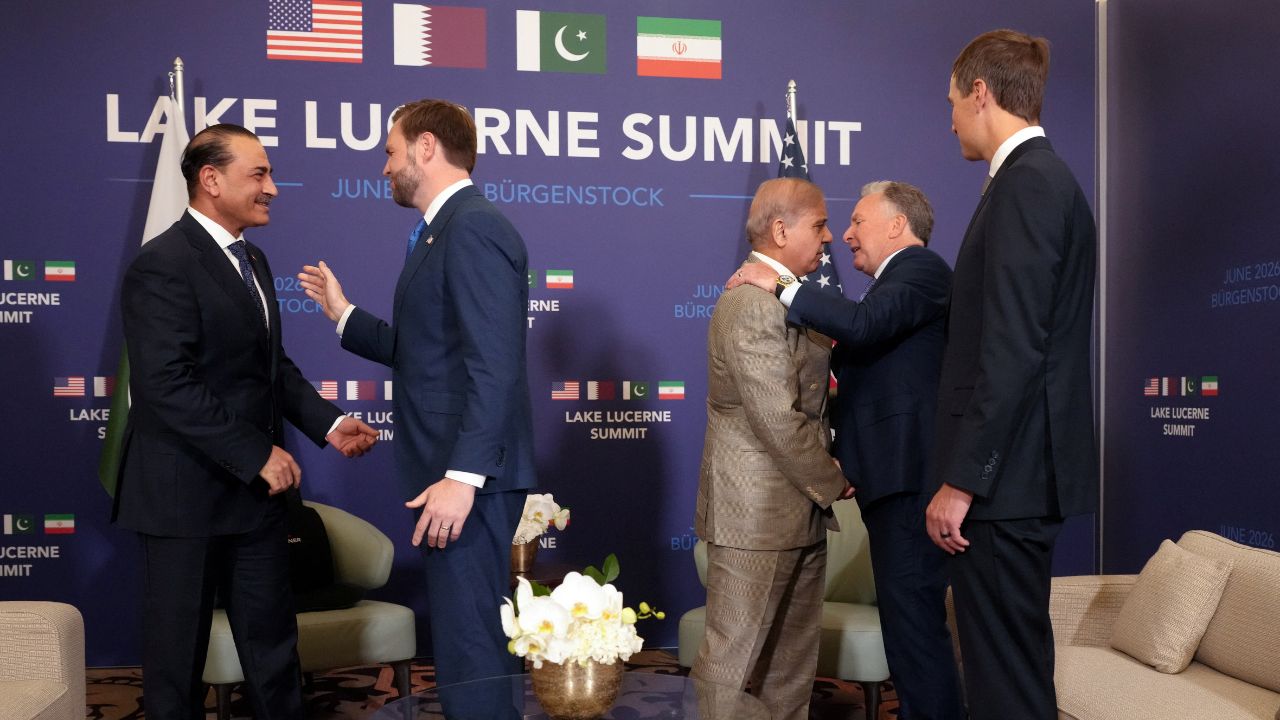
The ink isn't even dry on the interim agreement, and the entire framework is already falling apart. On Saturday, Iran threw a massive wrench into the gears of the upcoming diplomatic meetings, declaring that it has shut down the Strait of Hormuz. This aggressive stunt comes right as negotiators head to Bürgenstock, Switzerland, for highly anticipated Sunday talks aimed at settling a long-term nuclear and regional peace agreement.
Tehran claims the closure is a direct response to continuous Israeli strikes inside Lebanon, accusing Washington of breaking its promises to enforce a ceasefire. Meanwhile, the U.S. military says it's business as usual in the strait, flatly denying that Iran has any real control over the shipping lanes. It's a chaotic game of chicken that threatens to drag the global economy and the Middle East back into absolute chaos.
If you're wondering why this sudden flare-up matters, the answer is simple. The newly signed US Iran deal was supposed to stabilize the oil market and halt a catastrophic regional war. Instead, we're seeing an immediate return to brinkmanship. You can't separate nuclear diplomacy from real-world violence, and right now, the violence is winning.
The Swiss Diplomacy and the Hormuz Stunt
The timing of Tehran's announcement couldn't be worse for international diplomats. Technical-level talks are scheduled to kick off Sunday in Switzerland, with Pakistan and Qatar serving as the primary mediators. The Iranian delegation features heavy hitters, including parliamentary Speaker Mohammad Bagher Qalibaf and Foreign Minister Abbas Araghchi, alongside top banking and energy officials. They aren't going to Switzerland to play nice. They're going with demands.
Iranian Foreign Ministry spokesperson Esmail Baghaei made it clear that Tehran views the trip as an exercise in demanding enforcement, not making concessions. If the U.S. can't force Israel to halt its military operations against Hezbollah in Lebanon, Iran warns the entire memorandum of understanding will collapse. They want the world to know they have options, and their preferred option right now is choking the global energy supply.
On the American side, Vice President JD Vance confirmed that top negotiators Jared Kushner and Steve Witkoff are already on the ground in Switzerland. They've been grinding through the highly technical details of Iran's nuclear infrastructure, trying to find a compromise that satisfies hardliners back home. Vance himself plans to arrive within days, but he openly admitted to reporters that coordinating this diplomatic dance is incredibly delicate. The interim agreement gives both sides a strict 60-day window to hammer out a final nuclear deal. Right now, making it through the weekend feels like an uphill battle.
The Chaos in Southern Lebanon Explains the Rage
To understand why Iran is choking the world's most critical energy chokepoint, you have to look at what's happening on the ground in Lebanon. The interim deal signed earlier this week was supposed to bring an immediate halt to all military operations. It called for a total ceasefire on all fronts and explicit respect for Lebanese sovereignty.
The problem is that neither Israel nor Hezbollah actually signed the document. They are fighting their own war, completely detached from what diplomats are signing in European resorts.
On Saturday, Israeli airstrikes tore through southern Lebanon, killing at least 16 people, including two children. Strikes leveled homes in Nabatiyeh and surrounding villages like Barish, where an entire family of four was wiped out. Drone strikes targeted motorists and even killed a Lebanese army soldier in villages like Doueir and Kfar Rumman. According to Lebanon's health ministry, the overall death toll from this brutal cycle of violence has now crossed the tragic threshold of 4,000 people. The destruction is immense, and the humanitarian crisis is worsening by the hour.
Hezbollah hasn't backed down either. An Israeli military official noted that the militant group launched more than 50 rockets and drones at Israeli positions in southern Lebanon overnight. Israeli forces under Brig. Gen. Effie Defrin claim they're operating in a necessary forward defense zone and have no intention of stopping until northern Israel is totally secure. While Israeli Ambassador to Washington Yechiel Leiter claimed Israel is committed to a ceasefire if Hezbollah stops hostilities, the reality on the ground tells a completely different story. Both sides are deeply dug in.
An anonymous Hezbollah official revealed that Iran has explicitly told them the Strait of Hormuz will stay blocked until Israel publicly declares a comprehensive, unconditional ceasefire in Lebanon. This leaves the U.S. trapped in the middle, trying to manage an ally it cannot fully control and an adversary it cannot trust. It's a structural flaw in the negotiation framework that should have been addressed before anyone flew to Switzerland.
The Oil Market Crisis and the American Pushback
The economic stakes here are massive, and Donald Trump has already added fuel to the fire. Under the initial terms of the interim deal, the U.S. lifted its blockade on Iranian ports, allowing Tehran to sell its oil freely and preparing to unfreeze billions in state assets. In exchange, the global shipping industry expected safe passage through the region. Instead, they got more uncertainty.
Trump has publicly threatened to charge U.S. tolls in the Strait of Hormuz if a final pact isn't reached within the 60-day limit. It's a radical, legally shaky proposition that shows just how high the economic anxiety is running in Washington. The administration is under intense pressure from domestic critics who argue that lifting the port blockade gave away America's best leverage for nothing in return.
Charging tolls in international waters flies in the face of established maritime law, specifically the United Nations Convention on the Law of the Sea. But Washington isn't playing by the old rulebook anymore. The threat of tolls is a direct message to global shipping firms: if you want the U.S. Navy to protect your vessels from Iranian harassment, someone is going to have to pay for it.
The U.S. military is working overtime to project calm and maintain deterrence. Capt. Tim Hawkins, speaking for U.S. Central Command, directly disputed Iran's claim of a shutdown. He insisted that commercial traffic is moving normally and that American forces are actively monitoring the waters to ensure safety. Central Command reported that 55 merchant ships successfully transited the strait on Saturday alone, carrying over 17 million barrels of crude oil to global markets.
But even if the ships are moving now, the threat alone changes the math for global markets. Insurance companies are already recalculating risks, and shipping lines are tracking the rhetoric out of Tehran with deep concern. A war of words can turn into a naval skirmish with a single miscalculation.
Understanding the Iranian Power Play
We need to talk about why Iran uses the Strait of Hormuz as its ultimate safety valve. Tehran knows it cannot match the conventional military power of the United States or Israel. Therefore, it relies on asymmetric tactics. Closing the strait, or even threatening to do so, sends an immediate shockwave through western economies. It is a reminder that Iran can inflict economic pain far beyond its borders.
The composition of the Iranian negotiating team tells us exactly what they want out of these Swiss meetings. By including central bank and oil officials alongside hardline political figures like Mohammad Bagher Qalibaf, Tehran is prioritizing immediate economic relief. They desperately need the unfrozen assets and sustained oil revenues to stabilize their domestic economy. Yet, the military command's decision to declare the strait closed shows the internal friction within Iran's regime. The military hardliners want to show strength, while the diplomats want to secure the cash.
This internal tension makes negotiating with Iran incredibly difficult. The U.S. team led by Kushner and Witkoff has to figure out who actually holds the keys to compliance in Tehran. Is it the diplomats sitting at the table in Bürgenstock, or is it the military commanders issuing threats on state television? History shows us that whenever Iran feels cornered, the military wing takes the wheel, rendering civilian diplomatic promises entirely useless.
The Missing Link in the Peace Process
The fatal flaw of the current diplomatic push is the exclusion of the actual combatants. Writing an agreement that dictates terms to Israel and Hezbollah without their direct participation is a recipe for failure. Washington thought it could leverage its relationship with Israel, and Tehran thought it could dictate terms to Hezbollah. Both assumptions were wrong.
Israel views the threat from Hezbollah as existential. No amount of American diplomatic pressure will convince the Israeli military to stop its operations if they believe rockets will keep falling on northern towns. Similarly, Hezbollah answers to its own internal logic and its base in Lebanon. They will not stop shooting just because Iranian oil officials want to sell more crude to international buyers.
The upcoming round of U.S.-backed talks between the Lebanese government and Israel in Washington next week offers a slight glimmer of hope. But those talks are happening late, and the violence on the ground is moving much faster than the diplomatic calendar. If the ground reality doesn't change, the Swiss talks are nothing more than political theater.
Where Do We Go From Here
The coming days will prove whether this interim agreement is a legitimate path forward or a total waste of time. Diplomats can't build a lasting peace structure when the foundation is actively being blown up by airstrikes and naval blockades.
If you want to keep an eye on how this crisis unfolds, watch these specific indicators over the next 48 hours:
- Look closely at the official statement from the Sunday opening session in Bürgenstock. If Pakistan or Qatar flags a delay or a scheduling pause in the technical talks, the deal is effectively dead.
- Watch the daily transit numbers from U.S. Central Command. If the 55-ship average drops significantly, it means commercial insurance rates are skyrocketing and shipping lines are actively avoiding the strait regardless of what Washington says.
- Track whether Israeli Prime Minister Benjamin Netanyahu's office breaks its silence on the Washington-backed peace talks scheduled for next week. If Israel refuses to send a high-level team to those meetings, the Swiss negotiations won't mean a thing.
The reality is simple. You can't separate nuclear diplomacy from regional warfare. If the U.S. can't secure a real ceasefire in Lebanon, the Swiss talks will fail, the Strait of Hormuz will become a shooting gallery, and this short-lived peace deal will go down as a massive failure.