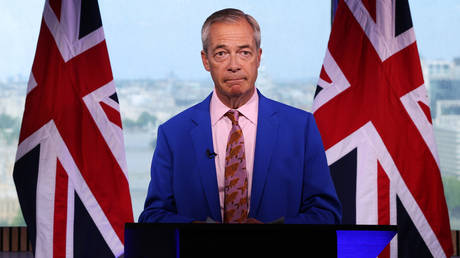
Nigel Farage just threw a massive wrench into the British political system. By stepping down as the Member of Parliament for Clacton, the Reform UK leader hasn't just triggered a local by-election. He's launched a high-stakes, all-or-nothing political gamble that could either solidify his power or completely destroy his credibility.
If you've been following British politics lately, you know Farage doesn't do things quietly. He loves a spectacle. But this latest move isn't just a routine political maneuver. It is a preemptive strike against a looming wall of financial scrutiny that threatened to trap him in parliamentary investigations for months.
Instead of waiting for a watchdog to deliver a verdict, Farage decided to blow up the scoreboard. He's taking his case straight back to the voters of Clacton, framing the entire upcoming vote as a battle of the people versus the establishment. It's classic Farage. But when you strip away the populist rhetoric, the underlying reality is far messier than his video announcements suggest.
The Financial Scrutiny Farage is Trying to Evade
Let's talk about why this is happening right now. Farage claims he's stepping down because the media is harassing his family and the system is being rigged against him. That's a great narrative for his base. The actual timeline tells a very different story.
The Parliamentary Commissioner for Standards, Daniel Greenberg, was reportedly about to interview Farage. The topic? A massive £5 million gift from cryptocurrency entrepreneur Christopher Harborne. Farage received this money before he won his seat in 2024. Under House of Commons rules, newly elected MPs must declare any financial gifts or benefits worth more than £300 that they received in the year leading up to their election.
Farage insists this £5 million was a purely personal, unconditional gift. He says he can spend it however he wants, primarily pointing to his permanent need for private security. He argues that because it was personal, it didn't need to be declared in the regular registry. The standards watchdog isn't so sure.
Then came the second blow over the weekend. A Sunday Times investigation dropped a bombshell allegation involving George Cottrell. Cottrell is a long-time associate of Farage who spent time in a US federal prison after pleading guilty to wire fraud conspiracy back in 2017. The reports allege that Cottrell effectively bankrolled a massive portion of Farage's operational costs before the 2024 general election. We're talking about paying for social media staff, private security, and even a luxury five-story Georgian townhouse near Buckingham Palace.
Labour immediately pounced, asking the Electoral Commission to investigate whether these benefits constituted undeclared political support. By resigning his seat today, Farage effectively pauses these specific parliamentary investigations. The rules generally dictate that once you're no longer an MP, the Standards Commissioner stops digging, though they can resume if he gets re-elected. It's a clever escape hatch, but it looks incredibly defensive.
The Strategy Behind the Sudden Resignation
Farage didn't hold a press conference with open questions from journalists. He released a pre-recorded video statement. No media pushback. No tough questions about crypto billionaires or convicted fraudsters.
In the video, he used his favorite phrase. He called it a chance to "stick two fingers up to the entire establishment." He even offered to have Reform UK cover the £250,000 cost of running the by-election so taxpayers wouldn't have to foot the bill.
Think about the sheer audacity of that move. He is turning a financial scandal into a referendum on his own popularity. If he wins the Clacton by-election, he can claim that the voters have cleansed him of any wrongdoing. He will say the public doesn't care about bureaucratic rulebooks or media investigations.
It is a playbook heavily inspired by Donald Trump. When faced with legal or ethical challenges, you don't apologize. You don't explain. You attack the system, declare yourself a victim, and ask the public to vote for you as a form of protest.
But this strategy has some serious weak spots. Clacton voted heavily for Farage in 2024, giving him a comfortable majority of over 8,400 votes. He took 46% of the total vote share. On paper, he should walk away with an easy victory. However, the political context has shifted dramatically over the last two years. Reform UK has performed poorly in recent special elections, losing three contests they confidently expected to win. The initial momentum that carried them through the local council elections earlier this year is showing signs of friction.
What the Rest of Westminster is Saying
The reaction from rival political parties was instant and brutal. Outgoing Prime Minister Keir Starmer called the resignation a desperate stunt from a politician who is up to his neck in sleaze. Kemi Badenoch, the leader of the Conservative Party, mocked Farage, saying he was throwing a massive hissy fit because he finally had to face some real scrutiny.
The Liberal Democrats went a step further. Their leader, Ed Davey, suggested that opposition parties should consider boycotting the contest entirely. The idea is to starve Farage of the media attention he craves, leaving him to run in a vanity project without the dramatic conflict he uses to fuel his campaigns.
The most interesting opposition, though, comes from his own right flank. Rupert Lowe, the former Reform MP who broke away to lead the rival hard-right party Restore Britain, slammed Farage for weaponizing the democratic process to hide from his own bad decisions. Lowe announced that Restore Britain won't contest this immediate by-election. Instead, they plan to wait for the second one, which he confidently predicts will happen later this year when the financial investigations inevitably catch up with Farage.
The Hard Reality of Farage's Parliamentary Record
One detail that often gets lost in the media circus is Farage's actual performance as an MP since he won his seat in 2024. He spent seven failed attempts trying to get into the House of Commons. When he finally made it, many expected him to use the chamber as a constant platform.
The data shows a completely different reality. Parliamentary records indicate that Farage has participated in roughly 30% of recorded votes. That puts him squarely in the bottom 8% of all lawmakers for voting participation. He's frequently been spotted traveling to the United States for media appearances and political rallies rather than attending to local matters in Essex.
For a politician who rails against lazy elites who neglect the public, those numbers are incredibly difficult to defend in a localized campaign. The opposition will undoubtedly spend the next few weeks reminding the people of Clacton that their representative has been largely absent from the halls of power.
What Happens Next for British Politics
The local authority in Essex will have to set a date for the by-election soon. Farage is betting everything on a quick, aggressive campaign focused on immigration, establishment corruption, and personal loyalty.
You need to keep your eyes on three specific elements as this story unfolds over the coming weeks.
First, look at the voter turnout in Clacton. If voters feel exhausted by the constant drama and choose to stay home, Farage's majority could shrink rapidly. A narrow victory would be almost as damaging as a loss, proving that his bulletproof appeal is fading.
Second, watch the Electoral Commission. While the Parliamentary Standards Commissioner might have to pause his work because Farage is no longer a sitting MP, the Electoral Commission still has the power to look into the donations from George Cottrell and Christopher Harborne. If they find systemic rule-breaking regarding Reform UK's funding structures, a by-election victory won't save Farage from legal financial penalties.
Third, monitor how Restore Britain capitalizes on this moment. The hard-right fracturing between Reform and Restore is turning into a bitter civil war. If Lowe's party successfully frames Farage as an unstable egoist, the populist movement in the UK could split down the middle, completely destroying its chances of challenging the mainstream parties in the next general election.
Farage wanted a fight, and he got one. He has successfully changed the conversation from a dry investigation into financial declarations to a loud, chaotic election campaign. It's exactly where he feels most comfortable. But by forcing this vote, he has put his entire political future on the line. If he loses this seat, the political career of Britain's most famous populist disruptor is effectively over.