Hong Kong is about to change how it builds universities. Education Minister Christine Choi recently dropped a major update, confirming that the long-awaited Northern Metropolis university town tender will officially launch in two months. This isn't just another real estate deal. It's a massive structural shift.
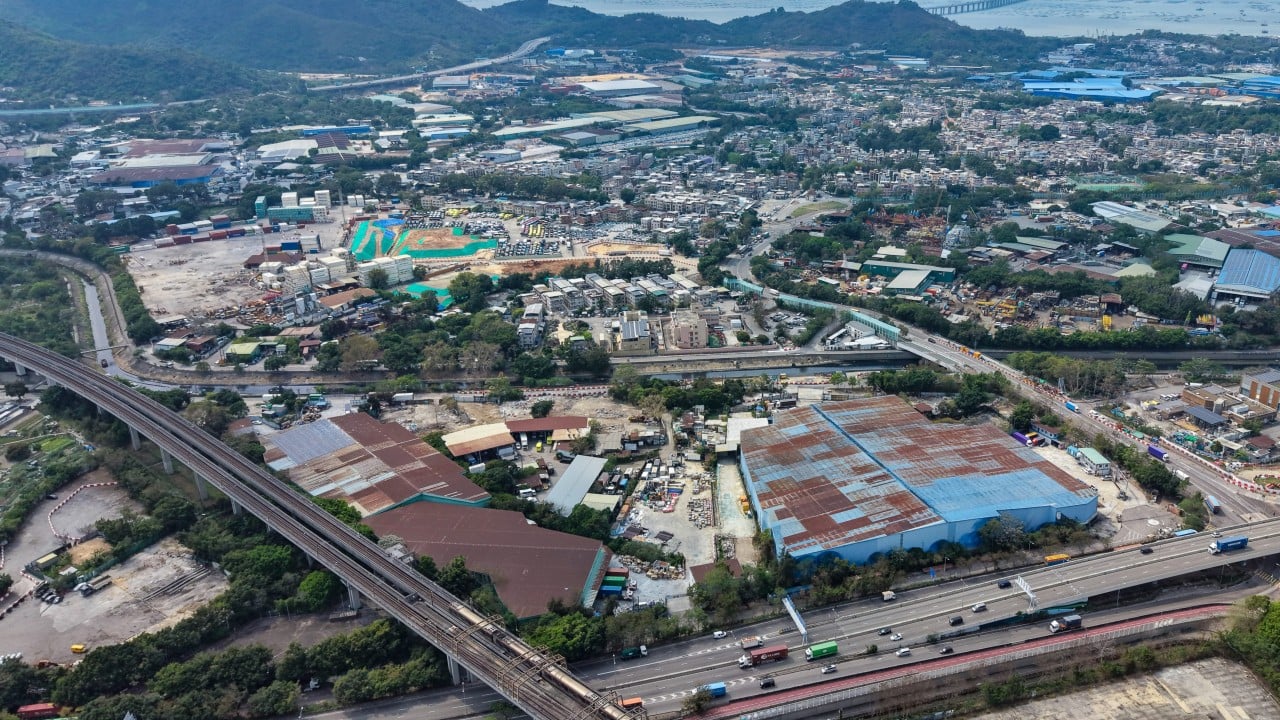
The plan involves a 22-hectare site in the Hung Shui Kiu and Ha Tsuen New Development Area. It will carve out space for three distinct university campus sites. If you've been tracking Hong Kong property and education trends, you know the city has run out of space in its traditional urban core. This project is the pressure valve release, and the upcoming tender marks the moment the concept turns into actual bricks and mortar.
Breaking Down the Twenty Two Hectare Blueprint
Everyone wants to know what this space will actually look like. The government wants to move away from isolated, ivory-tower campuses. The 22-hectare slice in Hung Shui Kiu is part of a broader 100-hectare vision for the education hub, but this specific piece is the first true testing ground.
Instead of giving one massive plot to a single institution, splitting it into three campus sites allows for a mix of specialized institutions. The government has made it clear that they aren't just looking for traditional liberal arts programs. The focus is squarely on applied sciences, vocational training, and high-end professional services. Think logtech, advanced engineering, and cross-border financial services.
The site formation works for this first batch of land are wrapping up this year. That means whoever wins the bids can start moving on construction quickly. It's a calculated move to inject fresh life into the local economy without waiting a decade for infrastructure to catch up.
The Shift Away From Highest Bidder Wins
For decades, Hong Kong land sales followed a simple, brutal rule. The company with the biggest checkbook won the site. That real estate mindset won't work for a specialized education hub.
Look at what happened with the nearby Hung Shui Kiu pilot area tender that closed on July 3, 2026. The government used a two-envelope bidding system. Price proposals only accounted for 30 percent of the total score. The remaining 70 percent focused on non-financial factors like industry expertise, development speed, and long-term economic investment.
We can expect a very similar framework for the Northern Metropolis university town tender. Officials don't want speculative developers sitting on land banks. They want consortiums that pair experienced builders with actual educational operators. If a developer wants to win this tender, they need a solid commitment from local or international universities ready to build specialized tech centers and labs.
Lessons From Germany and South Korea
The government didn't cook this plan up in an isolation booth. Just a few months ago, the Chief Secretary's working group on the university town went on a whirlwind tour of international education hubs. They spent time in Germany, South Korea, and mainland tech capitals like Beijing and Xiong'an New Area.
What did they learn? They saw that successful innovation clusters require industry and academia to live in the same building. In Germany, applied science universities operate hand-in-hand with local manufacturing giants. Students spend half their week on the factory floor or in corporate labs.
Hong Kong wants to replicate that model in Hung Shui Kiu. The goal is to build computing centers and advanced laboratories that aren't locked behind university security gates. The education bureau even suggested opening these facilities to local primary and secondary school students to drum up early interest in science and technology.
Navigating the Cautious Property Market
Let's look at the elephant in the room. The property market isn't exactly flying right now. Recent land tenders, like the one in Tung Chung or even the recent Hung Shui Kiu industrial pilot area, saw highly cautious bidding from major players like Henderson Land and Sino Land. Consortiums are forming because individual companies don't want to carry the financial risk alone.
To keep developers interested, the government is introducing creative financial sweeteners. The Development Bureau has introduced a pilot scheme called "Pay for What You Build." This arrangement lowers the upfront capital requirements and spreads land premium payments over a more manageable timeline. For the recent pilot tenders, successful bidders were allowed to pay 25 percent upfront and settle the remaining 75 percent over three years with zero interest. Expect similar financial flexibility to find its way into the university town tender documents to ensure the project doesn't stall out before it begins.
The Cross Border Ecosystem Play
You can't talk about the Northern Metropolis without talking about Shenzhen. The entire megaproject sits right on the boundary line. The university town is designed to act as a talent bridge between the two cities.
Hong Kong has top-tier research universities, but it lacks the land and manufacturing ecosystem to scale up new technologies. Shenzhen has the factories and the massive corporate tech labs, but it wants deeper access to global research networks. Putting three new campus sites right next to the boundary allows for immediate cross-pollination.
This layout aligns with the newly launched public consultation on Hong Kong's First Five-Year Plan for Economic and Social Development. The city is aligning its spatial planning directly with national development strategies. The university town isn't just an educational expansion. It's an economic retooling.
What Needs to Happen Next
If you're a stakeholder, developer, or academic leader, you can't afford to sit on your hands until September. The timeline is tight, and the preparation work needs to start immediately.
First, educational institutions need to finalize their partnerships. If you're a local university planning to bid for space, you should be actively talking to industry operators now. A standalone application without corporate backing will likely fail the non-financial criteria of the two-envelope evaluation.
Second, property developers must look beyond traditional residential metrics. The value of this development lies in its specialized infrastructure. Builders need to understand the technical requirements of wet labs, high-performance computing centers, and modern vocational training spaces.
The bidding war for the Northern Metropolis university town tender won't be won by the deepest pockets. It will be won by the team that presents the most actionable, integrated plan for Hong Kong's next generation. September is right around the corner, and the clock is ticking.