You leave your front door wide open, and then you get angry when dust ruins your couch. It sounds absurd, right? Yet millions of us do the exact equivalent with our mental health, relationships, and daily schedules every single day. We say yes to toxic bosses, we let family drama bleed into our marriages, and we allow endless digital alerts to trash our peace of mind. Then we wonder why we feel completely burned out.
There is an old saying in the Levant that cuts straight to the heart of this exact issue: "بيت بلا ستارة ما بيستحمل ريح" (Bayt bila sitara ma biystahmel reeh). Translated literally, it means a house without curtains cannot face the wind.
It is a beautiful, deceptively simple phrase from traditional Palestinian Arabic folklore. While it sounds like basic architectural advice for managing drafts in an old stone home, it actually serves as a masterclass in psychological survival. If you don't build proper boundaries, the world will blow you over. It is that simple.
The Real Story Behind the Curtains
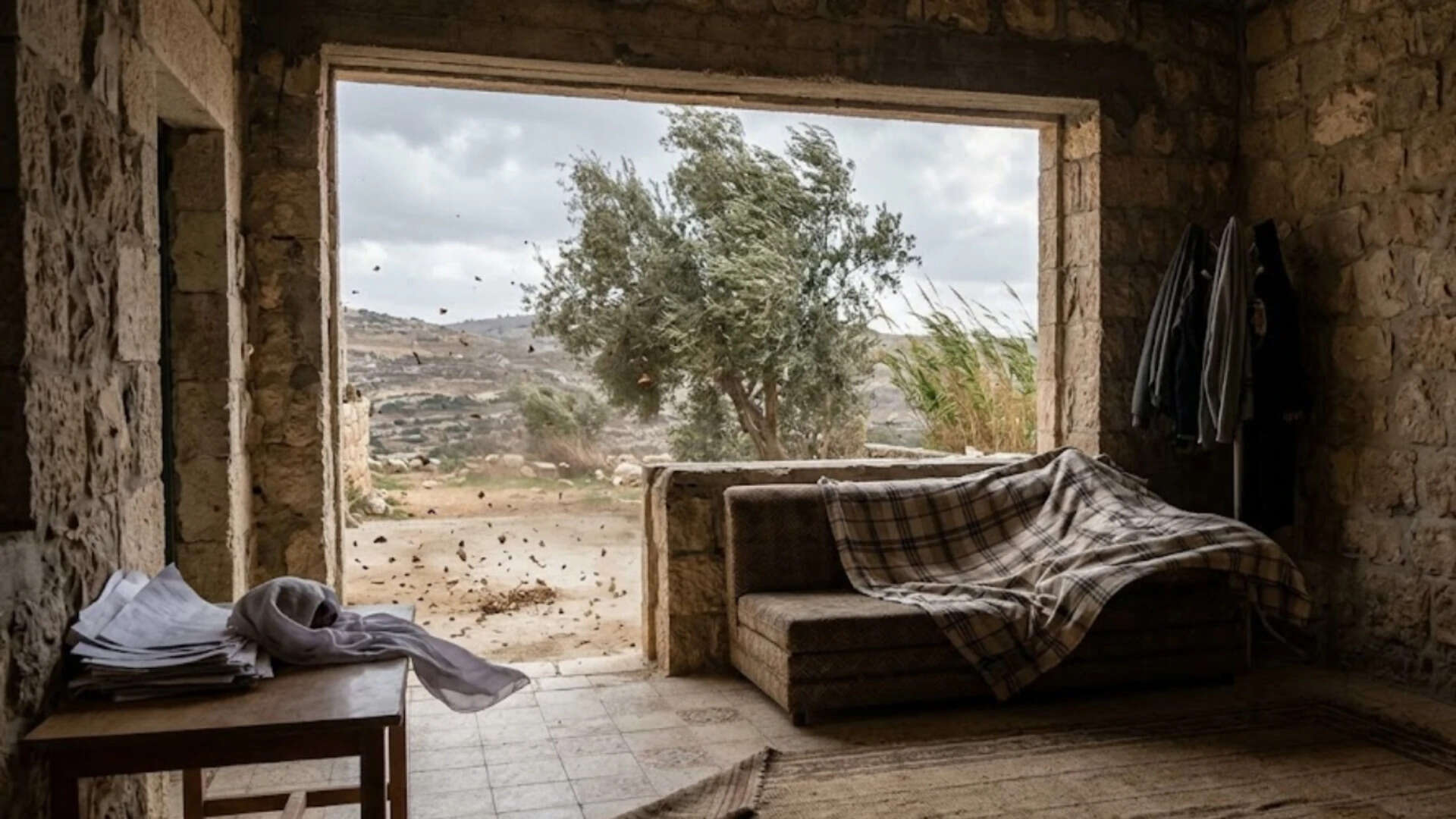
In older Levantine architecture, windows were not just glass panes to look through. They were vulnerable openings. In rural and semi-urban Palestinian villages, the wind was never just a gentle breeze. It was a chaotic force that carried heavy dust from agricultural fields, brought bitter winter chills, and invited the prying eyes of the street into the sacred intimacy of the home.
Curtains were the first line of defense. They weren't a luxury or a decorative afterthought. They were structural tools of survival.
But oral traditions in the Middle East rarely stop at physical descriptions. Scholars of Arabic folklore, like Ibrahim Muhawi and Sharif Kanaana, have long documented how everyday household objects are used to describe complex human relationships. In this specific proverb, the "house" represents your inner core—your family unit, your mental stability, your emotional capacity. The "wind" is the unpredictable, demanding outside world.
The curtains? Those are your boundaries.
Notice that the proverb does not say a house needs a brick wall instead of windows. It says it needs curtains. A wall blocks out the light, suffocates the air, and turns a home into a prison. A curtain is flexible. It allows you to manage your exposure. You can draw it back to let the morning sun and a fresh breeze in, or you can shut it tight when a storm begins to howl.
What We Get Wrong About Setting Boundaries
Most people think setting boundaries means building fortress walls. They cutting people off completely, adopt a cold attitude, or isolate themselves at the first sign of friction. That is a massive mistake, and frankly, it backfires.
In tightly knit Mediterranean and Middle Eastern cultures, absolute isolation is social death. Community is everything. The proverb acknowledges that the wind will blow. You cannot stop the weather, and you cannot stop people from being difficult, demanding, or intrusive. The goal isn't to eliminate external forces; it's to control how much you let them shake your internal structure.
Look at how this plays out in modern life. If you don't set boundaries at work, your inbox controls your weekend. If you don't set boundaries with opinionated relatives, their drama dictates your mood dinner table. You are living in a house without curtains, and you're shocked that your papers are blowing all over the room.
How to Hang Your Own Curtains Today
If you're feeling overwhelmed by the social or professional winds whipping through your life, you need to audit your structural defenses. Stop trying to change the weather. Change your setup.
1. Identify your high-wind zones
Where are you feeling the most chaotic draft? Is it a specific friend who only calls to dump their problems on you? Is it a client who texts you at 9:00 PM expecting an immediate reply? Pinpoint the exact window where the cold air is rushing in.
2. Deploy flexible filters
You don't need to quit your job or block your childhood friend on everything. Just put up a curtain. Tell the client, "I review all project updates first thing in the morning." Tell the friend, "I love you, but I don't have the mental space to dive into this heavy topic tonight." You're not shutting the window permanently; you're just pulling the fabric across to protect your peace.
3. Protect the inner room
In traditional Levantine homes, the deepest parts of the house were kept for private family life, away from the entryway where guests were received. Do the same with your time. Keep your first hour of the day or your dinner time completely free from external notifications, news alerts, and social obligations.
The wind is going to keep blowing. The world isn't going to get quieter or less demanding just because you're tired. Your stability depends entirely on the boundaries you choose to hang up. Go put up your curtains.