Aviation strategies rarely get a second chance. When a major route fails, airlines usually bury the data, cut their losses, and look elsewhere.
Oman Air is doing the exact opposite.
Nearly a decade after a botched attempt to capture the Singapore market via a stopover in Kuala Lumpur, the Muscat-based carrier is flying straight back into the ring. Starting July 2, 2026, the airline is launching a direct, four-times-weekly nonstop service connecting Muscat International Airport and Singapore Changi Airport. It is a bold move, especially right now. The Middle Eastern aviation corridor is already crowded with giants like Emirates, Qatar Airways, and Etihad.
So why try again? Because the playbook has completely changed.
The aviation environment in 2026 demands efficiency over sheer scale. Oman Air isn't trying to copy the massive hub-and-spoke models of its neighbors. Instead, it is betting on an eight-hour narrow-body flight, a leaner internal cost structure, and a fresh alliance partnership to turn a past failure into a highly profitable operation.
The Bold Move to Use a Narrow-Body Aircraft
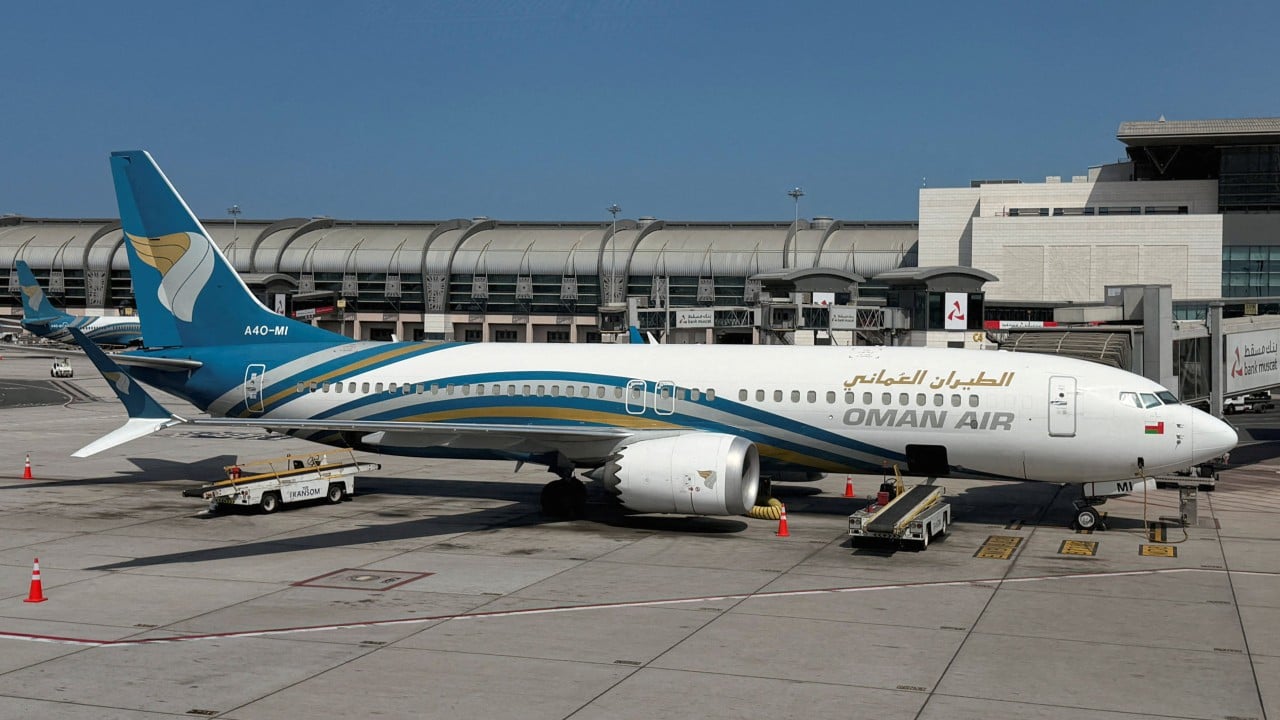
Flying between the Gulf and Southeast Asia usually conjures up images of massive double-decker Airbus A380s or sprawling Boeing 777s. Oman Air is throwing out that expectation. They are deploying a Boeing 737 MAX 8 on the 3,440-mile route.
It is a polarizing choice. The flight will rank as one of the longest narrow-body routes in the world.
For the airline, the math makes total sense. Filling a 162-seat single-aisle aircraft is much easier than trying to fill a 300-seat wide-body twin-aisle jet, especially when pioneering a revived route. It mitigates risk. CEO Con Korfiatis indicated that the carrier is aiming for a load factor in the mid-to-high 70% range for the first year. Early data shows that first-month bookings are already outperforming that target.
What about the passenger experience? That is where things get interesting.
The business class cabin on this specific aircraft features 12 Collins Aerospace Air Rest seats arranged in a 2-2 configuration. These are deep, comfortable recliners with a generous 46.6-inch pitch and a 17-inch entertainment screen. But they are not fully flat beds. On an eight-hour overnight flight, the lack of a flat bed might cause some premium travelers to hesitate, especially with competitors offering enclosed suites nearby.
Oman Air is countering this with price and positioning. They are targeting value-conscious business travelers and premium leisure tourists who want a direct link without paying the exorbitant premiums demanded by mega-carriers.
Moving From Transit Hub to Final Destination
For decades, Gulf airlines operated on a simple premise. They picked you up in Asia, swapped your plane in the desert, and dropped you off in Europe. You barely saw the outside of the transit terminal.
Oman wants to break that cycle. The country is intentionally repositioning itself as a final destination, focusing on its unique geography, rugged mountains, coastline, and distinct cultural heritage. They want tourists to stay in Oman, not just pass through it.
The timing matches a major internal restructuring. Since early 2024, Oman Air has been undergoing an aggressive transformation plan. They cut unprofitable routes, renegotiated vendor contracts, shrank headcount, and maximized fleet utilization. The goal was simple: lower the cost base so the airline could price flights competitively while remaining profitable.
Geopolitical resilience has also played an unexpected role. Even during recent airspace disruptions throughout the Middle East, Oman kept its skies open. While the broader regional tension caused a temporary 8 to 10 percentage point dip in passenger load factors during peak disruptions, the airline recovered quickly. Its location offers a reliable, stable pathway between East and West.
The Power of the Oneworld Alliance
The biggest differentiator between the failed 2017 attempt and the 2026 launch is Oman Air's membership in the oneworld alliance.
Back then, a passenger landing in Singapore had limited options for onward travel. Today, the alignment with oneworld completely shifts the competitive dynamics. Travelers arriving at Changi can tap into the regional networks of alliance partners like Qantas, Cathay Pacific, and Malaysia Airlines, opening up smooth connections to Australia, Japan, and Hong Kong.
The benefits flow both ways. Frequent flyers can earn and redeem points seamlessly. Oman Air recently expanded its loyalty horizons by tying its Sindabad program closely with Qantas and Turkish Airlines. Suddenly, a boutique carrier from Muscat feels like part of a massive global web.
This isn't just about Singapore either. Korfiatis has dropped heavy hints that North Asia is next on the horizon. Within the next 12 months, expect Oman Air to announce at least one direct destination in China, Japan, or South Korea as they seek out high-yield tourist markets eager for fresh experiences.
What This Means For Your Next Trip
If you are planning travel between Southeast Asia and the Middle East or Europe, this route changes the math.
Look at the schedules. The flight departs Muscat at 08:00 and lands in Singapore at 19:50. The return leg leaves Changi at 20:50, getting you back into Muscat just after midnight at 00:10. It is a clean, daytime schedule on the outbound leg, though the inbound requires some stamina for a narrow-body night flight.
Keep an eye on pricing. To make this narrow-body experiment work, Oman Air is offering highly competitive introductory fares. If you don't mind a high-end recliner instead of a fully flat bed in business class, or if you are comfortable in a modern economy cabin for eight hours, you can save a significant chunk of travel budget.
Check your frequent flyer accounts. Before booking, see how you can leverage your American Airlines, British Airways, or Qantas status on this route to secure lounge access at Changi or Muscat.
The battle for the skies between the Gulf and Asia is no longer just about who can build the biggest plane or the flashiest terminal. It's about efficiency, smart partnerships, and opening up new ways to see the world. Oman Air is betting its future on it.