If you want to know how Ontario's ambitious plan to build 1.5 million homes by 2031 is going, don't bother checking the provincial tracker. It's frozen in 2024. The provincial government has gone completely quiet on whether it will ever update the public-facing dashboard again.
This isn't just a technical glitch or a delayed bureaucratic upload. It's a calculated retreat from a signature policy that has run headfirst into harsh economic realities. When interest rates spiked and construction starts plummeted across Canada, the math behind Doug Ford's housing pledge stopped adding up. Instead of adjusting the plan transparently, Queen's Park chose to hide the scoreboard.
For anyone trying to buy a home, rent an apartment, or just understand why the province feels so unlivable right now, this radio silence matters. It signals a shift from tracking actual progress to managing political fallout.
The Creative Math Behind the 1.5 Million Target
When the Progressive Conservatives launched their housing targets back in August 2023, the premise was simple. Towns and cities across Ontario were given strict quotas. If they hit 80% or more of their annual target, they got a slice of the $1.2 billion Building Faster Fund. If they failed, they got nothing.
But almost immediately, the government ran into a structural problem. Traditional housing starts—the actual breaking of ground for single-family homes, townhouses, and condos—weren't happening fast enough. High borrowing costs and soaring material prices forced developers to pull back.
To fix the numbers, the province didn't change its economic strategy. It changed its vocabulary.
Over the last few years, the definition of a "new home" was expanded to include:
- Long-term care beds
- Laneway houses and garden suites
- Finished basement apartments
- Student dorm rooms
- Retirement home suites
By counting a single bed in a shared nursing home or a newly renovated basement apartment as equivalent to a newly constructed house, the province artificially inflated its metrics. Yet even with this statistical padding, internal Ministry of Municipal Affairs and Housing documents revealed that the province still missed its overall target for 2024.
Dropping the Metrics When the News Turns Bad
The decision to let the housing tracker sit dormant is part of a broader pattern of pulling back public performance metrics. Not long ago, the government quietly removed legislated requirements to report on greenhouse gas emissions targets after independent reports showed Ontario would miss its 2030 goals. The same playbook is now being applied to housing.
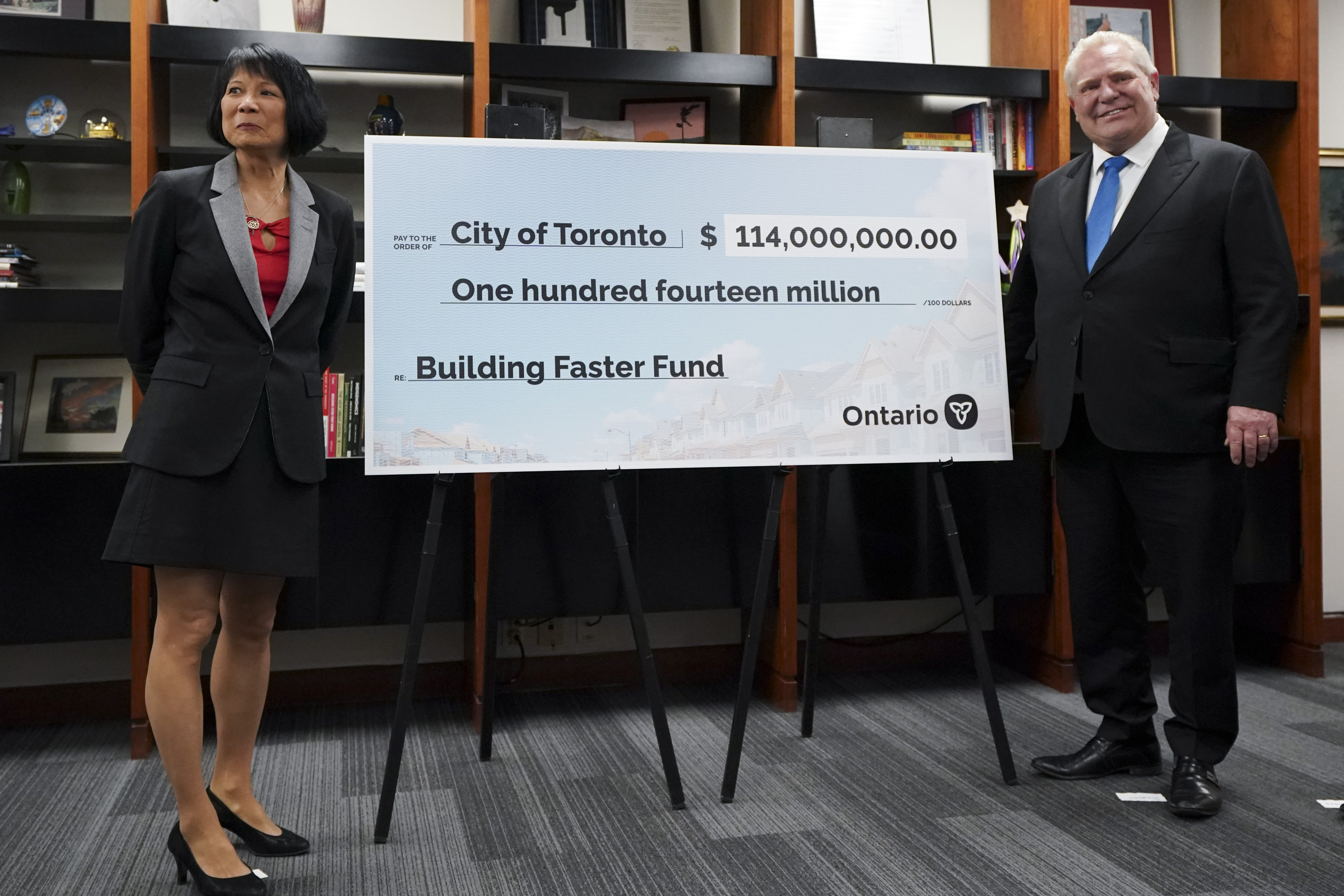
Right now, the province is still cutting big, ceremonial cheques for select municipalities that managed to hit their localized targets. What they aren't doing is showing you the aggregate data.
Internal briefings obtained through freedom of information laws show that civil servants actually finalized the full data set for 2024 housing completions back in February. The government sat on those numbers for months, hiding a 17% year-over-year drop in total housing starts before quietly burying the release. Now, in mid-2026, the tracker remains completely abandoned.
By keeping the public data frozen in the past, the province avoids daily accountability for a market that is fundamentally stuck.
Why Ontario Can't Build Its Way Out with Current Policies
The real reason the housing tracker went dark is that the market is working against the government's top-down targets. You can't force developers to build at a loss, and you can't force buyers to take on mortgages they can't afford.
Municipalities are caught in the middle. They are being blamed for slow approvals, yet they lack the massive capital needed for the fundamental infrastructure—like sewage plants, water mains, and arterial roads—that must exist before a subdivision can even be approved.
While the recent $8.8 billion joint funding announcement between the federal government and Ontario aims to split some infrastructure costs and cut municipal development charges, the rollout is slow. It takes years for water pipes in the ground to translate into keys in a homebuyer's hand.
What This Means for You Right Now
If you are waiting for a sudden surge of supply to drop home prices in Ontario, the abandonment of the tracker tells you everything you need to know. The provincial target of 1.5 million homes has quietly shifted from a hard policy goal to what Finance Minister Peter Bethlenfalvy openly called a "soft target."
Since you cannot rely on state-backed trackers to give you an honest view of the market, here are the practical ways to evaluate housing realities in your own area:
- Look at local building permits, not provincial press releases. Your local city or town hall tracks active building permits and zoning applications monthly. If your municipal council isn't actively approving water and wastewater expansion, new subdivisions aren't coming anytime soon, no matter what provincial funding is promised.
- Track CMHC data directly. The Canada Mortgage and Housing Corporation (CMHC) publishes independent, monthly housing start data that relies on actual construction metrics rather than the province's altered definitions. This gives an unvarnished view of true supply growth.
- Expect rental supply to come from basements, not towers. Because the province incentivized secondary suites to pad its data, municipal bylaws have shifted heavily to allow basement conversions and garden suites. If you are looking for housing, this is where the actual, immediate supply growth is happening—not in major condo developments.
The provincial housing tracker didn't stop updating because civil servants got lazy. It stopped updating because the numbers became a political liability. Relying on an official dashboard to tell you when the housing crisis is solved is a losing strategy. Pay attention to the physical infrastructure in your community instead.