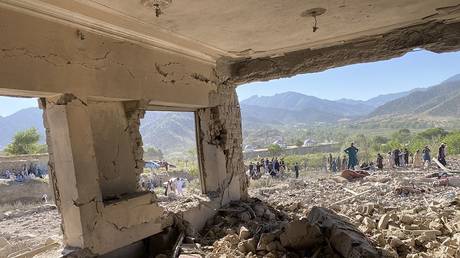
A 125-year-old historic Sikh shrine does not just vanish overnight because of a simple bureaucratic mix-up. When news broke that portions of the historic Gurdwara Sri Guru Singh Sabha Sahib in Farooqabad, Pakistan, were reduced to rubble, it triggered immediate outrage across the global Sikh community. India didn't hold back either. The Ministry of External Affairs dropped a blunt, heavy-hitting statement calling out the act as deeply distressing and a despicable act of targeted vandalism.
If you've been following the state of minority religious heritage across the border, you know this story feels painfully familiar. It's a pattern that keeps repeating. Local land mafias eye prime property, official bodies look the other way, and by the time anyone raises an alarm, a piece of history is gone.
Understanding what happened in Farooqabad requires looking past the standard diplomatic statements. This isn't just an argument about property lines or a local businessman acting without a permit. It hits at the heart of a systematic failure to preserve history, the complex internal politics of Pakistan's Evacuee Trust Property Board, and the deep emotional connection the global Sikh community maintains with its roots in Pakistani Punjab.
What Happened on the Ground in Farooqabad
The physical destruction happened during the quiet hours of the night. Between June 24 and June 25, 2026, heavy machinery moved in to tear down sections of the historical structure. Farooqabad, located in the Sheikhupura district of Pakistan's Punjab province, sits roughly 70 kilometers from Lahore. It's an area dense with Sikh history, situated near the highly revered Gurdwara Sacha Sauda.
Initial claims from local administrative circles attempted to downplay the scale of the destruction. Some officials suggested that only an old dome had been impacted during minor construction work. Social media told a completely different story. Videos recorded by local activists quickly went viral, showing massive piles of brick, shattered masonry, and the clear structural erasure of an ancient heritage site.
Bhupinder Singh, a prominent Sikh representative from Nankana Sabha, went public with a video message that forced the issue into the open. He openly accused local authorities of turning a completely blind eye while the site was actively desecrated. For days, no formal police complaint was registered. No government department issued an official statement. The silence from official quarters was deafening until the global backlash became too loud to ignore.
The Historic Weight of the Singh Sabha Shrine
To understand why this specific demolition caused such an intense emotional uproar, you have to look at what this building represented. It wasn't just a neighborhood place of worship. The Gurdwara Sri Guru Singh Sabha Sahib was a physical monument to a massive ideological shift in Sikh history.
The Singh Sabha Movement emerged in the late 19th century, starting in Amritsar in 1873 and establishing a major powerhouse in Lahore by 1879. It was a time of immense cultural and religious revival. Prominent scholars and leaders like Baba Khem Singh Bedi, Professor Gurmukh Singh, and Giani Ditt Singh worked tirelessly to restore Sikh rituals, promote the Punjabi language, and protect historical narratives from outside distortion.
Farooqabad was a critical staging ground for this historical revival. When the movement pushed forward to liberate historic gurdwaras from the control of corrupt hereditary managers known as mahants, this specific shrine played a central role. Volunteers famously gathered at the Farooqabad Gurdwara Singh Sabha before marching directly to liberate Gurdwara Sacha Sauda. This long, dangerous campaign eventually laid the crucial foundations for the creation of the Shiromani Gurdwara Parbandhak Committee in India.
Tearing down this building means erasing the physical evidence of that struggle. When a land shark destroys an inscription or knocks down a wall in Farooqabad, they aren't just clearing land. They are deleting a chapter of the history of the Sikh reform movement.
India Drops the Diplomatic Niceties
New Delhi's response on July 1, 2026, reflected deep frustration with the recurring nature of these incidents. External Affairs Ministry spokesperson Randhir Jaiswal issued a direct condemnation that left no room for misinterpretation. He labeled the demolition a highly deplorable and targeted act of vandalism against a revered Sikh shrine.
The Indian government pushed beyond a basic expression of regret. Jaiswal pointedly criticized the total lack of meaningful action by local authorities and the Evacuee Trust Property Board. The ETPB is the official Pakistani government body tasked with maintaining and protecting properties left behind by Hindus and Sikhs who migrated during the 1947 Partition.
New Delhi explicitly noted that this was part of an ongoing, systemic problem rather than an isolated incident. The official statement called on the government of Pakistan to expeditiously investigate the matter, bring the perpetrators to justice, and completely rebuild the demolished sections of the shrine. India demanded that Islamabad fulfill its baseline obligations to ensure the security and well-being of minority communities and their sacred spaces.
Earlier that same day, a formal delegation from the Delhi Sikh Gurdwara Management Committee met with top officials at the Ministry of External Affairs. They presented a detailed memorandum urging immediate diplomatic intervention to halt further destruction and ensure full reconstruction. The pressure wasn't just coming from diplomats; it was coming directly from the community's leadership.
The Role of the Land Mafia and Government Failure
When you look at how these heritage sites collapse, the culprit is almost always a combination of corporate greed and institutional neglect. In this case, local Pakistani officials eventually admitted that a wealthy local businessman initiated the demolition to expand commercial space.
Punjab Minorities Minister Ramesh Singh Arora quickly traveled to the site in an attempt to handle the political fallout. He acknowledged to reporters that the businessman had proceeded with the demolition without obtaining any sort of No Objection Certificate from the relevant conservation or religious departments. Arora ordered an immediate inquiry, halted further clearing of the site, and promised that the provincial government under Chief Minister Maryam Nawaz Sharif would ensure the structure is restored.
The fact that a private citizen could roll heavy machinery onto a 125-year-old historical site without an NOC shows massive gaps in structural security. Local activists argue that the ETPB frequently fails to map, monitor, and legally protect properties under its jurisdiction. When a community grows small or non-existent in a specific town, its sacred architecture becomes highly vulnerable to encroachment.
The Complicated Reality of Local Communities
There's another layer to this situation that rarely makes it into short news snippets. Local traders and shopkeepers who operate in the immediate vicinity of the Farooqabad shrine have voiced serious anxiety about the government's sudden promise of a total restoration.
Following the chaos of 1947, the gurdwara sat essentially vacant and abandoned for nearly 80 years. Over the decades, dozens of local Muslim families moved into the surrounding areas, building small homes and establishing shops that directly abut the historic walls. They rely entirely on these small commercial setups for their daily survival.
As the government moves to seal the area and plan a full reconstruction, these traders are pleading for a balanced approach. They want the historic site preserved, but they are terrified of sudden eviction. They have urged the government to provide clear alternative housing and livelihood options if they are forced to relocate. This creates a difficult domestic puzzle for local administrators who must balance international diplomatic pressure and minority rights against the immediate economic survival of their local residents.
History Repeating Itself Across the Province
The anger felt by the global Sikh diaspora stems from the fact that Farooqabad is not a unique case. Bhupinder Singh pointed out that Gurdwara Chobacha Sahib in Dharampura, a site deeply connected to the memory of the Sixth Sikh Guru, Hargobind Sahib, faced similar quiet destruction in the past.
When local communities raise their voices against the ETPB's mismanagement, they often face intense systemic pushback. Activists have noted that individuals who openly question the board's real estate dealings or highlight the slow decay of non-functional shrines are sometimes labeled as anti-national or disruptive elements. This creates a culture of fear that stops locals from reporting structural damage until it's far too late.
The numbers speak for themselves. Hundreds of historical Sikh and Hindu structures dot the landscape of Pakistani Punjab and Khyber Pakhtunkhwa. Only a tiny fraction are actively maintained as functional places of worship. The rest sit in various states of advanced decay, often used as cattle sheds, local schools, private homes, or storage facilities, slowly dissolving out of public memory.
Moving Past Empty Promises
If the historical legacy of the Singh Sabha Movement is going to survive in Pakistan, the approach to heritage management needs a complete overhaul. Empty promises of reconstruction after a building has already been knocked down won't fix the core issue.
First, the local administration must follow through on Minister Ramesh Singh Arora's public commitment to fully rebuild the destroyed sections using historically accurate materials. A concrete box with a green dome slapped on top is not a restoration. It requires careful historical preservation techniques to honor the 19th-century architecture.
Second, the Evacuee Trust Property Board needs a transparent digital audit. Every single historical site, whether functional or abandoned, must be mapped, registered, and given strict legal protections that override local commercial interests. Private businessmen shouldn't be allowed to touch these properties, with or without an NOC.
Finally, the government needs to work hand-in-hand with international conservation groups and organizations like the SGPC to fund round-the-clock security and maintenance for these vulnerable structures.
If you want to support the preservation of these endangered historical spaces, stay informed by following verified updates from international heritage watchdogs and minority rights groups active in the region. Raise awareness by sharing documented architectural histories of these shrines before they get targeted by local real estate developers.