The World Cup Resale Trap
You save for months. You book the flights. You head to the stadium with your jersey on and your phone in hand, ready to witness history. Then, the app spins. The ticket transfer fails. The gate agent shakes their head, and just like that, your World Cup dream evaporates right on the concrete outside the turnstiles.
This is not a hypothetical nightmare. It is happening right now to thousands of soccer fans across North America during the 2026 World Cup.
People are furious. Disappointed buyers are flooding social media with horror stories of last-minute cancellations, missing tickets, and customer service loops that lead nowhere. Industry giants like StubHub, SeatGeek, and Vivid Seats are taking a massive beating in the court of public opinion.
But why is this happening on such a massive scale? Most people assume it is just a bunch of tech glitches or bad luck. It is much deeper than that. The breakdown is a toxic mix of speculative selling, aggressive corporate finger-pointing, and a ticketing infrastructure that feels intentionally broken.
If you are planning to buy a ticket on the secondary market, you need to understand how the system is rigged against you.
The Myth of the Guaranteed Ticket
When you buy a ticket on a major secondary marketplace, you see big bold text promising a full protection guarantee. You naturally assume this means you are guaranteed to get into the stadium.
That is a dangerous assumption.
Marketplaces do not actually own the tickets they sell. They are middlemen matching independent sellers with buyers. When a seller lists a ticket, the platform relies on that seller to actually deliver the digital pass when the time comes.
What happens if the seller flakes? The platform invokes its safety guarantee. But if you read the fine print of policies like StubHub's FanProtect Guarantee, you will find some eye-opening realities. Michael McCann, a sports law expert at the University of New Hampshire, recently pointed out that these remedies are ultimately provided at the sole discretion of the platform.
That means the company can simply choose to give you your money back instead of finding you a replacement seat.
A refund sounds fair on paper. In reality, it is a disaster for the fan. If your $500 ticket gets canceled two days before a match, finding an immediate replacement on the open market might cost you $1,500 or more. You get your original cash back, but you still miss the match.
Speculative Sellers and the Surge Pricing Trap
A huge chunk of these failed ticket orders comes down to a shady industry practice known as speculative selling. Industry veterans who study these markets closely know exactly how this works.
Speculative sellers list tickets they do not actually own yet. They gamble on the market. They bet that as the match approaches, ticket prices will drop. If prices fall, the seller buys a cheap ticket, hands it over to you, and pockets the difference as pure profit.
The 2026 World Cup completely broke that business model.
Instead of dropping, ticket prices have skyrocketed as the tournament has progressed. Demand is unprecedented. Sellers who speculated early are now stuck in a brutal financial vise. They sold a ticket to a fan for $500, but now they have to pay $1,200 on the open market to fulfill that order.
Faced with a massive financial loss, many sellers simply choose to default. They cancel the sale.
Platforms do penalize these sellers. StubHub frequently hits defaulting sellers with fees up to 200% of the ticket price to deter this behavior. But when the market experiences wild, unpredictable swings, those penalties still do not stop the cascading wave of cancellations that leave fans stranded at the gate.
The Tech War Between FIFA and Resale Platforms
When things go wrong, the blame game begins immediately. Right now, the secondary marketplaces and FIFA are locked in a massive public relations war, pointing fingers at each other while fans suffer the consequences.
Resale platforms lay the blame squarely at the feet of soccer's global governing body. They argue that FIFA's digital infrastructure is intentionally restrictive and poorly managed.
- Late App Launches: FIFA did not release its official ticketing application until just a few weeks before the tournament began.
- Sudden Transfer Walls: Last-minute restrictions on ticket transfers made it incredibly difficult for automated secondary systems to sync up.
- Anti-Competitive Tactics: Critics argue that FIFA deliberately limits transfer capabilities to force fans into using its proprietary marketplace.
FIFA takes a completely different stance. They have consistently warned fans that the only way to ensure entry is to buy directly through official channels. They look at secondary sites as unauthorized entities that bypass their rules.
To make matters more confusing, FIFA applies a steep 30% surcharge on its official resale platform. The buyer pays 15% and the seller pays 15%. This heavy tax drives casual fans straight into the arms of traditional resale sites out of sheer habit or a desire to avoid massive extra fees.
Real Stories of Devastated Fans
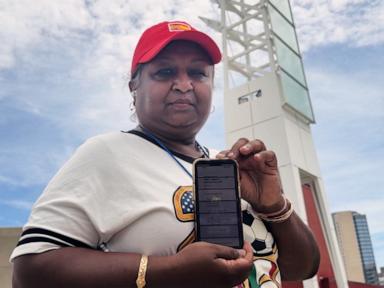
The corporate bickering means nothing to the people who saved up thousands of dollars for a once-in-a-lifetime experience. Take the case of Bina Ramroop, a grandmother who bought tickets through StubHub as a 13th birthday surprise for her grandson.
She trusted the platform because she had used it for years without a single hiccup. Instead of walking through the stadium gates in Atlanta, she broke down in tears when she realized the digital transfer was never coming. She and her grandson had to take a quiet, agonizing train ride back to the suburbs while the match played out without them.
Another fan, Mamadou Ndaw, bought match tickets months in advance for roughly $550 each. Forty-eight hours before kickoff, an automated email notified him that the seller could not deliver.
He accepted store credit from the platform, assuming he could easily pivot and buy alternative seats. He quickly discovered that the cheapest last-minute tickets left on the app were trading for over $1,500. He was completely priced out of the event he had already paid for months prior.
How to Protect Yourself Moving Forward
If you are determined to see a match and need to navigate the messy world of secondary ticket markets, you cannot just click buy and hope for the best. You need an active strategy to reduce your risk.
Stick to the Official Portal Whenever Possible
It is more expensive due to the fees, but the official FIFA resale platform is the only option that guarantees the ticket is authentic and will actually transfer to your account. It eliminates the middleman and the speculative seller entirely.
Verify the Ticket Format
If you do use an outside marketplace, look for listings that specify instant download or immediate transfer. Avoid listings that have vague delivery windows or promise delivery on the day of the event. Day-of delivery is a massive red flag for a speculative seller.
Understand Your Backup Options
Do not accept store credit if your order falls through right before a game. Demand an immediate cash refund so you can use those funds across multiple competing platforms to find a replacement seat. Keep an eye on secondary platforms like SeatGeek and Vivid Seats simultaneously to compare real-time inventory.
Have a Hard Price Limit
Do not chase the market if a seller defaults and prices spike. Set a clear budget for what you are willing to pay for a replacement. If the prices climb into the thousands, it is safer to step back than to rush into another high-risk, panicked purchase.


