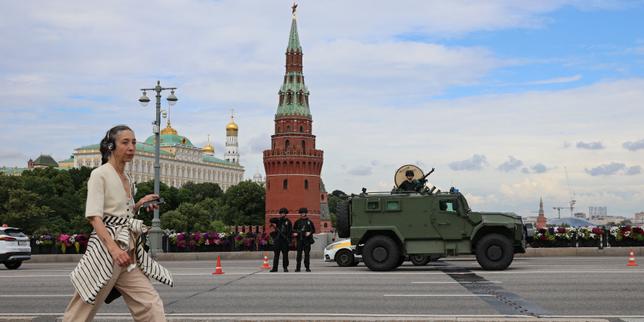
You wake up to another headline about a swarm of Ukrainian drones flying toward Moscow. This morning, Moscow Mayor Sergei Sobyanin announced that air defense systems intercepted at least 46 drones targeted directly at the Russian capital. The Russian Defense Ministry followed up with an even bigger number, claiming they shot down 419 drones across the country overnight.
If you're just reading standard news updates, it's easy to look at those numbers and assume Russia's air defenses are working perfectly.
That's exactly what the Kremlin wants you to think.
But if you look closer at how this air war is actually playing out in mid-2026, those massive interception numbers tell a very different story. Ukraine isn't expecting every drone to hit a building. They're playing a long, grinding game of economic and military exhaustion.
The Reality Behind the 46 Drones Over Moscow
Let's break down what actually happened on Tuesday morning. Around 4:00 AM, residents in the Moscow and Tula regions started posting videos of low-flying drones humming through the pre-dawn sky. Sobyanin immediately took to Telegram to post rolling updates, reassuring residents that every single threat was being neutralized by air defense forces.
By the time the sun came up, the official tally for the capital sat at 46 or 50, depending on which official you asked.
Here's what the official state reports don't mention. When an air defense system shoots down a drone directly over a city, the wreckage doesn't just vanish into thin air. Shrapnel, unexploded payloads, and burning lithium batteries fall straight down into residential areas and commercial zones. Just a few weeks ago, a similar intercept sparked a massive fire at a southeastern Moscow oil refinery, and another strike hit the Dubna Space Communications Center northwest of the city.
The strategy isn't about stealth anymore. It's about overwhelming numbers.
Why the Kremlin's Defense Claims Don't Add Up
The Russian Defense Ministry loves to brag about high interception rates. Hearing that they downed hundreds of drones makes it sound like an impenetrable iron dome protects the country.
It isn't true. Experts who study satellite imagery and regional impact reports notice a regular pattern. Russia is frequently forced to pull advanced Pantsir and S-400 air defense units away from the frontlines in Ukraine just to protect high-value targets inside Moscow.
Think about the math for a second. Ukraine is building cheap, long-range attack drones using off-the-shelf components, fiberglass, and basic navigation systems. Each one might cost a few thousand dollars to manufacture. Russia, on the other hand, is firing surface-to-air missiles that cost hundreds of thousands, sometimes millions, of dollars per shot to knock them down.
It's a textbook war of economic attrition. You don't need a drone to blow up a building to win the exchange. You just need to force your opponent to empty their expensive missile stockpiles protecting empty airspace.
The Strategy Shift Nobody Talks About
We're now well into the fifth year of this conflict, and Kyiv's long-range strike campaign has fundamentally evolved.
Early in the war, drone strikes inside Russia were sporadic and symbolic. They were designed to prove that Ukraine could hit back. Today, these strikes are highly coordinated, industrialized operations targeting specific economic choke points.
- Energy Infrastructure: Kyiv is systematically hunting Russian oil refineries, fuel depots, and storage facilities to choke off the oil revenue funding the Russian war machine.
- Military Logistics: Airfields, drone assembly plants, and communication hubs deep inside Russian territory are facing constant pressure.
- Psychological Disruption: Bringing the war to Moscow shatters the illusion of safety for everyday citizens in the capital, forcing the public to confront the reality of the conflict.
When a swarm of 46 drones heads for Moscow, many of them act as decoys. They fly ahead to force Russian radar systems to switch on, revealing their locations. The follow-up waves then look for gaps in the defense grid to slip through and hit nearby energy or logistics targets, like the recent strikes in the neighboring Tula region.
What to Watch Next
Don't look at these drone raids as isolated incidents. They're part of a sustained campaign to reshape the geography of the war.
If you want to understand where this is heading, stop focusing entirely on the daily interception numbers published by Moscow. Instead, track the flight restrictions at major airports like Sheremetyevo, monitor local independent Telegram channels for unverified smoke plumes, and watch how Russia moves its anti-aircraft batteries away from the southern frontlines. The real impact isn't the explosion you see on the news; it's the quiet reallocation of vital military resources that leaves the Russian army vulnerable elsewhere.