Hamas just announced it's dissolving its governing body in the Gaza Strip. After nearly two decades of holding an iron grip on the enclave, the group is stepping aside. On the surface, it looks like a massive concession. Mainstream outlets are framing this as a historic breakthrough for peace.
They're missing the real story.
This isn't a sudden burst of benevolence or a total surrender. It's a calculated, survivalist political play. By dismantling its Governmental Emergency Committee, Hamas wants to shift the burden of governance to someone else while keeping its guns. If you think this means the group is gone, you don't understand how they operate.
The Reality Behind the Sudden Gaza Political Shift
For 19 years, Hamas ran Gaza. They took over in 2007 after a brief, bloody civil conflict with rival Palestinian faction Fatah. Since then, they've been the absolute authority. They collected taxes, ran schools, managed hospitals, and commanded police forces. Today, that administrative era officially ended.
Mohammed al-Farra, the head of the government's emergency committee, formally resigned. Ismail al-Thawabta, the chief of the Hamas government media office, confirmed the complete dissolution of the local administrative structure. Spokesman Hazem Qassem explicitly stated the group wants to remove any pretexts for ongoing blockade or military action.
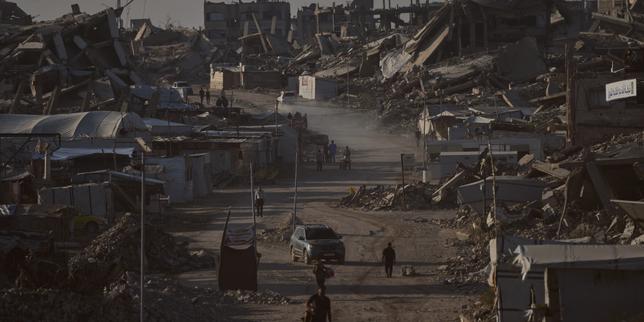
Let's look at the timing. This announcement comes months after the October 2025 ceasefire brokered by US President Donald Trump. Gaza is completely devastated. The infrastructure is shattered. The economy doesn't exist. People are starving. Hamas knows that governing a pile of rubble under a constant blockade is a recipe for internal rebellion.
They're broke. They can't rebuild the strip. By handing the keys to a civilian administration, they transfer the impossible task of reconstruction to international donors and technocrats. It's an escape hatch from administrative failure.
The Board of Peace and the Cairo Plan
Who takes over now? The responsibility falls to a new entity called the National Committee for the Administration of Gaza, or the NCAG.
This committee wasn't created overnight. It came out of the Board of Peace, an initiative established during the October 2025 ceasefire negotiations. Right now, the NCAG is based out of Cairo. It consists of technocrats, bureaucrats, and various Palestinian figures who aren't directly tied to Hamas's militant wing.
Hamas claims they're ready to hand over full administrative responsibilities immediately. They met with other Palestinian factions in Egypt to get their blessing. The factions naturally welcomed the move. Everyone wants to see aid flow and rebuilding start.
But there's a massive catch. The NCAG is a governance committee, not a military force. It has no army. It has no police. They're expected to step into a security vacuum and manage a population traumatized by years of war.
If the NCAG sets up offices in Gaza City, who protects them? Who enforces traffic laws? Who stops looting? Hamas hasn't disbanded its internal security apparatus or its fighter battalions. They've only disbanded the civilian office. The bureaucrats are leaving, but the men with rifles are staying exactly where they are.
Why Disarmament is Still the Elephant in the Room
This is where the mainstream narrative falls apart. Israel and international mediators have insisted for years on the total demilitarization of Gaza. This latest announcement doesn't address that at all.
Hamas is willing to give up the ministry of education. They're happy to hand over the sewage system. They don't want to manage garbage collection anymore. What they aren't doing is handing over their rockets, their remaining underground tunnels, or their light weapons.
The thorny issue of disarmament remains completely unresolved. Hamas spokesman Hazem Qassem framed this move as a strategic step to strip away excuses for the occupation. It's a PR victory. They can tell the world they did exactly what was asked of them by stepping down from government. If Israel continues targeting the strip, Hamas can claim it's an unprovoked attack on a civilian-led territory.
It's a classic asymmetric strategy. You separate the political target from the military asset. By dissolving the official government, Israel no longer has an official state-like adversary to target in Gaza. The enemy becomes an invisible insurgency embedded within a society managed by a Western-backed technocratic committee.
The Massive Logistics Trap Facing the NCAG
Think about what it takes to actually run Gaza right now. You need millions of dollars a day just to keep basic water desalination plants running. You need thousands of tons of concrete, steel, and machinery entering through highly restricted border crossings.
The NCAG has to negotiate all of this with Israel, Egypt, and the United States. Israel still controls the borders, the airspace, and the maritime waters. They'll scrutinize every single bag of cement entering the strip to ensure it isn't diverted to rebuild militant infrastructure.
If the NCAG fails to deliver quick improvements, the Gazan population will grow restless. Hamas can then sit on the sidelines, completely blameless for the lack of electricity or clean water, and blame the civilian committee and its foreign backers. It's a no-lose scenario for the group's leadership. If the NCAG succeeds, Gaza gets rebuilt, which relieves pressure on the population. If the NCAG fails, Hamas points the finger at foreign incompetence.
We've seen this play out before in different forms across the Middle East. Whenever a militant group hands over partial power to a weak civilian government, the civilian government takes the blame for daily miseries while the militants retain the true veto power through violence. Hezbollah did this in Lebanon for decades. They don't need to hold every cabinet seat to control the country. They just need enough firepower to make sure nobody can challenge them.
What This Means For You and Global Security
If you're tracking international stability, this development changes the diplomatic landscape entirely. Arab nations like Egypt, Jordan, and the UAE are now under intense pressure to finance and secure this transition. The US is heavily invested through the Board of Peace initiative.
We'll likely see an immediate push for an international or Arab-led peacekeeping force to assist the NCAG. But few nations want to put their boots on the ground in Gaza. The risk of getting caught in a crossfire between lingering insurgent cells and Israeli security forces is incredibly high.
The immediate next steps are highly practical. Watch the Cairo meetings over the next two weeks. The transition timeline will reveal exactly how much control Hamas is truly yielding.
If you want to understand if this move is genuine, look for three specific indicators:
- The Border Control Test: Will the NCAG take full physical control of the Rafah crossing and the Philadelphi corridor without Hamas security personnel present in civilian clothes?
- The Revenue Test: Where do the tax revenues go? If the NCAG collects customs duties, do they control the bank accounts, or does money find its way back into underground networks?
- The Policing Test: Who patrols the streets? If the civilian police force is entirely made up of former Hamas employees who just changed their patches, nothing has actually changed.
Don't buy into the initial hype. Dissolving a government committee is easy when the buildings are gone anyway. Giving up power is something else entirely. Hamas just changed its tactics. They didn't change their ultimate goals.