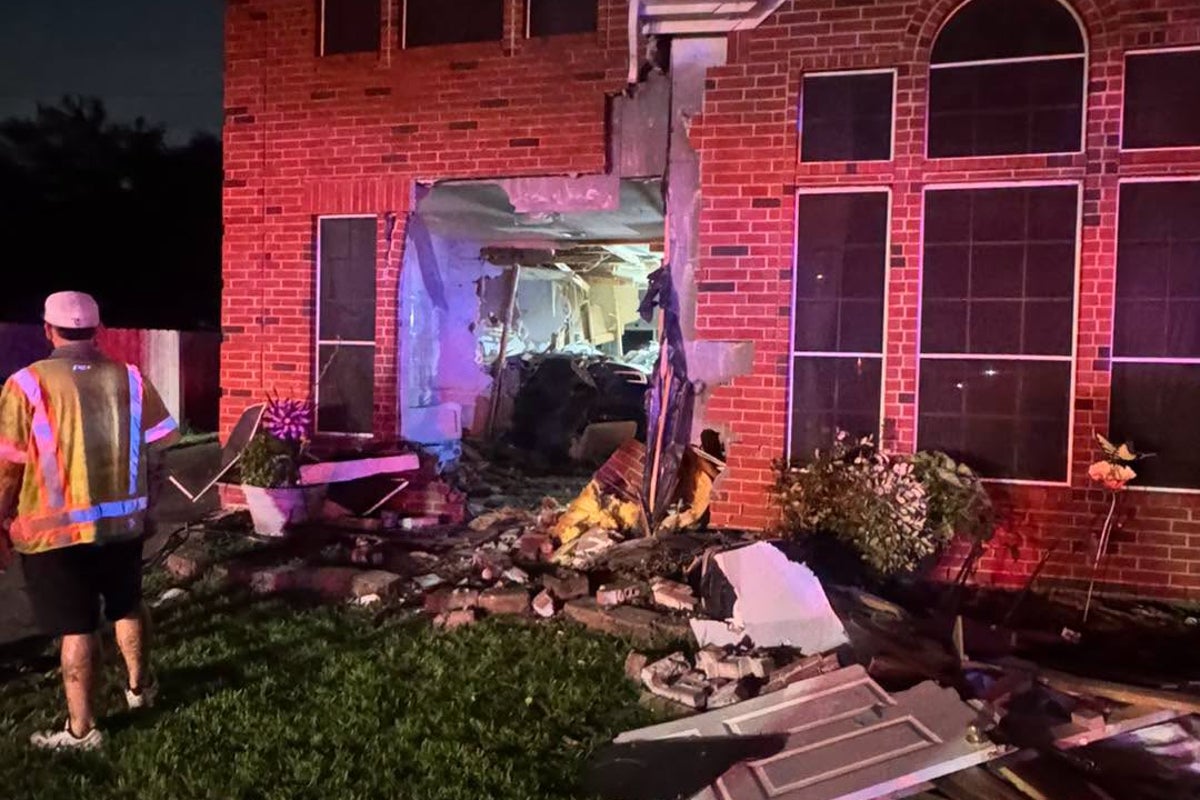
A quiet Friday evening in a Katy, Texas suburb ended in absolute disaster when a Tesla Model 3 launched off the asphalt, tore through a brick wall, and killed a 76-year-old grandmother inside her own home. Martha Avila was standing in her family’s front playroom around 8 p.m. when the electric sedan plowed through the structure at high speed. She was airlifted to Memorial Hermann Hospital but couldn't be saved. The driver, 44-year-old Michael Butler, claimed his car was running on Autopilot before it blew past an intersection instead of turning.
The internet did what it always does. Half the internet blamed Elon Musk immediately. The other half screamed that the driver was just trying to escape a vehicular manslaughter charge by scapegoating technology.
The reality behind this tragedy is much messier than a simple blame game. It exposes a dangerous gap between how semi-autonomous driving software is marketed and how it actually functions on real, unpredictable residential streets. This wasn't a freak highway accident. It happened on Rose Hollow Lane, a quiet street where kids ride bikes and grandmothers stand in playrooms.
The Physics of a Living Room Impact
Look at how the crash unfolded. According to investigators from the Harris County Sheriff’s Office, the Tesla Model 3 was traveling eastbound. It approached an intersection where it needed to execute a right-hand turn to stay on the roadway. Instead, the vehicle failed to maintain its lane, left the pavement entirely, and drove straight through a residential brick exterior without slowing down.
A brick house feels like a fortress until an electric vehicle hits it. Electric cars carry an immense amount of kinetic energy because of their massive lithium-ion battery packs. A Tesla Model 3 weighs anywhere between 3,500 and 4,000 pounds. When that much mass travels at a high rate of speed into a rigid structure, the brick acts less like a barrier and more like a collection of loose projectiles.
Neighbors reported hearing what sounded like a massive explosion. Jennifer Barbour, Avila's daughter, was in the backyard when the sound shattered the evening quiet. By the time the smoke and dust settled, the playroom was completely destroyed. Avila, a healthy woman who her family believed would easily live to 100, had her life cut short in an environment where she should have been perfectly safe.
The driver survived the impact and was hospitalized with non-life-threatening injuries. Deputies quickly confirmed Butler showed no signs of intoxication and remained fully cooperative with the ongoing investigation. That leaves law enforcement with one glaring question to answer. What role did the driver-assist system actually play?
The Driver Accountability Trap
Sgt. Alex Turman, an accident investigator with the Harris County Sheriff's Office, made the situation clear to local reporters. Law enforcement is actively digging into the Autopilot claim, but they haven't verified it yet. Even if the data logs show the system was active, it doesn't legally clear the driver.
Tesla explicitly states that its Autopilot and Full Self-Driving software are not fully autonomous systems. They are classified as Level 2 driver assistance technology. That means the human behind the wheel must keep their hands on the wheel, eyes on the road, and remain ready to intervene at any split second.
The core issue is human psychology. When a car steers itself perfectly 99 times out of 100, drivers experience automation bias. They check out. They look at their phones. They trust the machine. But on residential roads with sharp turns, faded paint lines, and unexpected geometry, that one-percent failure rate is deadly. If Butler’s car was on Autopilot and failed to detect the turning requirement at the intersection, a driver who was actively paying attention should have slammed on the brakes. The high speed of the impact suggests there was little to no driver intervention before the vehicle hit the brick wall.
Tesla has faced massive scrutiny from the National Highway Traffic Safety Administration over this exact issue. The agency has scrutinized millions of Tesla vehicles over concerns that the Autopilot system doesn't do enough to ensure drivers stay engaged. Critics argue that naming a system "Autopilot" naturally tricks people into thinking they can treat their car like a private chauffeur.
Why Residential Streets Are Autopilot Nightmares
Most autonomous driving software was designed and optimized for highways. Highways are predictable. They have clear, wide lane markers, gentle curves, no cross-traffic, and no houses sitting at the end of sudden dead-ends or sharp intersections.
Suburban neighborhoods are completely different animals. Consider the challenges a Level 2 system faces in a standard housing development:
- Faded or Non-Existent Markings: High-contrast paint lines are rare on secondary residential roads.
- Sudden Changes in Geometry: T-intersections, cul-de-sacs, and sharp 90-degree turns require aggressive steering inputs that standard Autopilot isn't always configured to handle safely at speed.
- Visual Distractions: Shadows from trees, parked cars along the curb, and curbside trash cans can confuse the cameras and sensors.
If a vehicle is moving too fast on a residential street and encounters an intersection it doesn't recognize, the system can disengage abruptly or simply blow straight through the turn. When that happens, the lag time between the car failing and the human driver realizing they need to take control can take up to several seconds. At 40 or 50 miles per hour, your car travels dozens of feet per second. By the time you realize the computer messed up, you're already in someone's front yard.
Real Actions for Drivers and Homeowners
We can't just wait for federal regulators or tech executives to fix this problem. If you drive a vehicle with advanced driver-assist features, or if you live in a neighborhood where these vehicles operate daily, you need to take practical steps to protect yourself and others.
If You Drive an EV with Assist Features
Never use highway-assist modes on residential streets. If the road has cross-streets, driveways, or tight turns, keep the system turned completely off.
Keep your foot hovering over the physical brake pedal whenever driver-assist is active. Do not relax your legs or tuck your feet back away from the pedals.
Treat every drive like a driving test. If you wouldn't take your eyes off the road while a student driver is behind the wheel, don't do it while a computer is driving.
If You Live on a High-Risk Suburban Lot
Evaluate your home's positioning. Houses located at the outer edge of a T-intersection or on the apex of a sharp curve are at a disproportionately high risk for vehicle intrusion accidents.
Install structural landscaping features. Heavy boulders, deeply rooted mature trees, or engineered retaining walls can act as a physical crash barrier, absorbing kinetic energy before a vehicle reaches your exterior walls.
Repurpose your front rooms if necessary. If your house sits directly in line with an oncoming traffic path, avoid using the frontmost room as a primary bedroom or a children's playroom. Move those high-use spaces to the back or upper levels of the property.
The investigation in Harris County will eventually reveal the exact data logs from Michael Butler’s Tesla Model 3. We will find out exactly when his hands were on the wheel and the exact millisecond the vehicle's computer registered the incoming crash. But for Martha Avila’s family, those data points won't bring her back. Stop treating these systems like a glimpse into the future and start treating them for what they are today: imperfect tools that require absolute human vigilance.