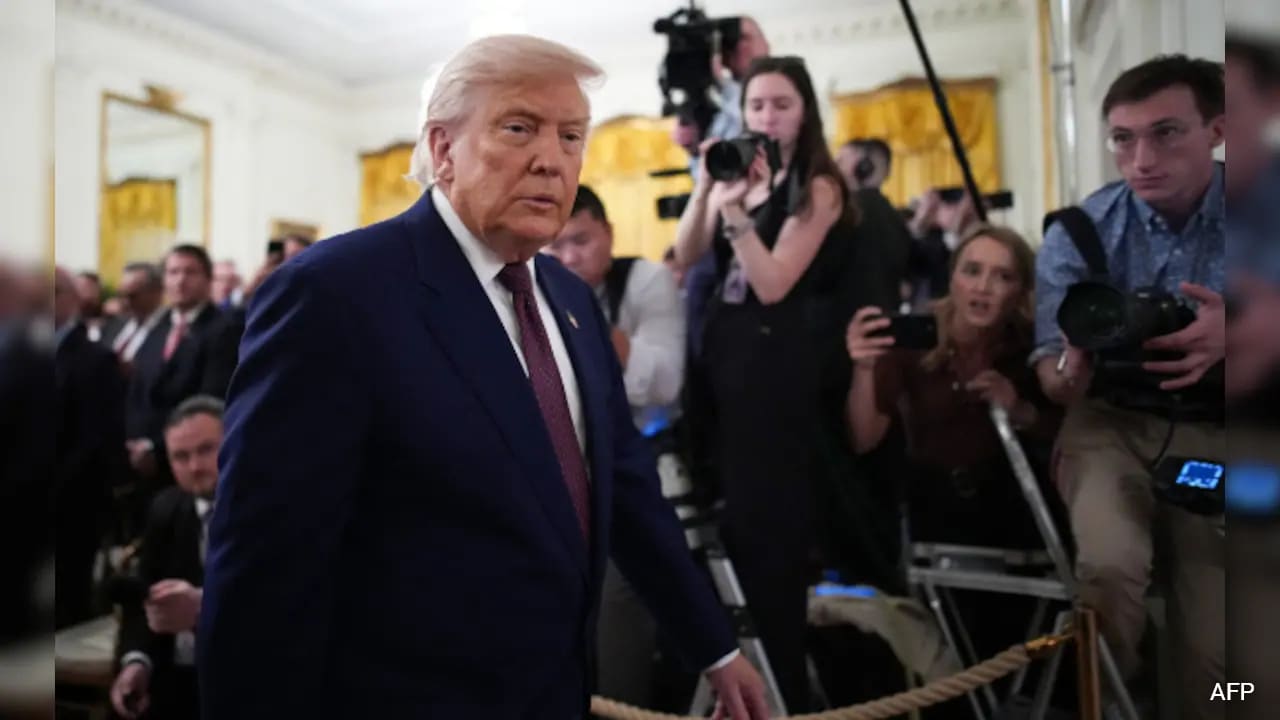
The diplomatic stage in Switzerland just witnessed one of the most jarring whiplash moments in modern geopolitics. While Vice President JD Vance was busy smiling for the cameras in Burgenstock and speaking about a desire to turn over a new leaf with Tehran, Donald Trump went on national television and threw a rhetorical hand grenade straight into the middle of the room.
In a phone interview with Fox News, Trump did not hold back. He claimed he warned Iranian officials directly about blocking the Strait of Hormuz, using characteristically blunt language. "You close it and you won't have a country," Trump said. Then he added a direct warning to the Iranian negotiating team themselves, telling them they wouldn't even make it back to their own country if the vital oil waterway remained blocked.
Predictably, the Iranian delegation walked out.
Most analysts are calling this an unmitigated disaster that completely undermines the peace process. That is a superficial reading of what is actually happening. This is not a policy failure. It is a deliberate, highly aggressive strategy designed to force a weak adversary into absolute compliance. If you want to understand where this conflict is heading, you have to look past the dramatic headlines and examine the harsh economic and military realities driving both sides.
The Good Cop Bad Cop Routine on the World Stage
The contrast between the two American leaders could not have been more striking. JD Vance arrived at the Swiss mountainside resort trying to sound like a conventional statesman. He spoke of historical breakthroughs. He noted that high-level American and Iranian teams had never sat together like this before. He was intentionally projecting optimism to keep the diplomatic track alive.
Then came Trump.
Aside from his explosive Fox News interview, he took to Truth Social to demand that Iran immediately halt its operations through proxies in Lebanon. He threatened strikes even more severe than those launched previously.
This is not a case of the White House inner circle failing to coordinate their message. It is the classic Trump negotiating playbook executed on a geopolitical scale. Vance plays the reasonable partner offering a diplomatic exit ramp, while Trump stands in the background wielding a sledgehammer. The goal is to keep the Iranian regime completely off-balance, forcing them to negotiate under the constant, immediate threat of military destruction.
It is an incredibly high-risk approach. For a moment, it seemed to backfire entirely. Iranian state media quickly reported that the talks entered a difficult phase, and the delegation briefly left the site in protest of the insulting message. Yet, the high-level political talks resumed overnight through Qatari and Pakistani mediators. Why? Because Iran simply does not have the economic or military leverage to walk away permanently.
The Strait of Hormuz Standoff
The core issue threatening to derail the fragile interim peace agreement is the Strait of Hormuz. Iran announced a total closure of the strategic waterway following waves of heavy Israeli military strikes in southern Lebanon. The Islamic Revolutionary Guard Corps explicitly warned commercial shipping vessels to stay away, blaming Israeli actions and claiming the US failed to enforce a promised regional ceasefire.
This closure is an existential threat to the global economy, and that is exactly why Trump is reacting with fury. Consider the facts.
- Global Oil Supply: Roughly a fifth of the world's petroleum passes through this narrow strait daily.
- US Economic Pressure: The ongoing regional conflict has already driven global oil prices upward. High gasoline prices are actively damaging the US economy and putting immense pressure on domestic approval ratings.
- Trump's Alternative Plan: Trump openly floated an aggressive solution during his interview, stating the US could simply take control of the strait, act as the sole authority, and extract a twenty percent toll on the oil passing through.
Iran views the closure of the strait as its ultimate trump card. It is the only mechanism Tehran has to inflict pain on the West without engaging in a direct, full-scale military conflict. Trump's counter-warning makes it clear that the US views the closure as an act of war itself. By threatening the physical safety of the negotiators and the existence of the Iranian state, Trump is attempting to nullify Iran's leverage before technical negotiations even finish.
What the Versailles Memorandum Actually Requires
To truly understand why these talks are so tense, you have to look at the foundations laid down earlier this month. The initial memorandum of understanding signed at the Palace of Versailles put an enormous amount of pressure on Washington to deliver immediate concessions.
Under the terms of that preliminary framework, the US is supposed to lift a massive web of economic sanctions. It must free billions of dollars in frozen Iranian assets. It is required to dismantle the naval blockade currently choking Iranian ports.
In exchange, Iran is supposed to provide verifiable guarantees that it will halt its nuclear weapon development, though Tehran still insists on its right to enrich uranium for civilian purposes.
The deal also requires a cessation of military operations in Lebanon. This is where the entire framework falls apart in the real world. The Trump administration is expected to pressure Israel to stop its campaign against Hezbollah. Israel is not a signatory to this agreement. In fact, Israeli leadership has explicitly denounced the talks.
Israeli defense officials have stated clearly that there are zero restrictions on their military actions in Lebanon. They have no intention of withdrawing from the southern security zone. This creates an impossible diplomatic knot. Iran closes the strait because Israel won't stop bombing Lebanon. Trump threatens to destroy Iran if they keep the strait closed, while simultaneously trying to manage an Israeli ally that refuses to follow the American script.
The Domestic Backlash and What Comes Next
Trump is not just fighting the Iranian regime. He is fighting a massive wave of political opposition at home. Politicians from both sides of the aisle are already tearing the provisional deal to pieces.
Critics from the traditional foreign policy establishment are calling the Versailles agreement a horrific surrender. They argue that the administration granted far too many major economic concessions upfront without securing real, irreversible changes in Iranian behavior. Outgoing congressional leaders are pointing out that rogue regimes routinely evade economic warfare anyway, making the lifting of official sanctions a dangerous gamble.
So, where does this leave us? The technical teams from the US, Iran, Pakistan, and Qatar are scheduled to remain in Switzerland to grind out the details. The high-level political drama will continue to play out on social media and television networks.
If you are tracking this situation, stop focusing on the angry rhetoric and watch the actual shipping lanes. The success or failure of these negotiations will not be decided by JD Vance's optimism or Trump's profanity. It will be decided by whether commercial oil tankers start moving through the Strait of Hormuz this week.
If Iran blinks and opens the waterway, the diplomatic track survives. If Tehran holds the line, expect the American military to move from verbal threats to direct kinetic action very quickly. Watch the naval movements in the Gulf. That is where the real answer lies.