Paying hundreds of dollars for a match ticket only to get extorted at the concession stand is a time-honored sports tradition. But the 2026 World Cup across the United States, Canada, and Mexico is pushing stadium food pricing into a comedic stratosphere.
If you walk into Miami Stadium expecting a standard hot dog and a cheap domestic draft, you are in for a brutal awakening. Instead, you will find luxury snacks aimed squarely at wealthy tourists and corporate high-rollers. The main headliner making waves right now is a tray of caviar-topped tots priced at a staggering seventy-five dollars.
International fans are experiencing severe sticker shock as they navigate North American stadium culture. If you want to survive the tournament without draining your bank account, you need to understand exactly what you are paying for and where the real value hides.
The Reality of the Seventy Five Dollar Menu in Miami
The famous dish generating internet outrage is called Fancy AF Tots. It costs seventy-five dollars at Miami Stadium. But here is the catch. They are not actually tater tots.
When you order this premium item, you receive three deep-fried hash brown patties topped with high-end caviar, creme fraiche, and fresh chives. If you decide you do not want the hash browns at all and just want the caviar, the price drops slightly to seventy dollars. It is a blatant luxury flex designed for the Miami crowd, engineered by food and beverage provider Sodexo Live.
Zach Williams, the vice president of operations for Sodexo Live at Miami Stadium, made it clear that the goal was to deliver an authentic local experience. For Miami, that means flash, wealth, and heavy Cuban influences.
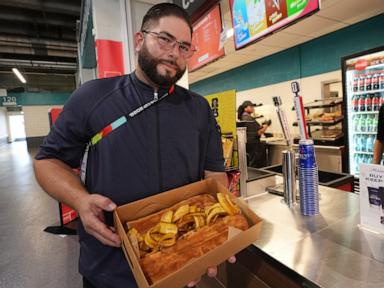
Beyond the caviar, the stadium is also serving a massive dish called the Empanada Mundial. Created by concession chef Lazaro Luya at Sol Cubano, this monster weighs five pounds. It is stuffed to the brim with chicken and cheese and costs forty dollars. While forty dollars sounds absurd for an empanada, it is actually designed for sharing among a large group of fans, making it one of the few items that might offer decent volume for your dollar. Luya is also serving up a classic pan con lechon, a traditional Cuban pork sandwich dripping with citrus mojo sauce on a full toasted Cuban loaf, served alongside fresh mariquitas.
High Prices and Bizarre Burgers Across North American Venues
Miami does not have a monopoly on wild stadium food concepts or sky-high pricing for this tournament. The culinary experimentation is happening everywhere, with mixed results for regular fans.
In Southern California, stadiums are leaning into extreme comfort food. Los Angeles features a twenty-two dollar item called the Twinkie cheeseburger. Despite the name, it does not involve a sweet sponge cake. It is a standard beef patty topped with a Texas Twinkie, which is a jalapeño stuffed with cream cheese and smoked brisket, all wrapped tight in bacon. It is heavy, greasy, and undeniably American.
Travel north across the border, and the pricing complaints change currency but remain just as loud. In Toronto, fans went wild on social media over a brisket sandwich combo. By the time you add chips and a bottle of soda, the total comes out to nearly forty Canadian dollars, which translates to about twenty-eight American dollars. Commenters online quickly labeled the pricing as flat-out robbery.
Meanwhile, Vancouver is trying to balance high prices with local pride. Their stadium menu features short rib poutine, combining French fries, rich beef gravy, pulled short rib, and squeaky cheese curds. They are also selling a maple bacon smokie, a smoked sausage slathered in a sweet bacon onion jam that uses real Canadian maple syrup. Daniel Feldmann, a traveling fan from Germany, noted while watching a match in Vancouver that the prices are barely acceptable, but people tolerate them because the World Cup feels like a once-in-a-lifetime experience.
The International Beer Crisis and Sticker Shock
The biggest clash of cultures is not happening on the pitch. It is happening at the beverage carts. European and South American fans are accustomed to incredibly cheap food and drink options at their local club matches. In Germany or England, you can grab a quality pint of beer at a match for four or five euros, roughly five to six American dollars.
Stepping into a US stadium and seeing domestic beers priced well into the double digits is causing genuine panic. Janine Arbetter, a visiting fan from Austria, shared her disbelief while waiting in line at a Miami concession stand. She paid nineteen dollars and thirty-five cents for a basic combo consisting of a hot dog, a bag of chips, and a soda. That price even included a special promotional discount for using a Visa card.
The contrast becomes even sharper when you look at the matches hosted in Mexico. In Guadalajara, you can walk up to a vendor and secure incredible, authentic rib-eye tacos for eight dollars. In Mexico City, local match-goers are realizing that a couple of beers inside the stadium can easily equal a full day's worth of minimum-wage pay for a local worker.
The tournament organizers have strict guidelines for what concessionaires can and cannot do, but individual markets still retain the power to set local prices. This explains why an international fan can get a cheap gourmet taco in Jalisco but gets charged nearly twenty dollars for a generic hot dog and soda in Florida.
Finding the Hidden Value in Stadium Concessions
If you are attending upcoming matches, you do not have to settle for overpaying. There are strategies to avoid getting ripped off while still enjoying the stadium atmosphere.
First, look for the host cities that actively reject hyper-inflation. Atlanta Stadium is famous for its fan-first pricing model. They intentionally keep concession prices low, offering hot dogs, pretzels, and sodas for just a few dollars, refusing to hike prices even for massive global events like the World Cup. If you are attending a match there, you can eat a full meal for less than the cost of a single beer in Miami.
Second, do the math on shareable items. The five-pound Empanada Mundial in Miami looks like a gimmick, but if you split that forty-dollar cost among four hungry friends, you are paying ten dollars a person for a massive amount of food. That easily beats buying four individual twenty-dollar hot dog combos.
Third, eat before you enter the gates. The neighborhoods surrounding these massive stadiums are packed with authentic, family-owned restaurants, food trucks, and street vendors selling superior food at a fraction of the stadium cost. Supporting local immigrant-owned eateries outside the security perimeter will always yield a better meal than a seventy-five dollar plate of hash browns masquerading as tater tots.
Actionable Steps for Match Day Success
To ensure you do not spend your match day stressed out by the concession lines and empty wallets, execute this simple plan.
Download the official stadium app for your specific venue before you leave your hotel. Many venues offer mobile ordering that allows you to view the full menu, compare prices between different stands, and skip the massive lines completely.
Check the stadium beverage policy. Several venues allow fans to bring in one unopened, factory-sealed bottle of water per person. Taking advantage of this rule saves you seven to eight dollars per drink immediately.
Budget your concession spending as a fixed part of your travel expenses rather than an afterthought. Decide on a strict spending limit before you walk through the turnstiles so you do not make impulsive, seventy-five dollar decisions when hunger strikes at halftime.