Imagine standing on a thin wire, suspended dozens of feet above a roaring stadium crowd, with thousands of flashing phone cameras pointed directly at you. One wrong step means disaster. For most people, that sounds like an absolute nightmare. For a professional high-wire artist, it is just another day at the office. But when that office belongs to Take That, the stakes get sky-high.
Performing on a massive stadium tour is entirely different from regular circus acts. The environment is chaotic. The lighting shifts constantly. The bass from the massive speakers vibrates right through the cable under your feet. It is a high-pressure environment where there is zero room for error. The tightrope walker performing with Take That recently shared how much of an honour it is to share the stage with the legendary pop group. It makes perfect sense. This is not just a gig. It is the peak of live entertainment spectacles.
The reality of stadium high wire acts
People watch a performer glide across a wire and think it looks effortless. It is not. The sheer physical strength required to maintain balance while moving gracefully is immense. Your core muscles burn. Your feet constantly micro-adjust to the tension of the wire.
When you add a stadium crowd into the mix, everything multiplies. The collective energy of eighty thousand screaming fans creates a literal wall of sound. That sound has physical force. It can shake a performer's concentration if they are not careful.
Safety is obviously the top priority for these stadium shows. Performers use specialized rigging systems and undergo intense safety checks before every single performance. Engineering teams spend hours ensuring the cables are anchored perfectly to the stadium infrastructure. Still, the psychological pressure remains entirely on the person walking the line. You have to shut out the noise, block out the visual distractions, and focus entirely on the next step.
Working with pop royalty
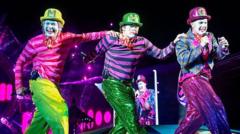
Take That has a long history of putting on massive, theatrical tours. They do not just stand at microphones and sing. They create worlds. From giant mechanical elephants to massive moving stages, Gary Barlow, Howard Donald, and Mark Owen always push the boundaries of what a pop concert can be.
Bringing a live tightrope walker onto their tour fits their style perfectly. It brings back the classic sense of wonder that old-school arena shows used to have. For the performer, sharing the spotlight with a group of this stature elevates their craft to a whole new audience. Most people go to a circus to see a high wire act. At a Take That show, fans get hit with that circus adrenaline right in the middle of a pop anthem.
The collaboration requires massive coordination between the performer and the production crew. The timing must be exact. The music, the lighting cues, and the wire walk must sync perfectly to create that breathtaking moment. If the wire walker is a few seconds late, the entire illusion breaks.
The mental game behind the spectacle
To survive up there, you need a specific mindset. Fear cannot be eliminated, but it must be managed. Professional performers treat fear as a tool for focus rather than a reason to panic.
- Total presence: You cannot think about your grocery list or what happens after the show. You are entirely in the present moment.
- Adaptability: Stadiums are open to the elements. Wind, rain, and temperature changes alter how the wire behaves.
- Trust in the crew: You place your life in the hands of the tech team who rig the wires.
Most people fail to realize how much the wind affects an outdoor stadium performance. A sudden gust can turn a standard walk into a battle against nature. The performer has to read the air currents, feel the vibration of the cable, and adjust their center of gravity instantly. It is a silent dialogue between the artist and the wire.
What it takes to reach this level
You do not just wake up and walk across a stadium wire. It takes decades of dedicated practice. Most high-wire artists start close to the ground, practicing on low lines just a few inches high until the muscle memory becomes second nature.
They spend years learning how to fall safely, how to regain balance when a cable wobbles, and how to control their breathing under stress. By the time they get a call from a massive production like Take That, they have logged thousands of hours on the wire. They know exactly how their body responds to pressure.
If you ever get the chance to watch a stadium show with a live aerial stunt, don't just look at the spectacle. Look at the feet. Notice the incredible precision of every single step. Watch how the performer uses their arms or a balancing pole to cut through the air. It is a masterclass in human focus and physical mastery. Next time you feel stressed about a presentation at work or school, just remember there are people keeping their cool on a piece of metal wire fifty feet in the air.