You’ve been lied to about what school is actually for.
Most people treat education like a transaction. You sit in a boring lecture hall, memorize data points you'll forget in a week, pass an exam, and trade that expensive piece of paper for a corporate paycheck. It's a mechanical process designed to turn you into a functional economic unit. Read more on a connected issue: this related article.
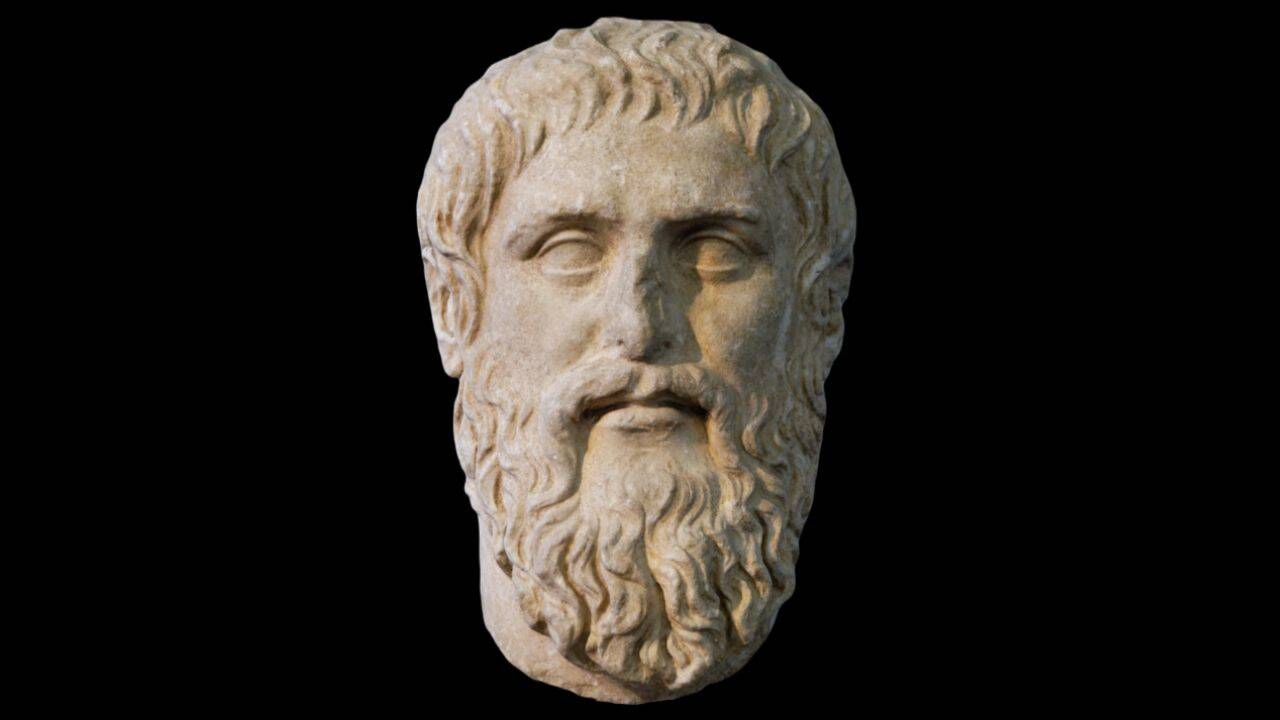
Plato, writing roughly 2,400 years ago in ancient Athens, thought that entire approach was garbage.
When Plato stated that there's nothing more divine than education, he wasn't talking about getting a high GPA or landing a tech job. He meant something far more radical. To him, real education is the exact moment you transition from merely existing as an animal to truly living as a human being. Without it, you stay unfinished. Additional journalism by ELLE explores related perspectives on the subject.
Let's look at why our modern view of schooling is completely missing the point and how you can reclaim what the ancients actually meant by learning.
The Massive Misconception of Modern Schooling
We confuse data with wisdom. We live in an environment absolutely drowning in information. You can pull any factual data point from the internet in three seconds flat. Yet, as a society, we aren't noticeably wiser, kinder, or more fulfilled.
That's because collecting facts isn't education. Plato used the Greek concept of paideia, which roughly translates to the deliberate shaping of a human soul. It wasn't a curriculum you finished at age 22; it was a lifelong, active sculpting of your character, your mind, and your morals.
In his late work Laws, Plato explicitly warned about the dangers of getting this wrong. He noted that a human, when armed with a good nature and the right instruction, becomes the most civilized and divine of all living things. But if you educate someone poorly? They turn into the most savage, destructive beast on the planet.
Look around. We see highly skilled, incredibly smart professionals using their immense intellect to engineer financial scams, build addictive algorithms, or manipulate public perception. They have plenty of instruction, but zero paideia. They are precisely the civilized savages Plato feared.
The Myth of Stuffing Knowledge Into an Empty Head
Most corporate training modules and university courses operate on the "bucket theory" of learning. The teacher has the knowledge, and your job is to hold your brain open while they pour it in.
Plato violently rejected this in his masterpiece, The Republic.
In Book VII, during his famous discussion on the nature of reality, he pointed out that trying to force knowledge into a mind that doesn't care is like trying to inject sight into blind eyes. The capacity to see is already there. The problem isn't a lack of vision; it's that the person is looking in the wrong direction.
True learning is a violent pivot. It requires turning your entire focus away from superficial distractions—the shadows on the wall—and forcing yourself to look at what actually matters.
Think about the last time you actually learned something that changed your life. It wasn't a random trivia fact. It was a shift in perspective that made you say, "Oh, I've been looking at this completely wrong." That internal pivot is what makes learning divine. It clears the gunk out of your thinking.
How to Apply Ancient Athenian Wisdom Right Now
You don't need an Ivy League acceptance letter to experience what Plato was talking about. Honestly, modern institutions might actually get in your way. If you want to transform learning from a chore into something genuinely elevated, you have to change your daily habits.
Stop treating learning as a phase of life
School ends. Education doesn't. The moment you decide you're "done" learning because you got a degree is the exact moment your character starts to atrophy. Read books that challenge your biases. Ask uncomfortable questions. Treat your daily interactions as a laboratory for understanding human nature.
Filter your inputs with absolute ruthlessness
You're being educated by everything you consume. Every mindless scroll, every toxic opinion piece, and every shallow conversation is actively shaping your mind. If you feed your brain intellectual junk food, you can't expect to produce wise choices. Pick your books, your podcasts, and your friends like your sanity depends on it—because it does.
Value character over credentials
It's easy to look smart. It's hard to be wise. True education shows up in how you treat people when you're stressed, how you handle failure, and whether you can hold onto your integrity when nobody's watching. If your knowledge doesn't make you a better, more grounded human being, it's just noise.
Your Next Steps
Ditch the transactional mindset. Stop asking what a book, a class, or a conversation can do for your resume. Start asking how it alters your understanding of reality.
Pick one topic this week that genuinely intimidates you—something completely outside your professional comfort zone. Buy a book on it, read it slowly, and don't worry about taking a test. Do it purely for the sake of turning your mind toward the light. That's how you become fully human.