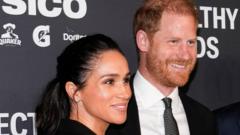
Prince Harry wants to bring Meghan Markle and their children, Archie and Lilibet, back to British soil. Honestly, it sounds like a straightforward family visit, but it isn't. The Duke of Sussex is locked in a fierce, multi-year legal war with the UK Home Office over his security arrangements, and the stakes couldn't be higher. He isn't just fighting for police escorts; he's terrified that the hostile environment built by British tabloids will lead to a violent attack on his wife.
When Harry stepped back from active royal duties, his automatic right to round-the-clock taxpayer-funded police protection vanished. For most people, that sounds like a fair consequence of leaving the firm. But for Harry, it's a security nightmare that has effectively exiled his young family to California.
The core of the issue comes down to a fundamental disagreement about risk. Harry believes his family faces a unique level of danger that private security simply can't handle. The UK government disagrees. This stand-off means that while Harry makes occasional solo trips to London, Meghan and the kids stay behind, thousands of miles away from their British heritage.
The Acid Attack Fear is Real
You might think Harry is being overly paranoid. He openly admits the word "paranoia" gets thrown around a lot when people discuss his life. But during a revealing interview for the ITV documentary Tabloids on Trial, he spelled out his exact fears.
He explicitly stated that all it takes is one lone actor who reads extreme online or tabloid vitriol to act on those words. He mentioned knives and acid attacks as genuine, day-to-day concerns. When you look at it through that lens, you understand why he refuses to bring his wife back without top-tier protection. It isn't about looking important; it's about survival.
Private security guards in the UK have severe limitations. They can't carry firearms. They don't have access to local police intelligence networks. They can't clear traffic or manage public spaces the way specialized police units do. For a high-profile target like the Duke of Sussex, relying solely on a private firm in London is a massive gamble.
The Legal Battle for RAVEC Protection
To understand why this is stuck in a legal loop, you have to look at RAVEC—the Executive Committee for the Protection of Royalty and Public Figures. This is the body that decides who gets state protection in the UK.
When Harry lost his full-time status, RAVEC decided his security would be handled on a case-by-case basis. Harry took them to court, arguing this decision was unfair and lacked transparency. His legal team even offered to personally pay the bill for police protection so British taxpayers wouldn't have to foot it. The Home Office flatly rejected that offer, stating that police officers are not guns for hire.
RAVEC Security Tiers:
- Full-Time Royal Duty: Automatic, comprehensive state protection.
- Case-by-Case Basis: Evaluated per visit (Harry's current status).
- Private Security: Paid by individual, no police powers or firearms allowed in UK.
Losing those court appeals didn't stop him. Harry has consistently fought the rulings because he genuinely believes the current setup leaves his family vulnerable. He wants predictable, guaranteed security before he even thinks about booking a flight for Meghan, Archie, and Lilibet.
A Family Rift Fuelled by Courtroom Dramas
It's no secret that the royal family is deeply fractured. While many point to the Netflix documentaries or his memoir Spare as the main causes, Harry views things differently. He believes his relentless crusade against the British tabloid press is a central piece of the collapse in his relationship with his family.
Harry has spent years chasing phone-hacking and privacy lawsuits against major newspaper groups, including Mirror Group Newspapers, where he won a monumental victory and substantial compensation. He openly expressed that he wished his family had joined him in this fight. He viewed it as a matter of service and standing up for what's right.
Instead, the royal family opted for their traditional policy of silence and negotiation behind closed doors. This divergence in strategy created an ideological chasm. Harry felt abandoned on the battlefield, while the rest of the family likely saw his public court battles as a liability that dragged private royal business back into the headlines.
What This Means for Archie and Lilibet
The real casualties in this security deadlock are the children. Archie and Lilibet are growing up completely isolated from their paternal extended family. They don't know their cousins, they rarely see their grandfather King Charles, and their connection to the UK is purely theoretical.
Harry wants his children to know his home country. He wants them to experience British culture and build a relationship with their relatives. But as long as the security threat remains unresolved, California is their only safe haven. The Duke faces a brutal choice: compromise on what he believes is necessary safety to bring his kids to England, or keep them safe in America but completely cut off from their royal roots.
If you are following this saga expecting a sudden family reunion at Buckingham Palace, don't hold your breath. Until Harry gets the security guarantees he is demanding, or until he decides the risk is worth taking, the cross-Atlantic divide will remain exactly as it is.
If you want to understand the modern royal family, stop looking at the tiaras and start looking at the court dockets. The future of Harry's relationship with the UK isn't being decided in palace drawing rooms—it's being fought out by lawyers in London courtrooms.