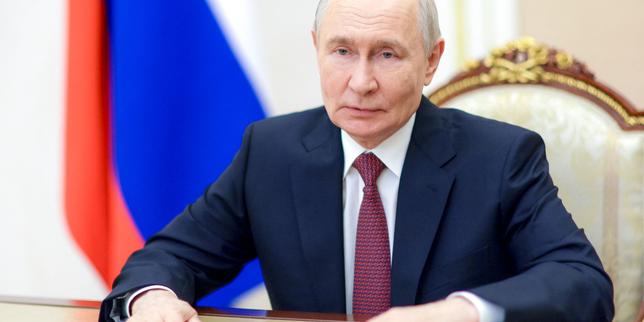
Vladimir Putin is playing the waiting game again. The Russian president recently made it clear that he's ready to sit down with American negotiators to talk about the war in Ukraine, but there's a catch. He claims Moscow is currently on the back burner because Washington is completely tied up with the ongoing crisis in Iran.
In a recent interview with state journalist Pavel Zarubin, Putin openly stated that he expects a team of US officials to land in Moscow once the White House wraps up its intensive Middle East diplomacy. It's a calculated rhetorical move. It positions Russia as a patient, reasonable actor while subtly mocking the American administration's ability to multitask on global security issues. For a more detailed analysis into this area, we recommend: this related article.
But what's really happening behind the scenes? The reality involves a mix of severe fuel shortages inside Russia, high-stakes nuclear brinkmanship in Switzerland, and a diplomatic game of chicken that spans from Eastern Europe to the Persian Gulf.
The Washington Distraction
The White House has its hands full, and Putin knows it. The US has been deeply entangled in intense negotiations with Tehran following a series of military escalations and maritime threats in the Strait of Hormuz. Vice President JD Vance recently admitted that American diplomats have been working around the clock, particularly surrounding agreements reached at the Lake Lucerne Summit in Switzerland. For additional details on this development, extensive reporting is available on NPR.
The US and Iran recently signed a fragile Memorandum of Understanding to halt strikes on shipping lanes, but the situation remains incredibly volatile. Just days ago, Tehran launched retaliatory drone strikes against regional targets, threatening to pull the plug on the whole deal. Donald Trump even took to social media to warn that the US might have to finish the job militarily if negotiations collapse completely.
When Putin says he's waiting for Washington to be less busy, he's acknowledging a cold diplomatic truth. The United States only has so much diplomatic capital to spend at one time. By tying the resolution of the Ukraine conflict to the resolution of the Iranian crisis, the Kremlin is trying to force Washington to choose its priorities.
Refineries In Flames And Domestic Fuel Issues
While Putin project confidence on television, things aren't going perfectly at home. In the very same breath that he discussed American negotiators, the Russian president had to admit something far more uncomfortable. Russia is facing a noticeable domestic fuel shortage.
This shortage isn't an accident or a market quirk. It's the direct result of systematic, highly effective Ukrainian drone strikes targeting major Russian oil refineries deep inside the country. For months, Kyiv has focused its long-range drone program on hobbling Russia's energy infrastructure. It turns out that strategy is paying off in a visible way.
Admitting to a fuel shortage is rare for the Kremlin. Usually, state media goes to great lengths to hide any domestic strain caused by the war. The fact that Putin publicly acknowledged the issue proves that the damage to Russia's refining capacity is too big to sweep under the rug. It also explains why he might actually want those American negotiators to show up sooner rather than later. Economic pressure is mounting, and bravado can only mask empty gas stations for so long.
The Fifty Five Minute Phone Call
To understand where these negotiations might go, you have to look back at the direct communication that happened earlier this month. Putin and Trump spent nearly an hour on the phone discussing exactly these two hotspots: Ukraine and Iran.
During that 55-minute call, Trump pressed for an immediate cessation of hostilities in Ukraine, signaling that he's eager to push Kyiv and its European allies toward a settlement. Putin, on the other hand, held a firm line, insisting that Ukrainian strikes on civilian or economic infrastructure won't change the reality on the ground.
Yet, the undercurrent of that conversation was entirely about leverage. Russia wants relief from crushing economic sanctions. The US wants a stable Europe and an end to the global energy disruptions caused by the war. Putin's public comments about waiting for the US team show that the phone call didn't settle the details, but it set the stage for a formal meeting that Moscow is now publicly eager to host.
What Most People Get Wrong About This Delay
Many Western analysts look at Putin's statement and assume it's a sign of Russian weakness or desperation. That's a mistake. Putin is using the US-Iran friction to his advantage in a few specific ways.
- He shifts the blame for the continuation of the war. By claiming Russia is ready to talk but America is too busy, he makes Washington look like the obstacle to peace.
- He validates Iran as a major global player. Moscow and Tehran have grown incredibly close, sharing drone technology and military tactics. Highlighting Iran's ability to distract the US serves Russian geopolitical interests.
- He buys time to fix his own infrastructure. With domestic fuel supplies hit by Ukrainian drones, a few weeks of diplomatic stagnation gives Russian engineers time to repair vital refining components.
How To Track What Happens Next
This geopolitical standoff won't be resolved overnight. If you want to see through the state propaganda and understand where this is actually heading, keep a close eye on these specific indicators over the next few weeks.
Monitor Global Oil Prices
Watch the price of Brent Crude closely. If the US-Iran talks in Qatar succeed and the Strait of Hormuz stays open, oil prices will likely stabilize around 73 dollars a barrel or drop lower. Lower oil prices hurt Russia's war wallet, making Putin much more desperate to get those US negotiators to Moscow to discuss sanctions relief.
Watch Ukrainian Drone Range
Pay attention to military reports detailing where Ukrainian drones are hitting. If Kyiv manages to strike refineries even further east, Russia's domestic fuel crisis will worsen. That will directly impact Russia's military logistics and force Putin to soften his negotiation demands.
Track Diplomatic Movements In Qatar
The US and Iranian delegations are scheduled to hold follow-up talks in Doha. The faster those talks progress, the sooner a US team will be freed up to head to Moscow. If the Doha talks fall apart, expect the Ukraine war to drag on with zero diplomatic contact between the US and Russia.
The diplomatic chessboard is messy right now. Putin wants everyone to think he's calmly waiting for the Americans to finish their homework in the Middle East, but the smoke rising from Russian oil refineries tells a much more urgent story.